


By Eduardo Stanley
FRESNO, Calif. — During a recent visit to a farm in South Fresno, a group of Indigenous Oaxacan women observed farming practices and the crops grown there by Hmong farmers, an ethnic group from Laos that arrived in the U.S. as refugees in the 1980s.
The visit was part of “Salt of the Earth,” a year-long multimedia campaign launched Sept. 17 by the Fresno-based Pan Valley Institute (PVI) at the Cruz Martinez Farm in Madera.
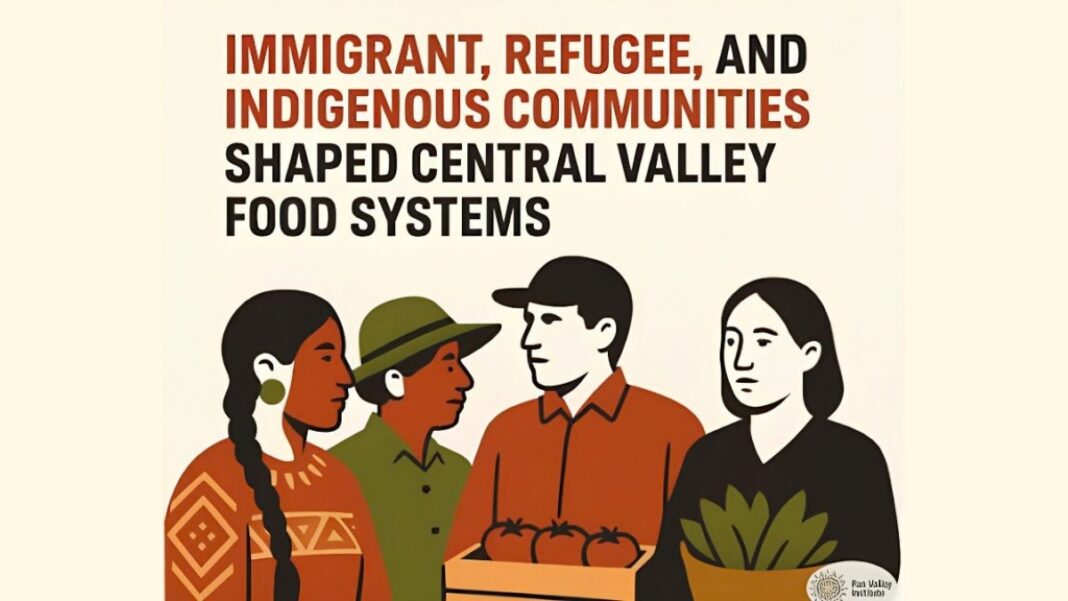
The campaign honors the rich history and contributions of immigrants, refugees, Indigenous peoples and people of color to regional agriculture, sustainable local economies and the vibrant food culture of California’s Central Valley. It also aims to build a sustainable future for the region.
At the South Fresno farm, the Hmong farmworkers harvested chili peppers, tomatoes, and ginger, as well as other products unfamiliar to the group from Oaxaca, a region in southern Mexico home to one of the country’s largest and most diverse Indigenous populations. The two groups discussed marketing, soil renewal, irrigation, harvesting and the preparation of traditional dishes — including similarities and differences in seasoning styles — using the crops grown on the farm.
“We have a lot in common. It’s good to learn from one another,” said Rosa Hernández, who lives in Madera and is a member of the Mixtec community, one of 16 recognized ethnic groups in Oaxaca. “I like knowing how they use the crops they harvest to season their food.”
Fresno is home to one of the largest Hmong communities in the country, second only to Minnesota. The Central Valley is also home to a burgeoning Oaxacan Indigenous population, many of them employed in the region’s agricultural sector.
Hernández is part of Nu’u Yavi, a group of indigenous Oaxacan women who maintain their ancestors’ traditional recipes and has organized outdoor markets in Madera to share traditional foods with the broader community.
PVI Founding Director Myrna Martínez said the organization particularly seeks to deepen collaboration among immigrant farmworkers, small-scale farmers and food-sector entrepreneurs such as the women of Nu’u Yavi — groups that represent “the backbone of the multibillion-dollar food economy.”
“The misconception that agricultural work is ‘unskilled’ overlooks the valuable skills, knowledge, and stewardship of the land that these groups bring to the food system,” continued Martínez, adding that “immigration policies that stigmatize and persecute immigrants, portraying them in a dehumanizing way, only serve to exacerbate this situation.”
“As the Central Valley faces growing environmental and economic challenges, the ‘Salt of the Earth’ campaign reminds us that solutions are rooted in the knowledge, cultures and lived experiences of those who have cared for this land for generations,” said Estela Galván, economic justice coordinator at PVI.
A key component of the campaign is a bi-weekly podcast produced in English and Spanish, featuring interviews with local figures behind these stories.
The event was attended by representatives from local community organizations dedicated to finding solutions to the challenges faced by the people who drive the economic and cultural life of the Central Valley.
A panel discussion also took place during the event, featuring Luis Elizondo, a beekeeper from Madera; Dalya Hussein, a representative of the Fresno-based organization Refugees Expanding the Food Culture of the Valley; Nicole Celaya, operations manager for the California Climate and Agriculture Network; and members of the Cruz family.
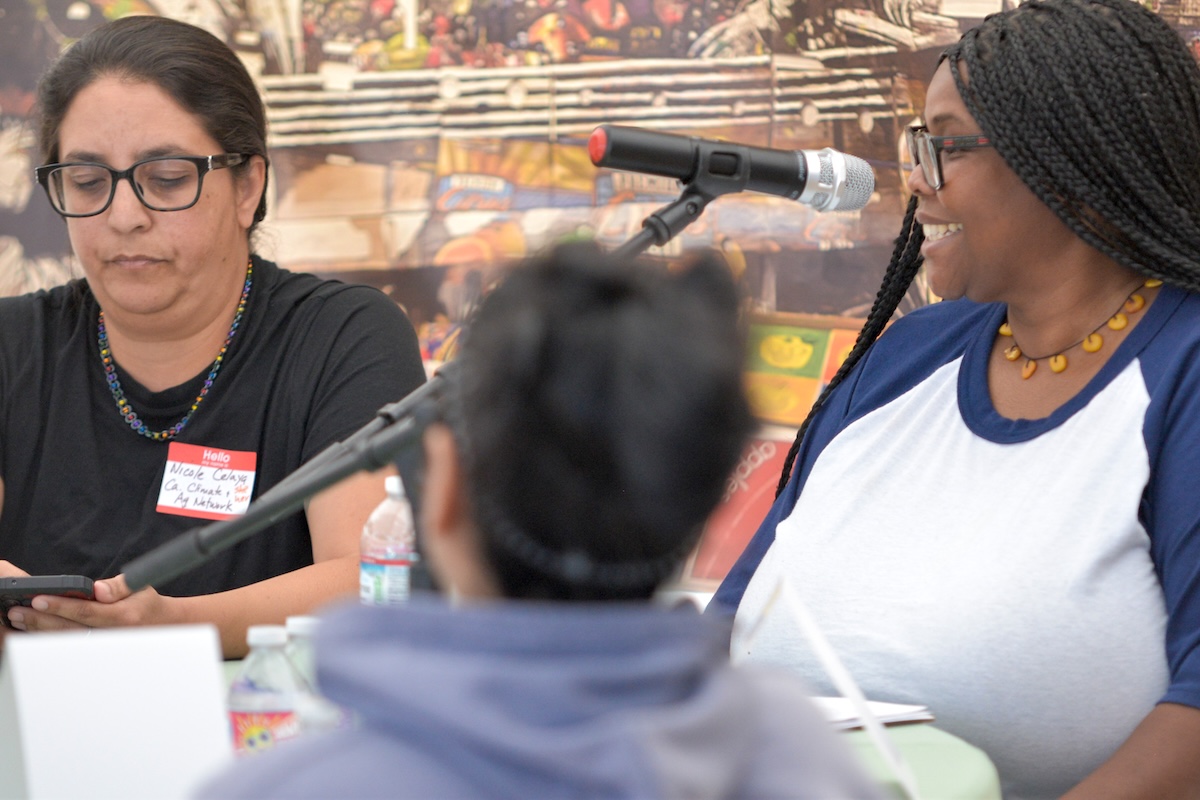
A recording of this panel will be used to produce the upcoming podcast.
“The entire discussion was a testament to the Central Valley and to those beacons of light who make every opportunity count,” said Devoya Mayo, a Fresno-based poet and community worker who is producing the English version of the podcast. “The session as a whole evoked a sense of community rarely felt amidst the hustle and bustle of daily life. It was an authentic example of loving one’s neighbor and of what reality could look like if we all strove to be more actively involved in our community.”
Regarding the podcast’s importance, Mayo said it “can help bring local issues to light and forge connections that build a sense of community — aspects that traditional media often overlook or lack the capacity to address with sufficient depth.”
Those interested in learning more about and supporting the “Salt of the Earth” campaign can visit panvalleyinstitute.org.
This story was produced as part of “Aquí Estamos/Here We Stand,” a collaborative reporting project of American Community Media and community news outlets statewide.