


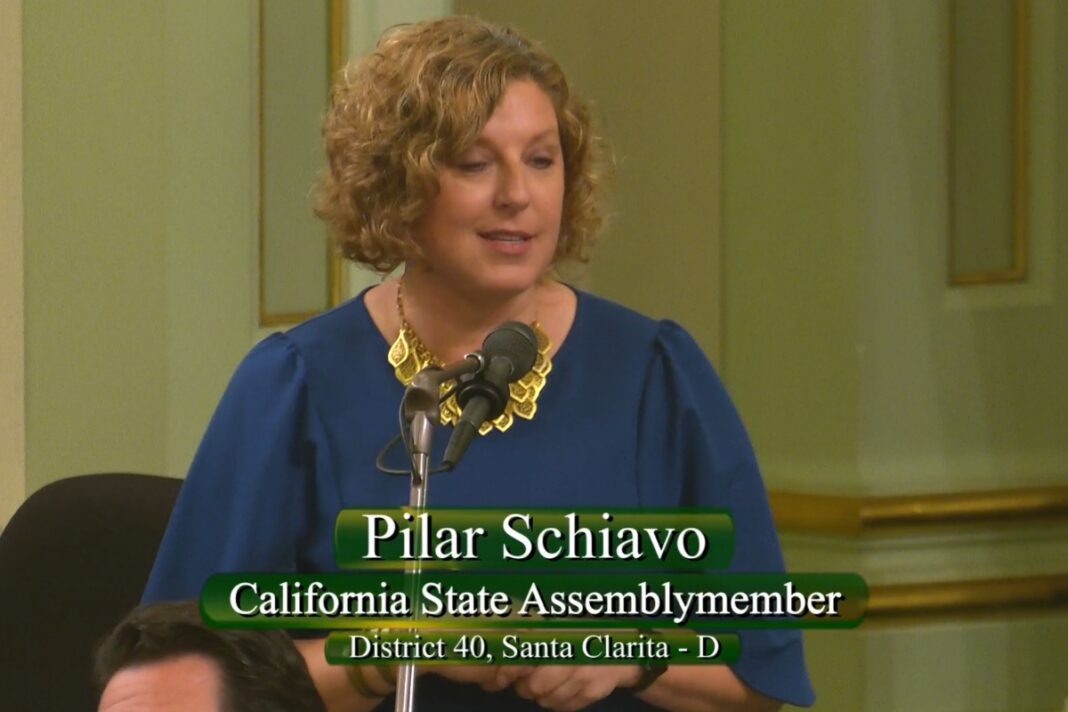
On a 53-2 vote, the California state Assembly May 19 passed a resolution condemning a proposed $715 billion federal cut to the Medicaid budget.
A 2nd resolution decried President Donald Trump’s executive order banning birthright citizenship. A lawsuit challenging the order is currently being heard by the Supreme Court. The resolution, AJR 5, authored by Assemblyman Alex Lee, a Democrat, passed the Assembly on a 58-1 vote.
Both resolutions are largely symbolic. But Assemblywoman Pilar Schiavo said on the Assembly floor: “We have to send a clear message to the federal government. They are not allowed to cut services for vulnerable people.” Schiavo, a Democrat who represents the Santa Clarita region, authored AJR3, which opposed the cuts to Medicaid. Her resolution had 52 co-sponsors.
‘Robbing the Poor to Support the Rich’
Schiavo’s resolution also discussed cuts to Medicare and Social Security. Both programs are not currently under consideration for cuts. Trump promised on the campaign trail not to cut the budgets of Medicare and Social Security.
The House is expected to vote on cuts to the Medicaid budget — part of a bigger budget reconciliation bill — on May 22. The aim is to cut $1.5 trillion from the federal budget to support Trump’s plan of $4.5 trillion in tax cuts over the next decade. Critics of Trump’s “big, beautiful bill” note that benefits for the nation’s most vulnerable are being stripped to support tax breaks for the ultra-wealthy.
“What’s happening in Washington DC right now makes the blood boil for decent people,” said Assemblywoman Jasmeet Bains, a physician and Democrat who represents the Bakersfield region. She noted that many rural hospitals would be deeply impacted and may be forced to shut down.
Newsom’s MediCal Cuts
Republicans took aim at California Governor Gavin Newsom, who last week announced a plan that would mandate undocumented immigrants currently enrolled in MediCal to pay a monthly premium of $100. No new undocumented immigrants would be allowed to enroll in MediCal, beginning Jan. 1, 2026.
”Democratic management has put MediCal on the brink of financial insolvency,” stated Assemblyman Carl DeMaio, a Republican who represents San Diego County. He noted that the state will take out an estimated $6.4 billion in loans to support MediCal, with little oversight.
Assemblyman Joe Patterson, a Republican who represents Rocklin and surrounding towns, said the budget proposed by Newsom would strip $94 million from in-home support services this fiscal year, and $540 million the following year. “The governor has proposed some draconian cuts that will impact our state’s most vulnerable populations,” he said.
Birthright Citizenship Ban
Lee’s resolution overwhelmingly passed with little discussion on the Assembly floor. “All babies born in America are US citizens. I have been a beneficiary of this policy,” said Lee, who represents portions of San Francisco’s East Bay Area, including Fremont and Milpitas.
”We are not a country of bloodlines. We are a country of values,” said Lee.