


Hear full interview | SoundOnSight Podcast on Spotify and Apple:
SoundOnSight IS A NEW PODCAST INITIATIVE BY ACoM. CHECK OUT MORE EPISODES HERE.
The sounds and flavors of the Middle East are having a moment in the Bay Area and across the country. Fueled in part by Israel’s siege of Gaza, high profile artists from Green Day to Chappell Roan and SZA, and the Armenian-American band System of a Down are voicing support for Palestinians on stage and during recent festivals.
Palestinian musician Saint Levant… love him or hate him… has been making an impact in the West with his mostly-Arabic lyrics, teaming up with Oakland-born star Kehlani on the track “Allah Yihmeeki.” In 2023, Palestinian-Chilean singer Elyanna made history as the first artist to perform a full set in Arabic at Coachella, while singer Billie Eilish shared in a recent episode of her podcast that she’s a huge fan of Lebanese pop icon Nancy Ajram.
Beyond music, Yemeni and Palestinian coffee shops are all the rage, while people sporting kuffiyehs are a common sight. In clubs and local venues Middle Eastern and North African (MENA) rhythms are growing in popularity.
Here in the Bay Area, one group helping to push that wave is Mother Armenia.
Since forming in 2023, the woman-led organization has produced parties centering Armenian and Middle Eastern music, curated an art exhibition, launched a radio show on LowerGrandRadio, and raised over $17,000 for humanitarian efforts in Palestine, Lebanon, and Armenia.
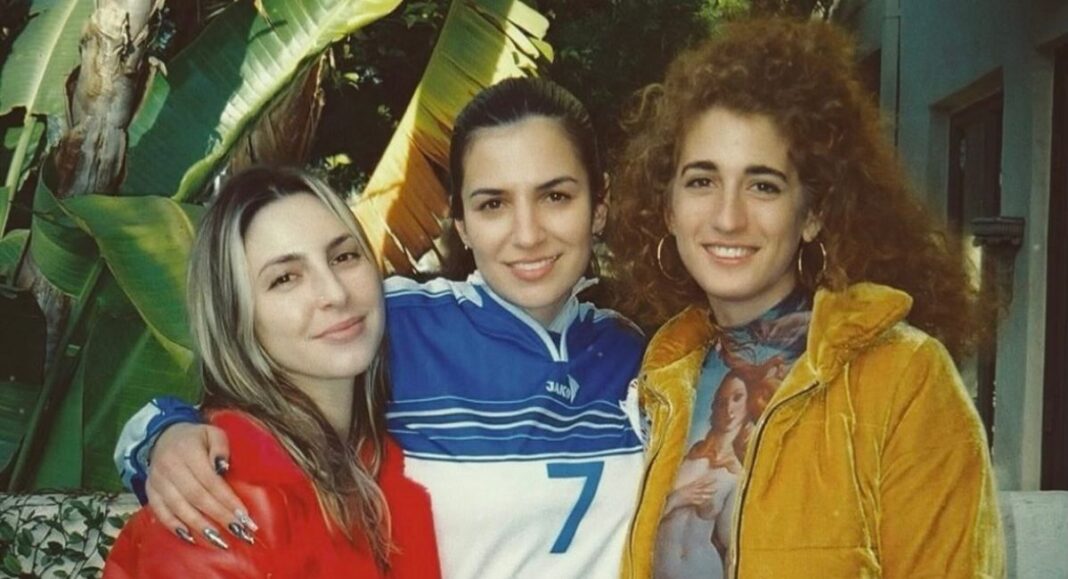
For the group’s founders, Elize Manoukian, Tara Baghdassarian and Dea Hovhannisyan, the work is an assertion of belonging, one that supersedes the political moment we’re in. “We are here… and we will continue to be here.” They spoke with ACoM reporter Chris Alam.
This is an edited version. You can hear the full interview along with previous episodes at Sound on Sight, a collaboration between American Community Media and HydeFM radio in San Francisco.

CA: Your first event was a fundraiser for Artsakh, a region in the South Caucuses mainly populated by Armenians. Tell us about that.
Tara: It was for Artsakh, but it was also very inspired by our Palestinian brothers and sisters that were taking the streets and protesting. After October 7th, we had seen so much happening in the Bay and around the world, so we felt really inspired, and were like, we need to step up and raise our voices, too. And it’s been nice because we’ve been working in solidarity with so many different other Southwest Asian and North African (SWANA) communities. It hasn’t been this single, one-way, homogenous Armenian oriented community.
Elize: The first event was very much in response to what had happened in Artsakh (when Azerbaijan invaded the region, leading to accusations of ethnic cleansing in the International Court of Justice). We had started talking about doing something once we had our moment of shock, and then immediately after, that’s when October 7th happened and then the genocide in Gaza. So the first event was very much in response to both of those. And then I think we were just shocked at the response from Armenians, because there are just so many Armenians who we had never met before, especially queer Armenians who don’t participate in a lot of Armenian cultural events. Just so many Armenians came out and were like, “We needed this.” And then so many non-Armenians came out too, and we were like, “Oh, you guys care.”
CA: Who was showing interest at first? Was it mostly people of Middle Eastern descent? Or was there broader appeal?
Dea: We had Arabs, Persians, Kurds, like everyone. It was an important moment because in the diaspora, a lot of times communities can be isolated and stick to their respective groups as a response to building a life in a new place. But because there was so much going on regionally, it was just more important than ever, I think. It’s been building for years, you know? It goes back to Syria and Libya and Iraq and Afghanistan. And so just having an intentional space where everyone who is going through similar struggles, you could connect and find strength in one another. The last thing we need right now is to feel like we’re going through it alone because we’re not, you know? So that was what we were trying to build from the very beginning, and it’s just taken off in such a beautiful way.
CA: Had you intended to create something long term, or did you think of this as more of a one-off event at first?
Tara: When it all started we did not expect it to go this long. It really was just, okay we need to put something together and raise money. But the reaction after that first event was so overwhelming and it was like, okay, there’s something here. It also touches on our origin story with the three of us. We all became really close in Armenia. We all lived there for different periods of time, but we overlapped. And I think coming back after that time there, we felt the lack of our culture, the language, the music, everything. So that was another big, big motivator for us to just propel forward and continue it.
Dea: Just to give you a sense of the first event, we did it at Tamarack, which is that spot in downtown Oakland, it’s two floors. And we really thought that it was just going to be a really small event, but there were people flowing out on the street and onto the sidewalk. I was sitting next to this girl at the bar, and she was like, “I feel like I’m back in (Armenia’s capital) Yerevan.” And I was like, mission accomplished.
CA: How did your experiences in Armenia shape what Mother Armenia is trying to do?
Dea: We were living in Armenia when the underground scene in Yerevan really started to blossom. It was after a revolution that left the old Soviet mob-like legacy behind. Queer Armenians were front and center of that fight. And so witnessing these beautiful underground safe spaces grow was so healing and beautiful. And then on top of that, experiencing how pervasive your culture is when you’re there. Like, at some point in the night at the pub, they’re gonna play the traditional song and everyone’s gonna do the traditional dance. And it’s just such an undercurrent of everything and it makes everything so much richer. And so I think those are two really big influences.
Dea: So, our last event that we just did a few days ago was a collaboration with Mahragan (an LGBTQ+ dance party based in L.A. centering music and culture from across the Middle East and North Africa). It’s run by Palestinians and Egyptians and is part of this wave, this response to everything happening in the region, just making our cultural presence as loud as it needs to be. So they wanted to have their first event in the Bay Area, and they reached out to us to co-host with them, which was so sweet. And we wanted to do a traditional dance element to kind of break up the flow of the party in between DJs, to just ground it into the really old historic elements because we’ve been dancing in the mountains for thousands of years and what we’re doing is just a modern version of that.
So we brought in these two amazing girls, Sona and Susanna and they performed this Armenian dance called Yarkhushta, which is a traditional, really powerful war dance only performed by men. Dancers slap hands really aggressively and they stomp on the ground. It’s really intense. And we would see it in Armenia, and it was like, man, I kind of want to join that but like you wouldn’t really be able to. And so we’re reclaiming our culture for ourselves and keeping the traditions but also allowing for evolution. It was just so beautiful to witness women doing that. To have that interwoven with Arabic and Persian and Kurdish and North African music, it was just so special. And then after the Yarkhushta, they led Kochari, which is a group kind of like our version of Debke, where everyone holds hands and you get in a circle. And that was really special too, to witness all these non-Armenians doing Kochari. It was so beautiful.
CA: Nostalgia can often have a large influence on diaspora communities’ memories of home and how they express their culture. What role does nostalgia play in your work?
Tara: The root cause of this sentimentality and the nostalgia is the pain of loss. So if you go to the root of it, we’re just trying to retrieve and reclaim what was lost. So I think a lot of times, you know, whether it’s through music, whether it is through dance, whether it’s through storytelling… it’s all touching these things that can be seen as nostalgic, but really we’re just trying to illuminate the past and bring more light to it.
Dea: What we’ve lost through what, Tara?
Tara: Genocide. The root cause for Armenians is the loss that we experienced in 1915, the Armenian genocide, 1.5 million Armenians were killed by Ottomans. And it’s a genocide that went unrecognized, and it’s denied to this day. And when you feel that your identity—and your country—is under threat, you want to do what you can to make yourself known, not necessarily in a nationalistic sense, but in a proud cultural sense of, we are here. We’ve been here and we will continue to be here.
Chris Alam is a member of the California Local News Fellowship.You can listen to the full interview with Mother Armenia and catch previous episodes of the show at Sound on Sight. Interested in keeping up with all of Mother Armenia’s events? Stay up to date on their Instagram page. Find all your favorite music, and the SoundOnSight archives, on HydeFM.