

By Kai Bwor & Patricia Fontejon
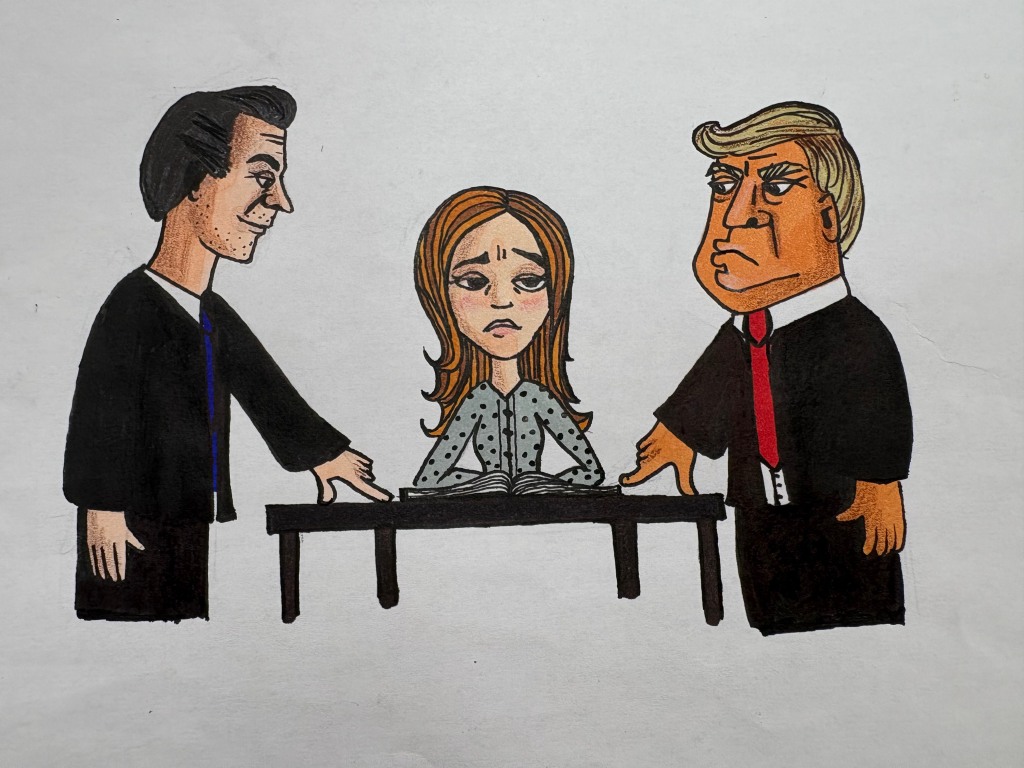
As President-elect Donald Trump’s administration prepares to enter the White House, students graduating within his four-year term may directly be impacted by new laws. These changes could negatively affect students across the United States.
So what will the future look like for us, Gen Z, under the Trump Administration? Although nothing is set in stone, the President-elect aims to dismantle the U.S. Department of Education. This department handles crucial tasks like allocating federal aid through Title 1 to support schools serving low-income families and student loan relief programs, such as the Public Service Loan Forgiveness and income-based repayment plans.
Low-Income Students
Abolishing the Department of Education would prevent students from having quality education and academic opportunities, as the lack of funding would make it almost impossible for low-income students to attend college.
“As a student myself, I feel incredibly upset and concerned that the economic aid we’ve been ensuring for decades can be stripped away from us, and the possibility of attending college would decrease for many across the country, which is frustrating because everyone deserves a chance to enrich their education,” says Lauren Pho, a junior.
Through the dismantling of this department, Trump focuses on two key areas: reducing federal funding for schools that teach Critical Race Theory and eliminating the student loan forgiveness programs established under the Biden-Harris administration.
Critical Race Theory
Critical Race Theory offers a way of seeing the world that helps people recognize the effects of historical racism in modern American life, highlighting the relationship between race and American law. It emphasizes how other marginalized identities, such as gender or class, are often overlooked.
During his first term, Trump issued an executive order advocating for local communities to control how children receive education in their schools. He argued that public school curricula were “one-sided,” and often failed to properly honor and reflect the great legacy of the “great American national experience.”
Alienation
However, this approach results in polarized classrooms. By presenting only one side of history—the perspective of the “good side” of American history—we lose the ability to critically analyze and form our own opinions. This perspective alienates students, causing us to view America’s history only through rose-colored glasses rather than understanding it holistically.
Beyond that, Critical Race Theory is evident in our daily lives, especially in K-12 educational settings. Schools incorporate it through curriculum content, including stories written from the perspectives of BIPOC authors.
If Trump were to issue a similar executive order, texts such as “Invisible Man” by Ralph Ellison or “Beloved” by Toni Morrison might be taken off the curriculum. Dismantling the Department of Education could potentially impact our education and that of future students by losing some access to diverse perspectives, resulting in a more narrow curriculum.
Book Bans
Students benefit from analyzing multiple perspectives and gaining insight into different cultures. The act of restricting the books read in schools constitutes a form of censorship reminiscent of what is portrayed in “Fahrenheit 451.”
Additionally, as Trump pledges to shut down the Department of Education, loan forgiveness and federal aid may face significant changes, potentially impacting students nationwide. This shift could reshape education, leaving many feeling uncertain about the future of their academic and financial support. As these changes unfold, it’s important to consider state-level responses and how they may protect students from these shifts.
Prop 2
For instance, California recently passed Proposition 2, which directs state tax dollars toward federal student spending. This measure was designed to ensure that even if federal support for higher education diminishes, California remains committed to providing financial resources to its students. But, not many states are afforded these luxuries.
Many Americans are excited about the prospects of a new administration, while others find the news confounding. Right now, the future of our country is unclear. But beyond politics, there’s optimism as a result of elections. This time in America brings out the desires of the people. Regardless of our political preferences, we all share a common goal of wanting the best for our country and ensuring quality education for future generations.
The Plaid Press is the student newspaper of Granada Hills Charter High School.