


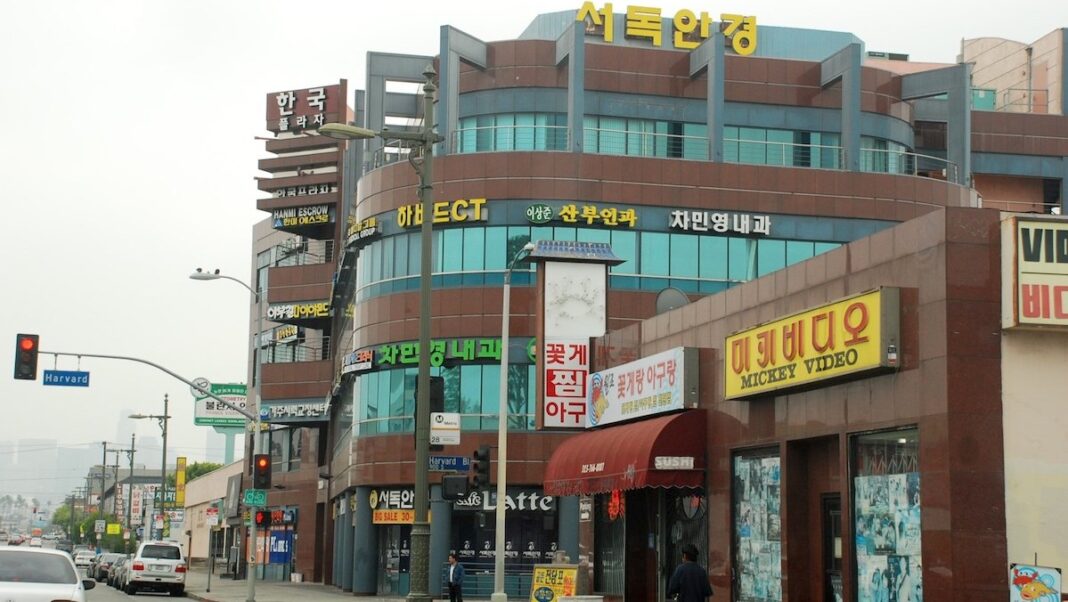
LOS ANGELES — Koreatown has been officially identified as one of the areas most in need of new park space in Los Angeles.
According to the draft Park Needs Assessment (PNA) released at a community hearing on September 9, Koreatown was classified as a “First Priority” area for new park development. This designation means the neighborhood ranks among the most urgent sites for park infrastructure improvements out of 519 candidate locations across the city.
The report cited Koreatown’s high population density, lack of private open space, vulnerability to extreme heat, and low perception of safety as critical factors. The community’s main green space, Seoul International Park, recorded an alarmingly low 0.12 in safety, exposing its deficiencies. Other indicators were also below average, including accessibility (0.42), amenities (0.75), and walkability (0.50).
Although designated as a “Large Neighborhood Park,” the report noted that Seoul International Park suffers from overcrowding due to its limited size, aging facilities, and weak pedestrian infrastructure. It concluded that the city should develop additional small-scale “mini-parks” to improve accessibility and ease the burden on the existing park. Overall, the park ranked 339th out of 519 parks citywide, placing it among the lowest-tier facilities.
These findings highlight that Koreatown’s challenges go beyond a simple lack of green space, encompassing issues of quality of life, climate resilience, and public safety. Experts stressed that “green space is not just for leisure but essential infrastructure for survival in the era of climate crisis,” warning that insufficient shade and greenery pose serious health risks to seniors, children, and low-income residents.
Other areas designated as first-priority sites include Arts District Park, Ord & Yale Street Park near Boyle Heights, University Park North, North Hollywood, and Van Nuys–Valley Glen. In South LA, Rolland Curtis Park, St. James Park, and Vermont Miracle Park also made the list. Each of these neighborhoods faces overlapping issues of limited park access and socio-environmental vulnerability, requiring concentrated investment similar to Koreatown.
Survey Results: Maintenance and Safety Top Residents’ Concerns
The assessment incorporated results from a large-scale survey of more than 5,600 residents, who overwhelmingly identified facility improvements in existing parks as the top priority.
In the Central/East region, which includes Koreatown, more than half of respondents said there were not enough parks near their homes. Only 45% reported having sufficient access to parks or recreation centers within walking distance. Among barriers to use, 38% cited poor maintenance, 37% said lack of information about available programs, 33% pointed to distance from home, and 24% raised concerns over inadequate security patrols.
Citywide results showed similar trends. Fewer than 48% of respondents reported having enough parks within walking distance. Among households earning between $10,000 and $40,000 annually, the figure dropped to 39%. Fewer than 40% of residents rated park conditions as “excellent” or “good,” with online respondents at 40% and on-site participants at just 10%.
When asked about safety and belonging, 82% said they felt safe in at least one park or recreation facility. However, half of respondents identified homelessness as a barrier to visiting parks, while 39% cited distance, 29% pointed to poor maintenance, and 35% mentioned lack of information. Safety concerns, the survey showed, are not unique to Koreatown but a recurring issue across the city.
Community Demands Transparency
At the September 9 hearing, residents voiced deeper frustrations. One participant said, “Over the past decade, countless housing projects have been built in Koreatown, but we don’t know where the developers’ park fees have gone.” Another added, “The city can’t even maintain the parks we already have—who will manage new ones?”
City officials responded that expenditure records are published annually, but they also acknowledged the severe shortage of park space in Koreatown, implicitly conceding that residents have seen little direct benefit.
For many local families, the issue is deeply personal.
Yunjung Lee, 57, who lives in Koreatown with her in-laws, described the desperate need for more green space. She often takes walks two or three times a week with her father-in-law, who has dementia.
She explained, “Walking stimulates the brain and helps with dementia, doesn’t it? When we see nature, our hearts open up and we feel peaceful. Looking at the blue sky and the different shades of green on the trees makes me reflect in God’s providence. Running in the park even smells good-it’s fresh and uplifting.”
Amy Jang, 54, a Koreatown resident, expressed her concern: “I want to visit parks more often, but honestly, I’m afraid because of the homeless presence. If the facilities were improved and police patrols increased, I would feel safe enough to use them.”
This story was produced by Ethnic Media Services in collaboration with the Laboratory for Environmental Narrative Strategies (LENS) at UCLA as part of the Greening American Cities initiative supported by the Bezos Earth Fund. Read more stories like this by visiting the Greening Communities homepage.