


Managing editor of a tech publication. Over a decade in digital media. Someone whose job is, quite literally, to stay informed, stay connected, and track the pulse of Silicon Valley. Sounds like someone who would thrive on social media, right?
Well, on April 21st, I deleted or deactivated every social media app on my phone, and life hasn’t been the same since.
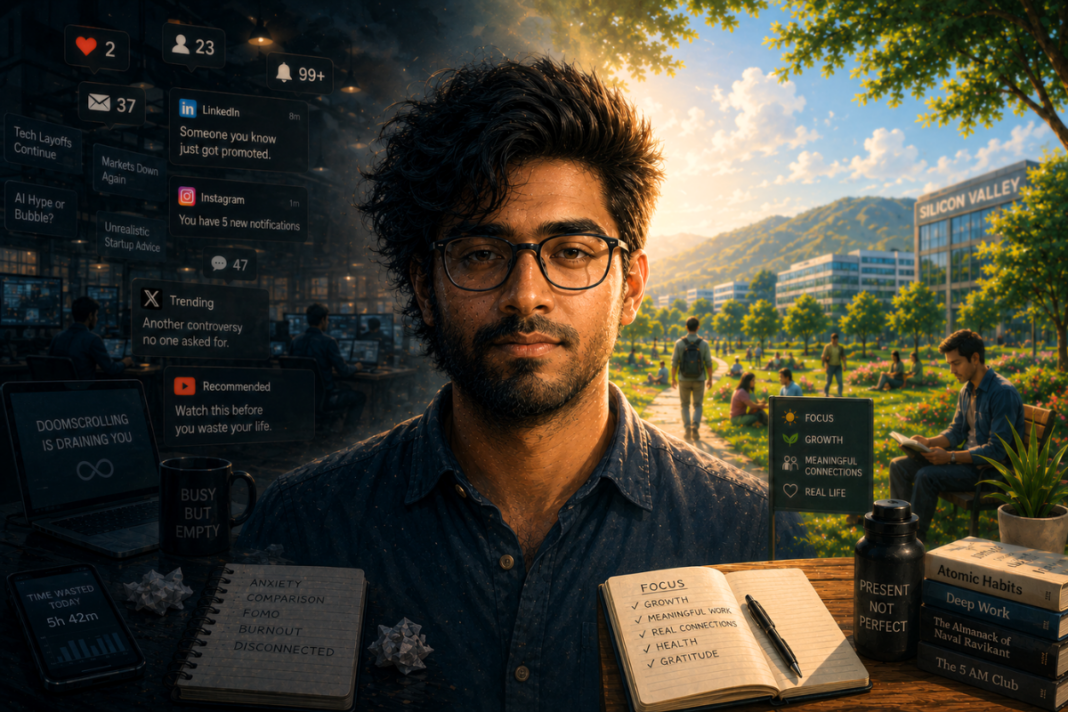
In the age of brainrot and doomscrolling, likes, tags, and DMs have become the new infrastructure of human connection. And, I realized, I had been hollowed out because of it. It was like a gradual numbness that quietly became my baseline. The days passed, and I wasn’t fully inhabiting them. In my free time, I scrolled through reels. When I was supposed to be working, I stared blankly at a screen. Life was on autopilot.
Social media, I realized, was steadily stealing my life from me. It was time for me to go touch some grass.
By this point, I had already distanced myself from Snapchat (2022), TikTok, and Facebook (both 2021). I deactivated my Instagram and LinkedIn accounts, keeping them on hand for personal and professional connections. Harmless and reasonable. Or so I thought. The algorithms had other plans.
Over time, what I had rationalized as intentional use had devolved into compulsion. A new kind of emotional avoidance was taking hold.
Meanwhile, I was connecting less authentically with people and more reflexively with content. Increased anxiety and diminished self-esteem were constants. The most insidious of it all: a perpetual dopamine feed that left me genuinely numb to my own life.
Numerous studies point to the risks of social media for mental health, especially for young people and adolescents. The City of New York went so far as to sue social media companies in 2024 for “fueling the nationwide youth mental health crisis.” In March of this year, a jury found Meta and Google responsible for harming a young user’s mental health.
Schools across the country, meanwhile, are experimenting with cell phone bans as a way to wrench students away from their screens. Studies show mixed results in terms of academic improvement though some argue the real measure of success is in how students interact with one another in and out of class.
Based on my own experience, the impact has been eye opening.
For one, I have noticed the world is a more beautiful place. The trees feel greener, the sky bluer. Even the misty morning air has a special feel to it. There is a renewed sense of intentionality in how I connect with the environment around me. Suddenly, life feels a lot better, and I am no longer competing with the perceived “billionaires” my age. I find far more genuine joy in talking to people on the phone or seeing them in person.
And sure, I connect with fewer people online, but the reduced noise has been a net positive.
I’ve also grown more aware of unresolved emotions that I have had to finally confront. Social media enables avoidance. We can perpetually escape our thoughts and feelings because they can be heavy and dark. I decided it was time to face those.
The first few days were uncomfortable. A flood of emotions came to the surface. Feelings of dread, guilt, sadness, and an overarching sense of doom and failure. The itch to escape was constant, and the instinct was always to reach for my phone. Old habits die hard.
But after one week of this constant tug-of-war, I finally sat with my feelings rather than scrolling past them. I am glad I did.
The amount of time that I have reclaimed for reflection and for meaningful work has been remarkable. My productivity has sharpened. My creative output improved. I am investing more in my own intellectual development and physical health.
The mental space that has opened is something I hadn’t realized I had lost. For example, I would never have imagined taking the initiative to write this article to share what I’ve learned.
Again, quitting has not been easy. In fact, I’ve tried to quit multiple times before but would just go back within a week. This may be my tenth attempt. Now three weeks in, I’ve found my social life has quieted some, with friends reaching out to make sure I’m still among the living.
Work wise, kicking social media has complicated how and where I find new readers, track trends and otherwise promote our content. Our channels still exist. It’s just no longer where my personal energy goes. That’s a tension I’m still figuring out.
But in the end, getting off social media has made clear just how consumed I had become by these platforms, and how much of the world around me and of my own life I had lost touch with.
I am not sure how this will end for me, or for how long I will continue my disconnection from the digital world. For now, one thing is certain: the rewards of kicking social media, the improvement in my quality of life, has in every sense of the word been transformational.
Vansh Gupta is the Managing Editor of Siliconeer, a Gen-Z South Asian-focused magazine based in the Silicon Valley. He also serves as the Chief Marketing Officer of Siliconeer Ventures Inc.


The writing is excellent — the level of self-reflection is brave.
Thank you for sharing your journey.