

The Ebola virus is extremely dangerous and transmissible even after an infected person has died.
The World Health Organization May 17 announced a major outbreak of Ebola in the Democratic Republic of Congo and Uganda. The WHO has characterized the outbreak as a “pandemic emergency.”
As of May 16, 8 laboratory-confirmed cases, 246 suspected cases and 80 suspected deaths have been reported in Ituri Province of the Democratic Republic of the Congo across at least three health zones, including Bunia, Rwampara and Mongbwalu, notes the WHO.
Additionally, 2 laboratory confirmed cases (including one death) have been reported in Kampala, Uganda, within 24 hours of each other. The deceased were traveling from the DRC when they caught the infection, reports the WHO.
The current outbreak is associated with the Bundibugyo strain of the Ebola virus. No vaccine currently exists against Bundibugyo. Vaccines for previous strains of Ebola, including the more common Zaire strain, are ineffective against Bundibugyo.
Highly transmissible
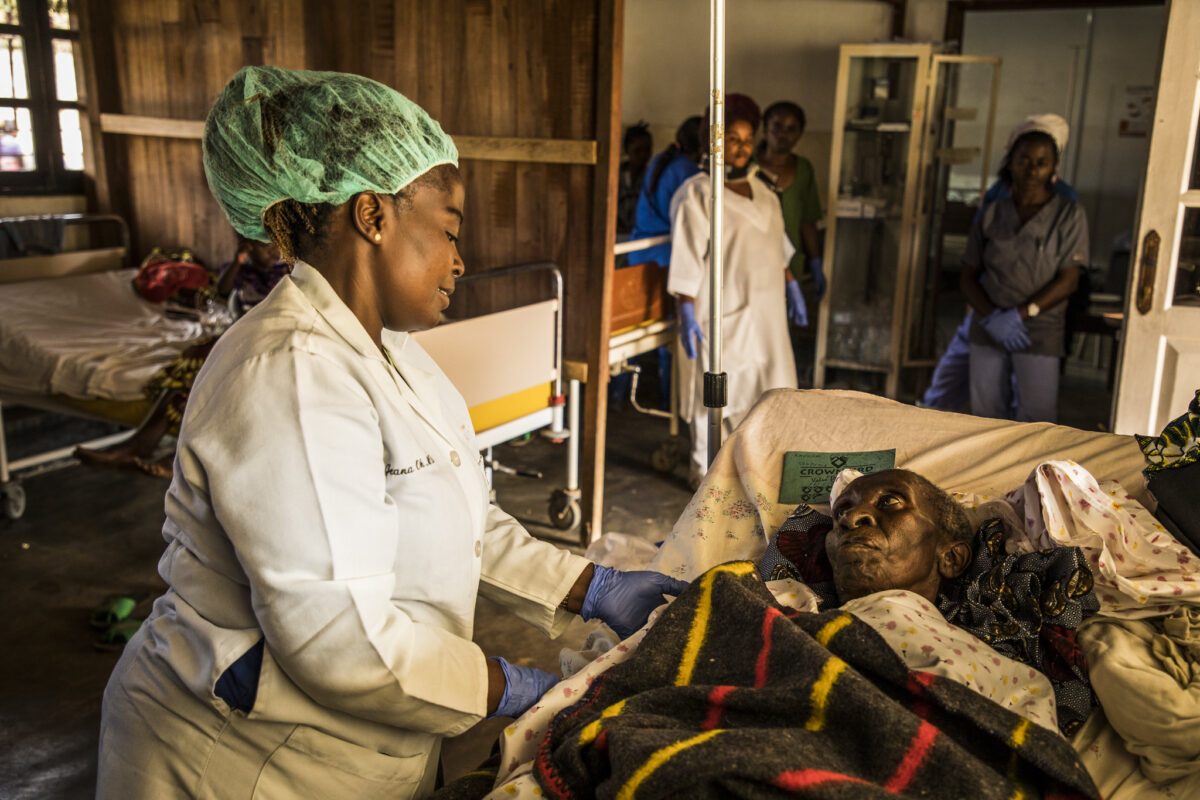
In the early stages of the illness, the person is not very contagious. “But as the person gets progressively ill, the virus multiplies more and more throughout the body, and then anyone who has personal touch contact with that individual becomes sick,” said Dr. William Schaffner, professor of preventive medicine and infectious diseases at the Vanderbilt University School of Medicine.
“If you’re getting sick and caregivers are trying to help you, making you comfortable, helping you eat, helping you with your bodily functions, they can acquire the infection,” said Schaffner in a May 18 interview with American Community Media. “And then by the time you actually get so sick that you pass away, your body essentially becomes a test tube full of the ebola virus, including the skin.”
“And that’s why burial practices are so important. In many cultures, it is very respectful to bathe the departed. This is a sign of respect. But in those activities, the people who are showing the respect can acquire the infection. And then later they can transmit it to others.”
“So burial practices become very, very critical in trying to curtail the spread of this outbreak,” said Schaffner. People are most contagious when they are very sick and after they have passed away.
Dangerous burial practices
The Ebola virus can remain on an infected person’s skin for more than 7 days after a person has died.
Burial practices are rooted in the culture of a community. “In West Africa when we had the Ebola outbreak a few years ago, we had to work with local community leaders to get them to understand that this reverence that they were having for the deceased was actually extraordinarily dangerous,” said Schaffner.
Below are portions of ACoM’s interview with Dr. Schaffner.
Could Ebola rise to pandemic level proportions and how at risk are we in the US?
Well, clearly it is spreading locally in the Congo and now into Uganda. The risk to the rest of the world still is very low.
First of all, a person who would acquired the infection in the Congo or Uganda would have to get on a plane or other mode of transportation. They would come to this country, and become sick and go unrecognized. If we could recognize the infection as we did in the West African circumstance, then we can put people into isolation units and care for them safely and then not spread.
So although there is some risk of transmission now, the general risk is very low.
(Editor’s note: the Centers for Disease Control and Prevention issued a travel ban May 18, restricting entry for non-US citizens who had traveled to the DRC, Uganda, or South Sudan over the past 21 days.)
How does Ebola spread?
The reservoir for these Ebola strains is in the wild and it’s often in African fruit bats. And these bats can eat fruit incompletely and drop it down. And then sometimes children pick it up and munch on that fruit.
Or the fruit bats themselves can be used for food. And in the context of preparing the fruit bat, actually cutting it up, somebody could cut themselves and thereby inoculate themselves and they become the first case.
Then, as they become progressively ill, family and friends will want to take care of them. In that close contact, transmission can occur.
Is Ebola always fatal?
It’s not universally fatal, but if you’re sick, you do need sophisticated medical care. We don’t have an anti Ebola drug, but we do have intensive medical care that can support your body while it fights off the virus.
And what does that care look like?
Intravenous fluids, constant testing to monitor the chemicals in your blood to make sure that they’re balanced, giving you nutrition, making sure we take care of your bodily waste, making sure that while you’re in bed, you don’t develop bed sores, all of that sort of supportive care.
How extensively do you expect to see this outbreak continue?
Well, this outbreak is rural. The roads are not very good. The medical care is somewhat modest. It’s in an area of political turbulence. There’s a fair amount of poverty.
Despite the fact that these are modest circumstances, people are nonetheless mobile. They move. And all of those things together suggest to me that this outbreak may be more intense. It may take quite some time to bring to a close.
I would expect there would be substantial spread over the next days and even weeks.
After the US pullout of the World Health Organization last year, do we face a greater risk for Ebola, and similar illnesses that are now in the developing world?
Our withdrawal from the WHO puts us at arm’s length rather than being close to the WHO. Nonetheless, public health communities around the world are still communicating with each other.
But I personally, of course, would wish that we were closely associated and part of the WHO, working with our international partners on these public health issues.
Given that there’s a low risk of transmission to the US, why should Americans be concerned about Ebola?
Well, we should be concerned for two reasons. One, there’s the humanitarian reason. We wish to reach out and help people who don’t have the resources to deal with this very fatal disease.
And the other is self-interest. What’s over there can be over here in less than 24 hours. So if we can stop what’s over there, it won’t come over here, wherever over here is.
We are linked inextricably with our fellow humans all around the world.