


On the final day of January this year, Kim sat stoically in a Fulton County courtroom, watching Robert Aaron Long and his legal team.
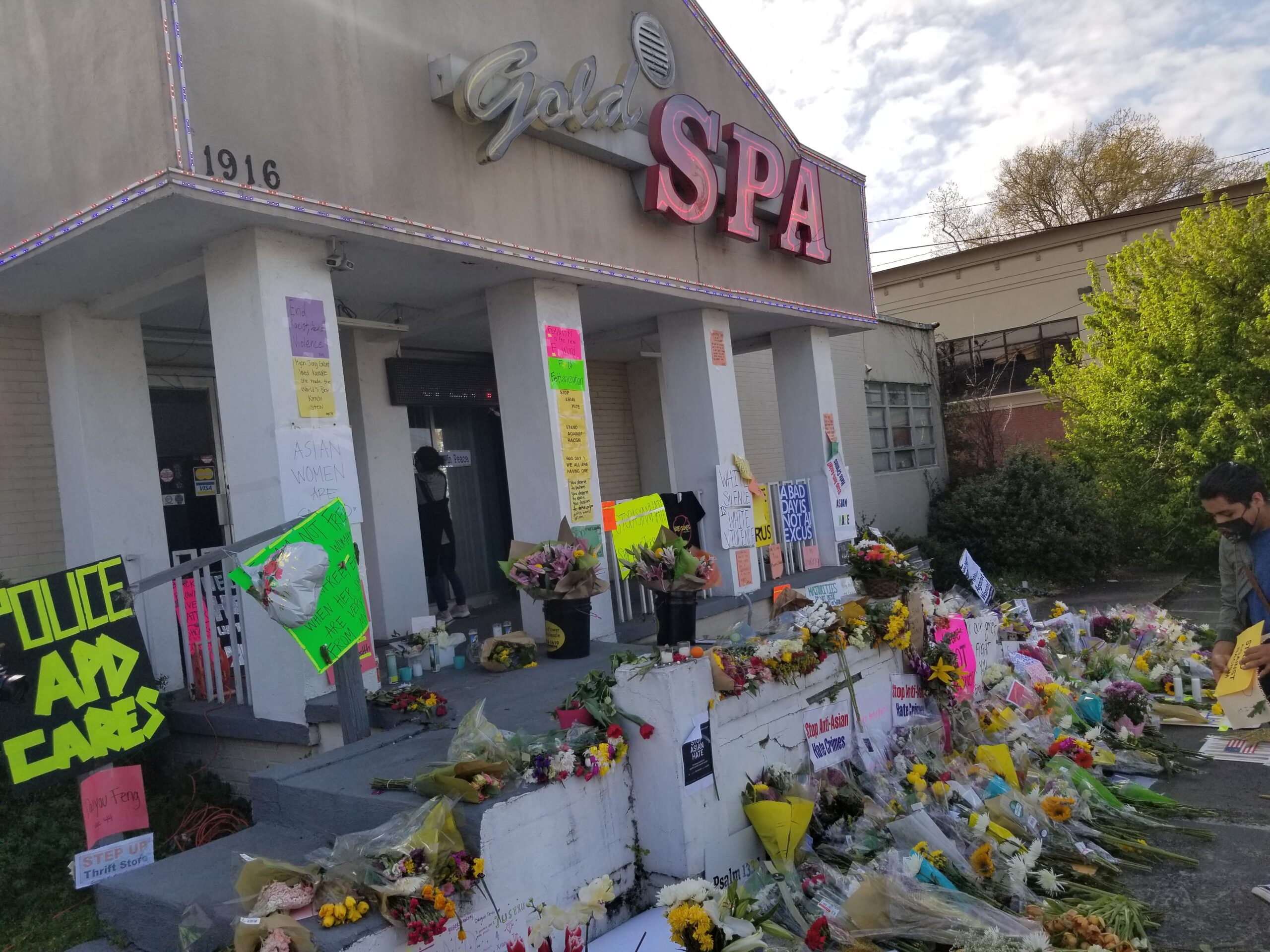
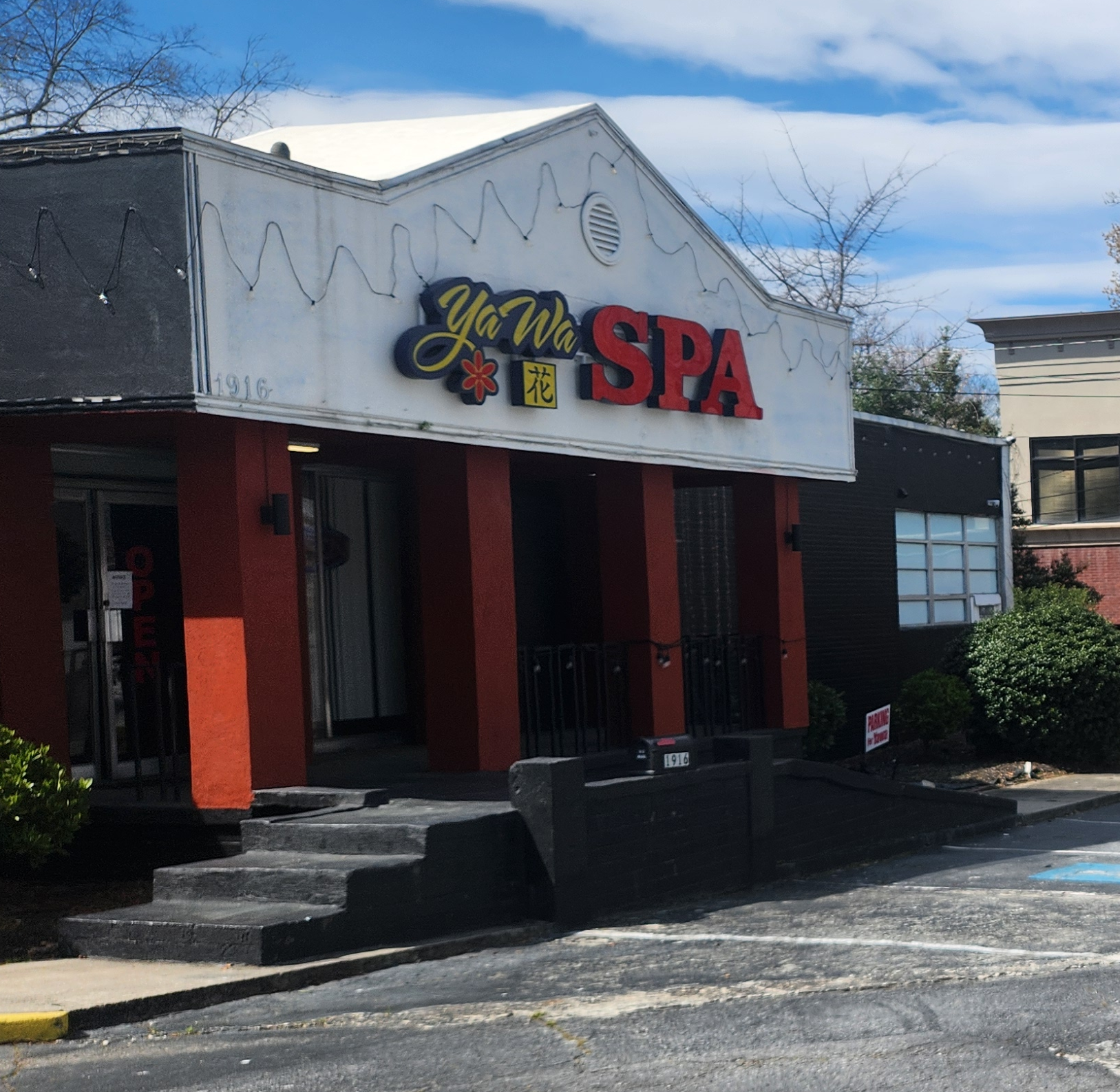
Five years have passed since Long shot and killed eight people at three Atlanta-area spas on March 16, 2021. Six of the victims were women of Asian American and Pacific Islander (AAPI) descent; one was the wife of Kim, whose name has been changed to protect his privacy.
Throughout the five-year legal process, Kim and his son have shared courtroom rows with Long’s parents. Though they have occupied opposite sides of the gallery for half a decade, the two families have never spoken. It was Long’s parents who initially contacted police to report that their son was the gunman.
Now over 70 years old, Kim’s stoicism is beginning to fall under the weight of the delay. Battling a severe bout of the flu during the January hearing, he told Korean observers “At the very least, I want to live long enough to see the end of this endless trial.”
Long was sentenced to life in prison without parole in Cherokee County Court just four months after the 2021 shootings, following a guilty plea for the four murders committed in that jurisdiction.
This case was transferred to Fulton County, where another four deaths of AAPI women occurred. Unlike Cherokee County, Fulton County District Attorney Fani Willis is seeking the death penalty and pursuing hate crime enhancements, which have kept the case in pre-trial hearings for five years.
The proceedings are on track to become one of the longest murder trials in Georgia history, surpassing the four-year Jamie Hood trial and nearing the five-and-a-half-year duration of the Tiffany Moss case.
Kim is not the only relative exhausted by the wait. Michael Webb, whose ex-wife Xiaojie Tan was killed, missed the annual memorial at the Georgia State Capitol for the second consecutive year.
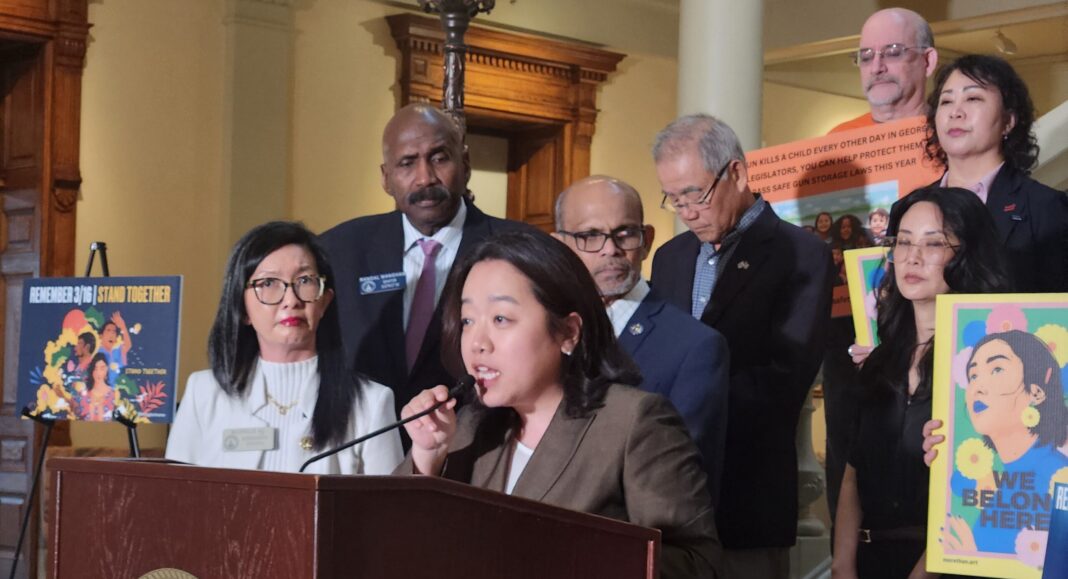
Since 2021, Webb has been a vocal advocate for gun control and hate crime legislation. By 2026, he described the five-year mark as a “painful chapter,” stating in a released message at the fifth anniversary memorial of the Atlanta spa shooting, “My daughter still lives every day without her mother … every year around March 16, the grief returns like it happened yesterday.”
The difficulty of prosecuting hate crimes
The January hearing focused on whether the targeted killing of women of Asian heritage constitutes “domestic terrorism” under Georgia law. The statute requires proof that a person “intended to intimidate the public … while causing significant harm to others.” While the DA argued the murders directed at Asian women show Long’s intent, the defense countered that the law itself is vague and unconstitutional.
The DA’s filings allege that Long “intentionally selected victims because of her actual or perceived race, national origin, sex, and gender” under Georgia’s Hate Crime Law.
The case marks the first major legal test of Georgia’s domestic terrorism and hate crime statutes.
Georgia had no hate crime law for 16 years after the state Supreme Court struck down a 2004 version for being “unconstitutionally vague.” The current hate crime law was passed in 2020, in the wake of the murder of Ahmaud Arbery in Brunswick, Georgia, and a rise in anti-Asian incidents during the COVID-19 pandemic.
It amended portions of the Code that the state Supreme Court previously found unconstitutional by adding specific words “intentionally select any victim because of such victim’s … race, color, religion, national origin, sex, sexual orientation, gender, mental disability, or physical disability.”
However, the evidentiary bar for “specific intent” remains high. Long has denied a racial intent, claiming he was motivated by a “sex addiction” and “wanted to shoot anyone and everyone he saw.” Furthermore, then-Cherokee County District Attorney Shannon Wallace chose to pursue only murder and assault charges against Long and declined to pursue hate crime charges in the 2021 trial.
After the plea deal with Long, Wallace stated that “investigators did not find sufficient evidence to prove a bias-motivated attack beyond a reasonable doubt.” She added that if the case had gone to trial, she intended to portray the case as a bias against gender, but not as a racially motivated attack against Asians.
Unlike Wallace, Willis continues to pursue hate crime charges against Long — marking Georgia’s first such case — stating in a WSB-TV interview that “these crimes were driven by bias against two communities: women and Asian Americans.”
Shifting political support
As the legal battle continues, community leaders and elected officials have voiced deep concerns regarding the lack of institutional understanding and the long-term trauma inflicted on Atlanta’s AAPI community.
Representatives from the White House, along with elected officials at the federal level, have been absent from the annual memorial ceremony since 2025, following the Trump administration’s disbanding of the Biden-launched White House Initiative on Asian Americans, Native Hawaiians, and Pacific Islanders.
Victoria Huynh, one of the organizers of the ceremony, noted “We do not have the same type of attention and support that we used to have.”
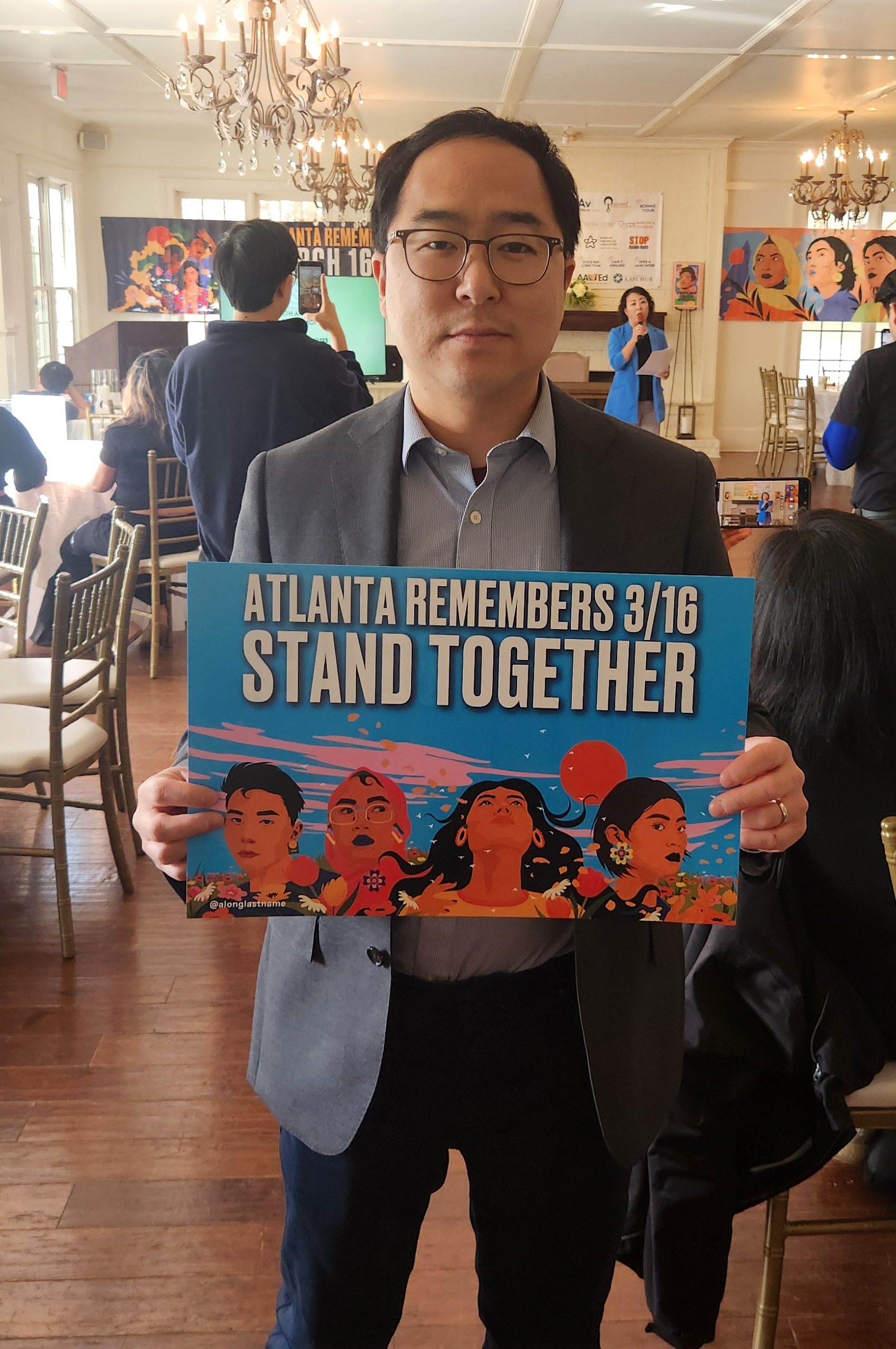
During the fifth anniversary memorial in Duluth, U.S. Senator Andy Kim recalled a dismissive interaction with a colleague shortly after the 2021 shooting that highlighted the disconnect in Washington, D.C.: “A member of Congress approached me and said ‘I am so sorry for the shooting and what is happening to the Asian American community right now. But the pandemic will be over, so don’t worry. It will all go back to normal.’ That really showed just the lack of understanding. We know that there was racism and discrimination before the pandemic, before the shooting.”
Senator Kim, the only federal official to attend the Atlanta memorial in person this year, emphasized that the struggle for justice is part of a broader national crisis: “It shows the challenges that we are facing right now in this country, and the attack upon pluralism and diversity that is happening, including out of the mouths of some of my colleagues, who swore to defend this Constitution.”
An AAPI community in limbo
During this year’s March 16 memorial, Duluth Councilwoman Sarah Park reflected on the heavy emotional toll the delay has taken on the AAPI community, noting that time has not yet brought closure: “I am not sure the community will ever fully heal. It’s still the stage where we are talking about healing or what actually took place. But we wanted this year to be where we can hear from one another and just check in.”
In the same event, Bonnie Youn, a member of the 3/16 Commemoration Committee, spoke to the moral imperative of continuing the fight for a verdict: “The victims cannot speak, their families have sacrificed so much, so we need to be able to speak and give voice to their need for justice, and the need for justice for all of our communities.”
The families of the eight victims expected progress at another inquiry hearing scheduled for March 31, 2026, in Fulton County Court, but the judge canceled it at the last minute. With no new trial date set, the families have no choice but to continue their wait.

