


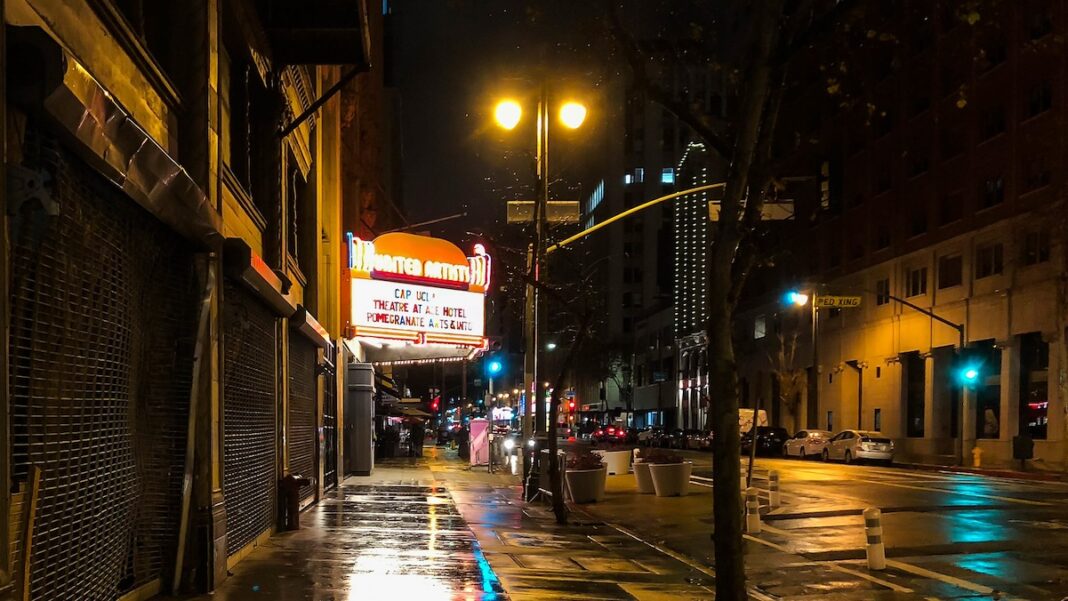
Editor’s note: On June 2 voters in LA will decide whether to approve a ballot measure that, if passed, would increase property assessment fees to pay for maintenance and repair of the city’s aging street light system. Supporters in LA’s Koreatown say improved streetlights enhance crime prevention and the area’s overall safety.
LOS ANGELES — Neon signs light up Koreatown late into the night. But some corners remain in darkness. And where the light fades, concerns about crime begin to grow.
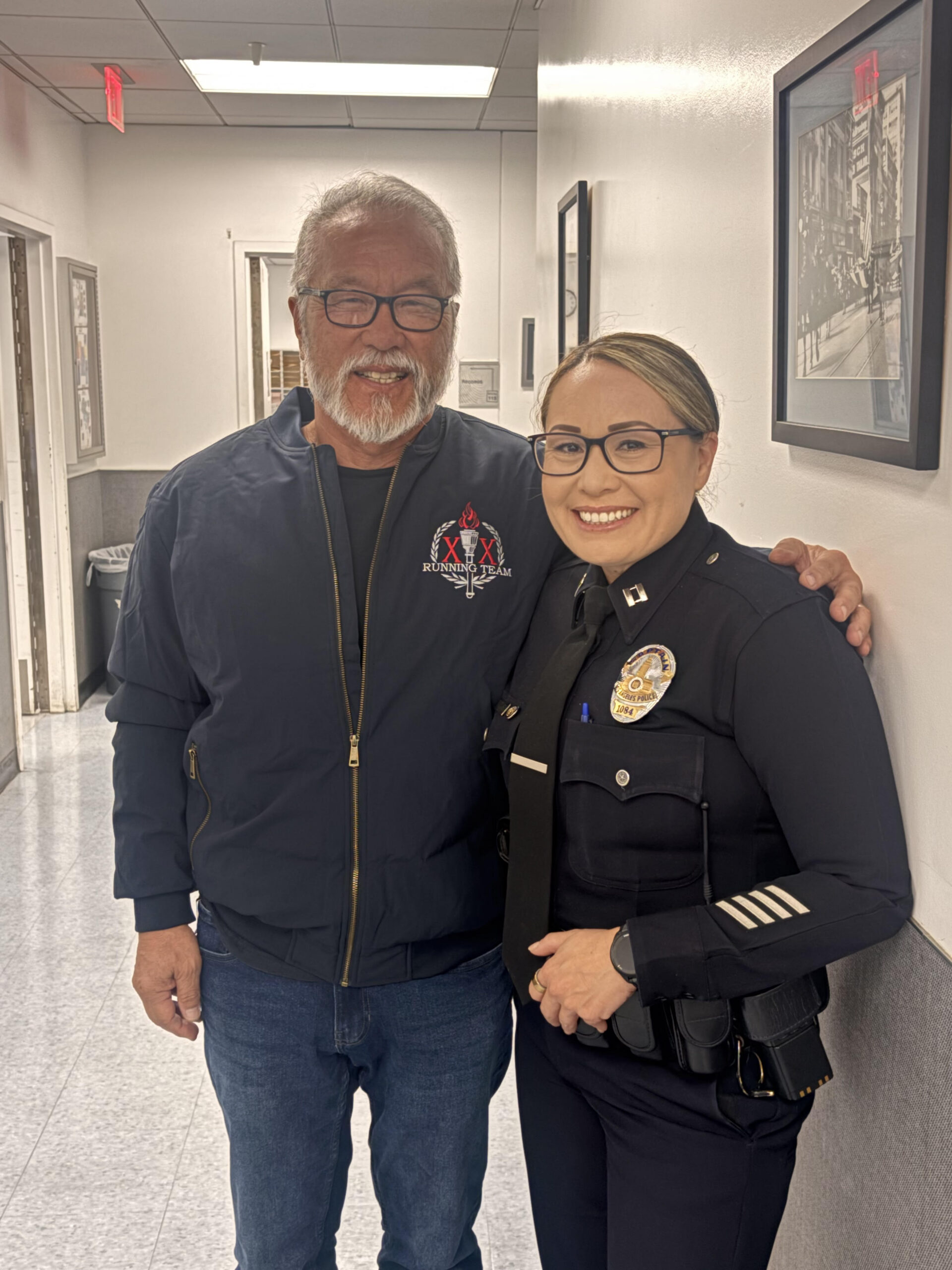
“Dark streets create conditions for crime. Streetlights are essential infrastructure,” said Capt. Rachel Rodriguez of the Los Angeles Police Department’s Olympic Division during a recent press conference.
Standing beside her was Chang Y. Lee, president of the Olympic Police Boosters Association (OBA), a longtime business owner who has witnessed the neighborhood’s changes firsthand.
His perspective is shaped not by statistics alone, but by lived experience.
A turning point
More than three decades ago, during the 1992 Los Angeles riots, Lee’s gas station was set ablaze.
At the time, many Korean American business owners were left to defend their properties without sufficient protection. The city was in turmoil, and Koreatown’s vulnerabilities were laid bare.
“That was when we realized how defenseless we were,” Lee said.
He said the experience changed the course of his life.
It took more than 13 years to rebuild his business, but what stayed with him was a deeper realization — that safety cannot be taken for granted.
From businessman to community leader
Lee immigrated to the United States in 1971 and later earned a degree in chemical engineering from USC. He worked as an engineer at Rocketdyne, contributing to space shuttle engine development, before turning to entrepreneurship.
He went on to operate restaurants, gas stations and construction businesses in Koreatown.
After rebuilding his business following the riots, Lee became active in civic leadership. He served as president of the Los Angeles Korean American Chamber of Commerce (2007–2008), as well as chairman roles within both the chamber and the Korean American Federation of Los Angeles.
Through these roles, he helped bridge the Korean American community with the city and broader mainstream institutions.
He also led projects aimed at strengthening Koreatown’s identity, including streetscape improvements along Olympic Boulevard and the construction of the traditional Korean pavilion, Dawooljung.
The Olympic Gateway project, launched in 2008, was designed to both enhance the neighborhood’s appearance and improve safety. The city invested about $4 million to install Korean-patterned sidewalks, signage and decorative streetlights along Olympic Boulevard to brighten the area. The project remains ongoing in surrounding areas.
Dawooljung, completed in 2006 near Seoul International Park, was built in traditional Korean style using approximately $300,000 raised by the community and $350,000 in city funds. It has since become a visible symbol of Koreatown.
For Lee, these projects were not just about aesthetics — they were tied directly to safety.
Prevention over response
Today, Lee leads the OBA, working closely with law enforcement to improve public safety.
He emphasizes prevention over reaction.
“Bright, visible areas reduce crime,” Lee said, stressing the importance of basic infrastructure like street lighting.
Rodriguez agreed.
“Areas with insufficient lighting are more vulnerable,” she said. “Streetlights are not just utilities — they are a key tool in crime prevention.”
Cameras and new efforts
As part of those efforts, the LAPD Olympic Division, with support from the OBA, is moving forward with a pilot program to install 18 surveillance cameras along Western Avenue.
The association is contributing about $100,000 to the project.
The corridor has long been known as a “track” for prostitution activity.
“We are seeing increased activity, including younger individuals being drawn in through social media,” Rodriguez said.
Officials expect the cameras to help deter crime and provide evidence in investigations.
A changing role for the community
Lee said the role of the community has evolved.
“In the past, we relied entirely on police. Now we have to be part of the solution,” he said.
He added that the association supports law enforcement through equipment, training programs and environmental improvements.
Education as another layer of prevention
Another effort is the “STAR” training program for restaurant owners, recently held at the Olympic station with support from the OBA.
Rodriguez said alcohol-related impairment increases the risk of accidents and crime.
“Education is a key prevention tool,” she said.
Lee said streetlights, cameras and education are all interconnected parts of improving safety.
Lee still reflects on the events of 1992.
Having experienced a moment when safety collapsed, he said his goal today is clear.
“I want Koreatown to be a place where anyone can feel safe,” he said.
Image cropped from its original size. Published under CC License 2.0