


A Spanish national tested positive for the deadly Andes virus — a type of hantavirus — May 25, bringing the total number of known cases over the past month to 13, including 3 dead.
The man, whose name was not released by Spain’s health authorities, was among the 150 passengers and crewmen on the luxury liner MV Hondius. Eighteen Americans were repatriated earlier this month to the Nebraska Quarantine Unit.
Five Americans were allowed to leave quarantine and have returned home. Thirteen Americans still remain quarantined, though they are symptom free, reports the Centers for Disease Control and Prevention.

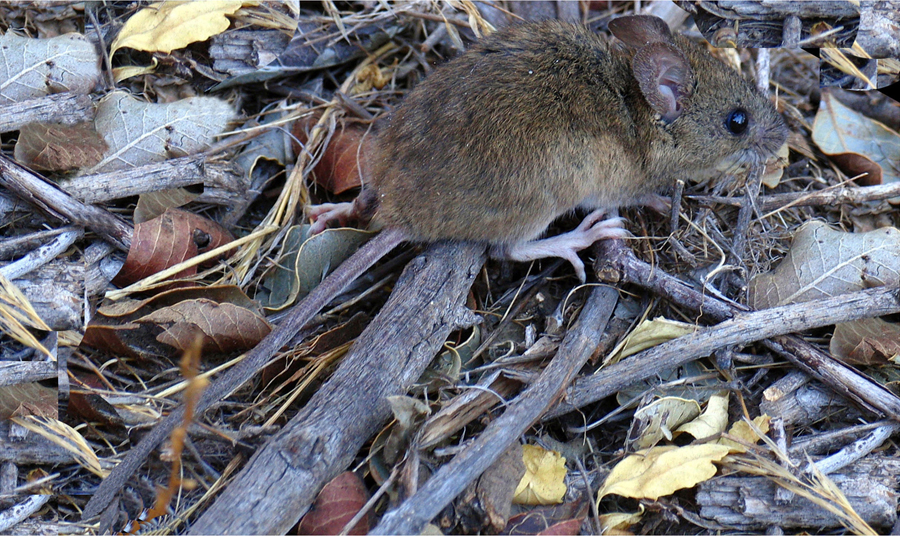
Dr. Peter Chin-Hong, an infectious diseases specialist at the University of California, San Francisco, notes that there are many strains of hantavirus. But only the Andes virus — spread in droppings by the long-tailed pygmy rice rat — can be spread from human to human. People breathe in viral particles stirred up from dried rodent urine, droppings, or saliva. They can then become infectious.
The Andes virus is found in rodents in Argentina and Chile. Passengers on the infected MV Hondius cruise ship were on a nature expedition that began in Ushuaia, Argentina.
Cruise ship conditions, with tight, close quarters, are incubators for a variety of illnesses, including an outbreak of norovirus last month. That gastrointestinal disease hit 12 passengers and crew aboard the National Geographic Sea Bird Cruise in Alaska.
‘Cruise ships have become much safer’
Despite the danger of seaborne illnesses, Chin-Hong told American Community Media he would not discourage people from their vacation plans. “I think people can continue to travel on cruise ships,” he said, advising seafarers to be up to date on all their vaccines.
On board, Chin-Hong advised frequent hand washing with soap and water: hand sanitizer cannot adequately protect against hantavirus or norovirus. He also advised prospective passengers to consider the remoteness of their adventure, and the ability to access offshore hospital care.
“Cruise ships have become much safer since COVID. There’s space and protocols for quarantine and isolation. They do symptom checks before you’re going on board. There’s a medical office on board. But it comes with attendant risks,” he said.
Here are excerpts of the interview with Dr. Peter Chin-Hong, edited for length:
How contagious is hantavirus and how easily does it spread?
So, hantavirus isn’t very contagious. Normally, there are many hantavirus species. But the type that we have in the United States and in California is spread typically from rodent to humans. And that’s what we know about the vast majority of hantavirus types in the world.
Of course, the Andes virus is the exception. It’s not known exactly why it evolved in that way. But in the 30 years that we’ve known about the Andes virus, we know it’s the only hantavirus where a human can spread it to another human.
It is very difficult to spread. You need prolonged, sustained contact at close range with an individual, typically in the setting of intimate contact. So kissing or at close range, in saliva and lung secretions, or even at a party with poor ventilation.
The cruise ship poses a very unique environment. When we think about who is at close contact on a cruise ship, it’s pretty much everybody. They are going to dinner, recreational facilities, and other group activities.
Please describe the early symptoms of a hantavirus infection?
The first phase is very nonspecific: fever, headaches, muscle aches, headaches. And that is followed very quickly by extreme shortness of breath, low blood pressure, and shock where a lot of organs don’t receive any blood flow or oxygen. That second phase can emerge very, very quickly.
So how do we distinguish hantavirus from, say, the cold, the flu, or even Covid-19?
It is very difficult to distinguish in the first phase of the disease because it looks like the flu or any illness.
That’s why for the first patient who died on the MV Hondius, the ship’s captain didn’t really think anything was very special or highly infectious with that patient. Because it looked very nonspecific.
It only took testing of another sick passenger, who was transported South Africa, to identify this as hantavirus. It’s very, very difficult to diagnose because it can look like many other things. It is only an astute clinician who thinks about potential exposure and can link that somebody has been exposed to mouse droppings or rat droppings, and then come down with this illness.
It’s not usually picked up on a routine blood test, for example.
Is hantavirus always fatal?
There’s no vaccine. There’s no antiviral. But there is high-level support with an ECMO machine that can result in 80% survival as opposed to, say, a 40% mortality.
What happens in hantavirus is that it likes these small blood vessels and sits there. Then the body sends a lot of immune cells to try to fight it and you get a lot of inflammation. The blood vessels get very leaky.
So it’s almost like all the contents of the blood go into the lung air spaces. It’s like a wet sponge or like you’re drowning.
The ECMO machine takes the blood out of the human at very high volumes. It gives it oxygen, and puts it back in the human. So access to very high level intensive care units is really the way to support patients until they get better on their own.
But that is also why the mortality rate is so high. Many people who get hantavirus are in rural areas. So they don’t have access to this kind of intensive care unit treatment. And the early symptoms are so nonspecific that people don’t really seek medical attention, even if they had access to it.
Should we be thinking about hantavirus as the next possible pandemic?
No, we should not be thinking about hantavirus as the next pandemic. There are several features that make it not suitable for that kind of scope. The first is that it’s very hard to get hantavirus. You have to really be at close range or in intimate contact settings.
The second reason is that we don’t have that type of rodent in the rest of the world that’s outside of southern Argentina and Chile to sustain the virus, even if it gets into the population.
The third reason is that people get very, very sick very quickly once they get symptoms with hantavirus. So if you think about other pandemic-like diseases like influenza or COVID, there’s a long asymptomatic phase where people can be transmitting. But in the case of hantavirus, typically people get sick very quickly, so they don’t feel well to go around the community and spread infection.
The fourth reason is really what we know of previous outbreaks, particularly the one in late 2018 and 2019 in Southern Argentina where there were 34 cases, 11 deaths. Not everybody spread infection. There were actually only 3 super spreaders that spread more than 75% of the infections. When you took away all the symptomatic people and isolated them, you could control for the infection.
So for all of those reasons, hantavirus is not pandemic potential in terms of an infectious agent as some other infections.
How would you advise people to be safe as they travel on cruise ships this summer?
When you go on the ports of call off the ship, be careful about mosquitoes and rats and other potential exposures. While on the boat, even if you have a mild symptom, you should report it because there may be other people with these symptoms. This is the way in which the crew medical team can determine if it’s something more than an isolated case.
If you see rat droppings or mouse droppings, be very careful. Don’t sweep them up. Open the window for 30 minutes. Wear gloves and pick up the droppings after moistening the paper towel with a solution of bleach if you have it, or at least moistening it. Rat proof as much as possible, including your food.
Then when you come back home, if you have a fever or an illness, please seek medical attention, even if it’s mild.