



MINNEAPOLIS – Across the country migrant communities and their allies are scrambling to find ways to protect themselves in response to the Trump Administration’s sweeping anti-immigrant crackdown.
In Minneapolis, where a massive surge in federal immigration agents last year culminated in the death of two U.S. citizens, advocates say bridging the political divide is key.
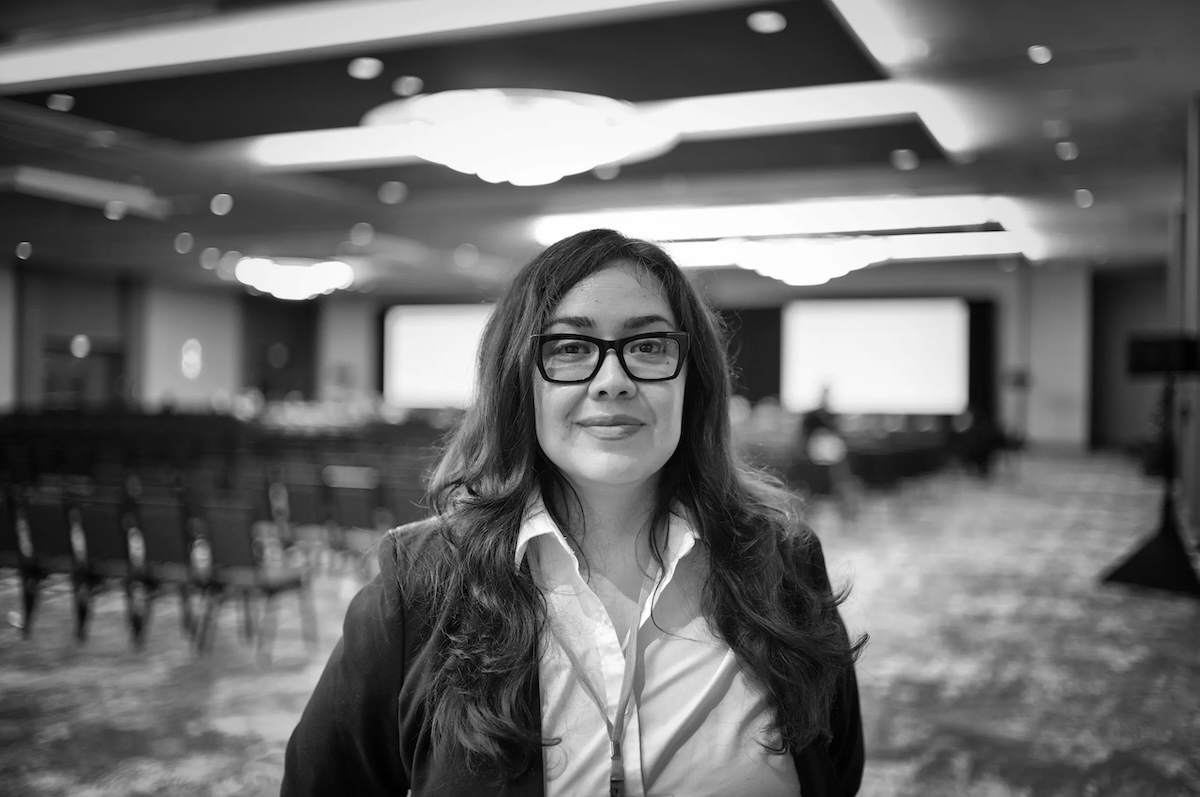
“It’s about organizing different sectors, very different from what you’re used to, and taking that risk,” said Emilia González Ávalos, executive director of the grassroots group Unidos Minnesota, or United Minnesota. “We are organizing more conservative Catholic communities, and we are organizing communities that have different ideas than us.”
The key message, according to González, and one that cuts across otherwise deeply divided opinions on a range of issues, is resisting authoritarianism. “We have a common interest; how can we put our differences aside … and organize around this current situation?”
Born in Mexico City, González has called Minnesota home since first coming to the state at 12 years old. She credits Minnesota’s long tradition of labor and community organizing, and it’s deeply held civic ethos — Minnesota has among the highest voter turnout in the country — as reasons why so many rallied in support of their immigrant neighbors during Operation Metro Surge.
Beginning in December 2025, the government launched what became the largest immigration enforcement operation ever carried out, surging between 3,000 and 4,000 federal agents from Immigration and Customs Enforcement (ICE) and Customs and Border Protection (CBP) first into Minneapolis and St. Paul and later across the state.
Minnesotans quickly rallied in response to the violent tactics employed by ICE and CBP agents. Tensions escalated further after the deaths in January of U.S. citizens Renée Good and Alex Pretti at the hands of federal agents.
“What we have is people,” said González, noting that despite the enormous budget allocated by the federal government reinforcing the administration’s deportation infrastructure, the greatest strength of communities lies in their capacity to organize.
In early June, lawmakers approved a spending bill that funds ICE through the remainder of Donald Trump’s presidency, sending the agency an additional $70 billion over three years with few stipulations on how or when the money should be spent. That comes on top of an additional $70 billion approved last year as part of the GOP’s “Big Beautifull Bill” Act.
According to Gonzaléz, Unidos Minnesota realized soon after the 2024 elections that immigrant communities in the state and across the country would be facing a drastically different and more hostile scenario. In response, the organization launched the Monarca Rapid Response and Legal Observer program, which prepares communities to organize and peacefully respond to immigration enforcement operations.
Organizers say to date the program has reached more than 50,000 people.
Many of the strategies now being implemented in Minnesota originated from experiences shared by advocacy organizations in California, said González. These include the Coalition for Humane Immigrant Rights (CHIRLA), the Service Employees International Union (SEIU), UNITE HERE, and Indigenous groups around the state.
Unidos Minnesota adapted those strategies to the state’s social and demographic realities, she explained. “What we learned to create … we learned from elsewhere,” she said, adding the key to effective organizing is “being adaptable.”
But for González, the work doesn’t end there. Social movements of the past, she said, tended to bring people together who held similar or identical ideological perspectives. This current moment, she added, requires broader alliances.
Unidos Minnesota, for its part, has begun engaging in dialogue with employers it once clashed with in past labor disputes, as well as with conservative religious communities and other sectors that have traditionally been on the opposite side of its causes.
“We have been heavily criticized,” she acknowledged. “But we decided that this was part of our responsibility … choose your risk zone, choose your area outside your comfort zone, and take responsibility for it.”
One of the thorniest divides, González said, are ethnic and religious, a fact that came into stark relief with the targeting of Somali immigrants by the Trump White House. Reports of fraudulent scams involving COVID-19 relief funds in Minnesota allegedly led by Somali criminal rings are part of what led to Operation Metro Surge.
Minnesota is home to the largest Somali diaspora community in the US.
“Who benefits from not organizing with your Somali neighbor who works on the same production line,” queried González. “Who benefits from your anti-Muslim ideas preventing you from forming a relationship with your neighbor? The numbers always favor the authoritarians and the elite.”
González concluded the conversation with a message for communities.
“In the end, people organized are themselves the infrastructure … and that is the most important thing to win a campaign, to win an election, or to achieve the conditions we deserve.”
This story was originally published in Spanish by Peninsula 360 Press. It was produced as part of “Aquí Estamos/Here We Stand,” a collaborative reporting project of American Community Media and community news outlets statewide.