


Everyone Salt + Light works with — whether living on the streets or in one of the organization’s 53 permanent supportive homes — is referred to as a neighbor.
“I think of you as my neighbor too,” said its founder Adrianne Hillman to this reporter. Hillman started the nonprofit in late 2019 in Tulare County, a Central Valley, a region she described as “the heartland of the state,” but one that gets “often passed over for funding and attention.” Her family has been in the county for roughly 120 years, going back to great-grandparents who came from the Azores. She’s never left.
What drove her to found Salt + Light was a board seat at a local faith-based homeless aid nonprofit where she found the approach overly transactional and conditional — “People weren’t getting services if they weren’t following particular rules or believing particular things” — and a trip to Austin, Texas where she saw the Community First! Village, a 51-acre master-planned permanent supportive housing model.

“It was so intoxicating to watch people really live in community with one another,” she said. “I was like, we’re made for this. It just felt like home.”
She brought the model back to the organization she’d been advising in Tulare County. They declined, but “it really wouldn’t let me go,” she said.
Salt + Light and its Neighborhood Village — California’s first master-planned permanent supportive housing community, opened in 2024 — are recipients of this year’s James Irvine Foundation Leadership Award, which carries a $350,000 grant. Hillman leads alongside Erin Garner-Ford, a fellow century-long Tulare County native with 20 years of nonprofit lead experience who became chief strategy officer in 2023.
Their first major test came almost immediately. Garner-Ford first joined as a consultant in February 2020, a month before the COVID-19 pandemic.
With almost no staff, Hillman went to Oregon and bought a used food truck for $10,000, and the two drove it to serve people living on the streets in Tulare, where visible encampments along the rail lines were causing public frustration.
“Naysayers were saying we were keeping people homeless by feeding them,” Hillman said. “A peanut butter and jelly sandwich does not a home make. We were just meeting an immediate suffering need.”
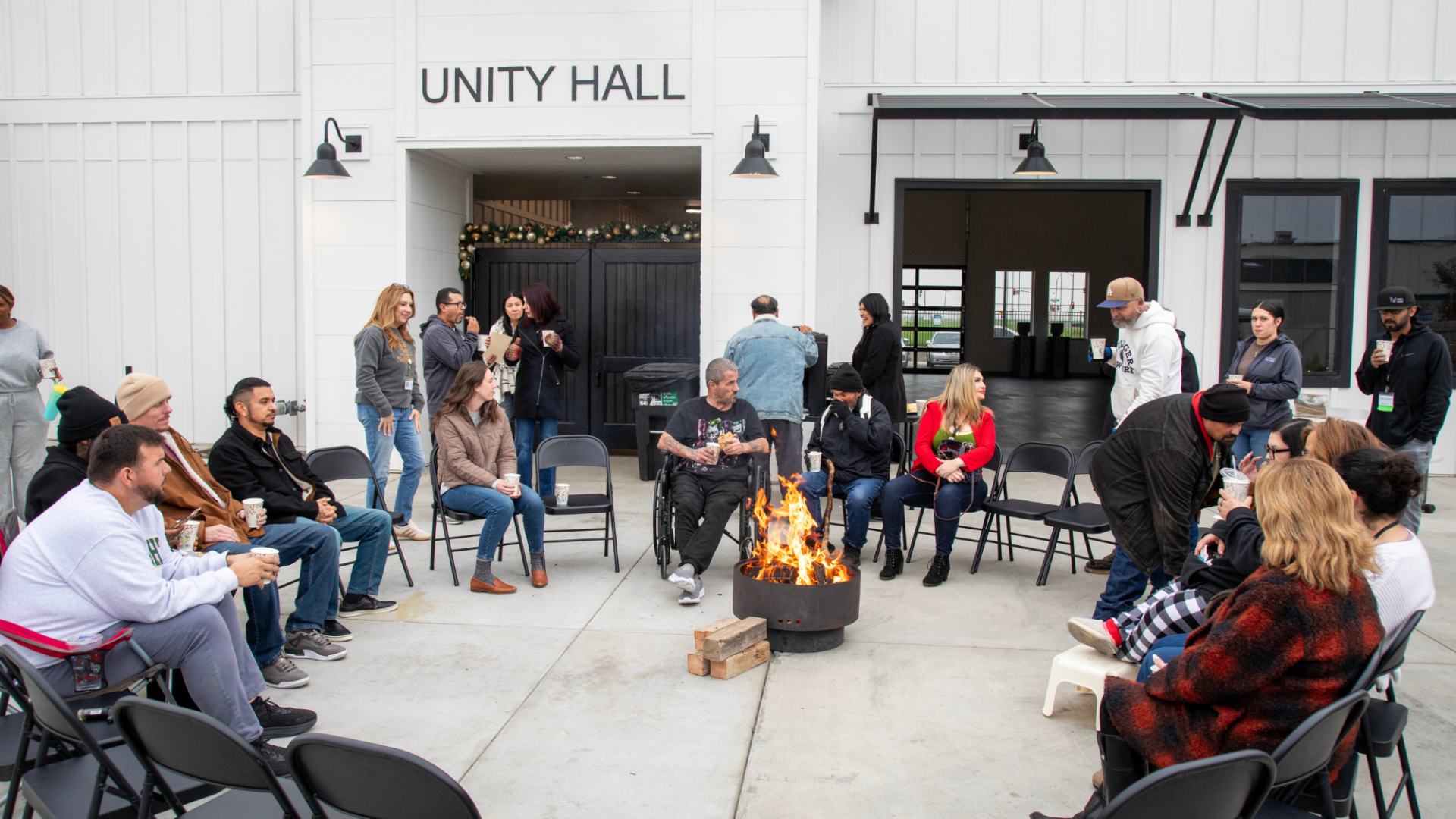
When a state Encampment Resolution Funding grant soon opened, Garner-Ford wrote the application with the city of Tulare.
Seeking nearly $1.6 million, they got under $200,000, but it was enough to stabilize the encampments, service them with case managers and move residents to a safer site, she explained.
“We were the boots on the ground for that effort, from helping the city get that money to implementing that care,” Hillman said. “By the time we built the village, people were cheering for us.”
Between these case services and the village, Salt + Light has housed more than 250 people — roughly 20% of Tulare County’s unhoused population.
Of those, Garner-Ford estimates only three households have returned to homelessness.
“I don’t even know the exact number, because it’s so rare that it sends waves across the agency each time, the loss when someone goes back to the streets, the trauma of starting again from day one,” Hillman said.
Nationally, an estimated 14% of people in permanent supportive housing return to homelessness within a year.
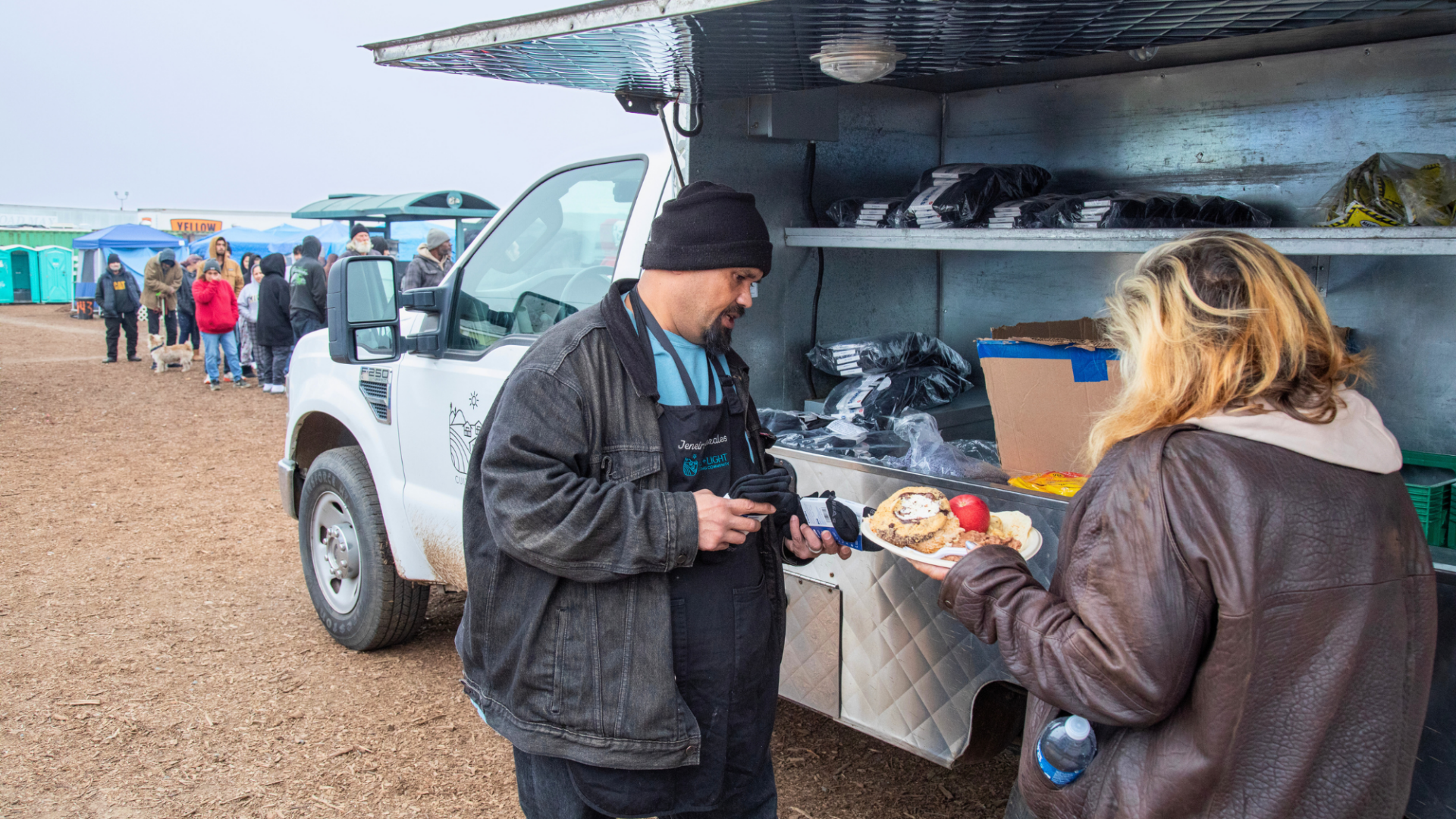
The Neighborhood Village has 53 furnished modular homes on six-and-a-half acres in Goshen, an unincorporated, impoverished part of Tulare County. The village includes a community center, dog park, central park, memorial garden and a market where residents can use currency earned through community work for goods or experiences including trips to Yosemite National Park, Sequoia National Park and the beach — for some, for the first time in their lives.
Hillman designed every house with a front porch.
“They say what killed community in the United States was air conditioning,” she said, “because before that, we’d sit on the front porch with our neighbors.”
Each house comes with job training, financial literacy classes, income opportunities, addiction meetings, weekly free medical care provided by Fresno State’s family nurse practitioner program and transit service from a grant-funded van that takes residents to grocery stores and appointments.
“I thought the Everest I had to climb was to build this village,” said Hillman. “I had no idea that the harder thing was to build a nonprofit, sustain it and create a culture within it where people wanted to live and love and stay. Our insides should match our outsides as an organization.”
Building trust with the surrounding community has required negotiating one institution in particular.
In Tulare County, law enforcement has historically been the default response to mental health crises. When Salt + Light first moved into Goshen under the jurisdiction of the county sheriff’s department, early encounters were difficult.
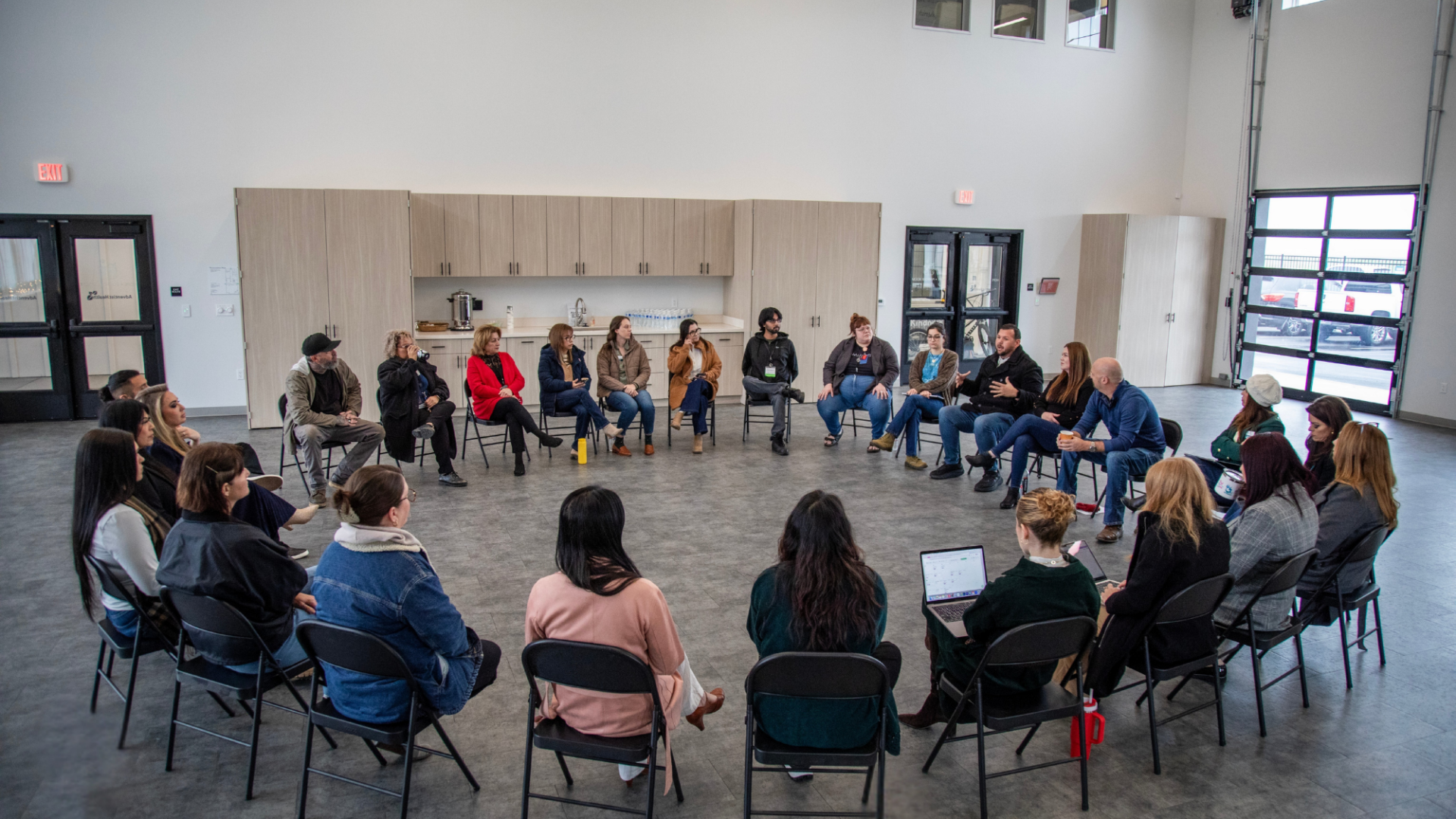
“I’m not going to candy-coat it,” Hillman said. “The only time I’ve ever felt any kind of threat when working on the streets was never from our neighbors, was always from the predators, the pimps and drug dealers that were preying upon our neighbors … but we’ve moved the needle, and I’m proud of that. It has been a very good partnership.”
Garner-Ford described an attitudinal shift with the Sheriff’s Department too.
“They know we’re human-to-human here. They know how much we care, and that’s bridging a really big gap,” she said. “A lot of times, why individuals get into law enforcement in the beginning is to help people. When they come to the village, they see we’re helping people too.”
The Visalia police department, though not in is even closer: Chief Jason Salazar is an original Salt + Light board member still serving today. Salazar has since established one of the state’s first homeless task forces within his department.
He was also the organization’s “public validator” explaining the nonprofit’s work in its Irvine Foundation grantee video, a pairing that Hillman said surprised people: “You don’t always connect humanitarian work and law enforcement.”
The Irvine grant will fund staff training, leadership development and operational costs that are hardest to fundraise for.
“Food’s easy to fund,” Hillman said. “Funding the people to make the food is difficult.”
She plans to invest in programs fortifying her longer-term goal: demonstrating to state and federal funders that human-relational care can stabilize long-term housing, and that affordable housing dollars for the chronically homeless should include wraparound services like health care and food aid.
She also has village expansion planned; future buildings may go multi-story.
“We set out to prove it, and the only way to do that is to fundraise the heck out of it, collect the data, and then go back and say ‘See: front-end money, long-term gain,’” Hillman explained. “Teaching people about how homelessness at all really works, involves convincing them why they should even care about their neighbors experiencing homelessness, rehumanizing people experiencing homelessness.”
“Our passion is our heartbreak,” she added. “Belonging is my heartbreak.”
More information about the James Irvine Awards is available here.
This year’s other five grantees are Celina Alvarez of Housing Works of California; Chris Chatmon of Kingmakers of Oakland; Lian Cheun of Khmer Girls in Action; Darla M. Cooper of the Research and Planning Group for California Community Colleges; and Virgil Moorehead and Amy Mathieson of Two Feathers Native American Family Services.