


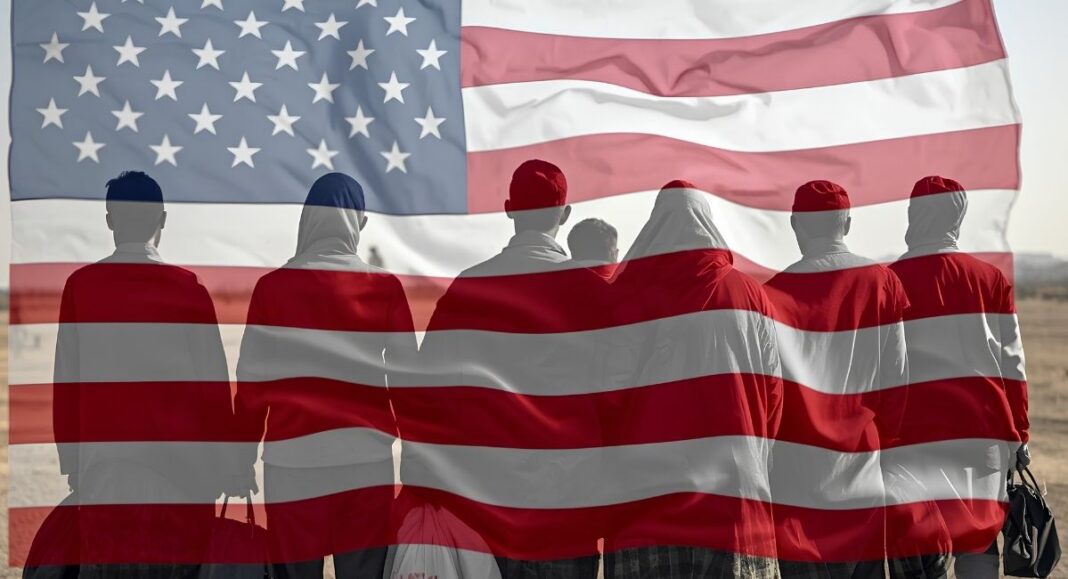
For the estimated 8,000 Afghans in the US whose Temporary Protected Status (TPS) designation was canceled in 2025, an anticipated Supreme Court ruling on the federal program carries a bitter, if not familiar irony.
While the current case centers on whether conditions in Haiti and Syria still warrant continuing protections, its outcome will reverberate far beyond those two countries.
“Many of us supported initiatives that promoted women’s participation, education, and economic opportunities,” said Roya (we are using a pseudonym to protect against possible government reprisals). Now living in California, Roya spent years promoting equity for women in Afghanistan before the Taliban returned to power.
“These activities were visible within our communities,” she said, “and may place some individuals at greater risk if they return to Afghanistan.”
A ‘living hell’
Former Department of Homeland Security (DHS) Secretary Kristi Noem ended Afghanistan’s TPS designation in July of 2025, asserting there were “notable improvements in the security and economic situation” that made return safe.
Afghan TPS holders interviewed for this story disagree.
Mohammad (also a pseudonym) is a father of four in Virginia who worked closely with U.S. forces in Afghanistan before their withdrawal from the country in 2021. After arriving in the US, he applied for a Special Immigrant Visa, reserved for those who provided support to the U.S. government abroad. Five years later, his visa has still not been processed.
The loss of TPS status has also meant the end of his work authorization.
“People need to understand what happens to a family of four, five, or six people when only one or two adults can work, while they also have young children, sick family members, or students to support,” he said. Many Afghans he knows are similarly struggling to survive.
He described Afghans he knows who became long-haul truck drivers while waiting for their immigration cases to move forward. “All of them have since lost their driving jobs and are now confined to their homes. Many work in small stores for very low wages (under the table), around $10 to $13 per hour, working 18, 20, or even more hours.”
He called the situation a “living hell.”
Few legal avenues
On paper, most Afghans in the US would appear to have other pathways to securing legal status — family-based, employer-sponsored, or humanitarian — but those pathways are now largely blocked.
Refugee admissions are currently limited to White South Africans. Moreover, because Afghanistan — described in a recent report as “one of the world’s largest humanitarian crises” — is one of almost 40 countries for which there is a travel ban, USCIS has suspended processing of most paperwork, meaning asylum applications have stalled and frequently been denied. Although a federal court ordered USCIS to resume processing last week, the government is expected to appeal.
For the more than 130,000 Afghans who entered the US under Operation Enduring Welcome and its predecessor, Operation Allies Welcome — intended to help resettle Afghans evacuated following the Taliban’s return to power — life in the US is similarly uncertain.
Most remain in the country on temporary legal grounds, and Operation Enduring Welcome was terminated on the first day of the Trump administration, abandoning tens of thousands of Afghans who had supported U.S. efforts.
Racial animus
For the estimated 330,000 Haitians and 6,000 Syrians in the US under TPS, the Afghan experience is a troubling reminder of what awaits them should SCOTUS rule in the administration’s favor.
Former DHS Secretary Kristi Noem ended TPS designations for eight countries in 2025, arguing — as she did with Afghanistan — that conditions had sufficiently improved.
In the case of Syria and Haiti, Noem’s assertions contrast with the U.S. State Department’s own Level 4 travel advisories, the highest such warnings for any country. The Haiti advisory reads: “Do not travel to Haiti due to kidnapping, crime, terrorist activity, civil unrest, and limited health care.”
A brief submitted to the court by Haitian plaintiffs notes this is more than speculation. “In February, the decapitated bodies of four Haitian women deported from the US several months earlier were found dumped in a river.”
At issue in the case is whether DHS’s termination of TPS protections for Haitians and Syrians violated federal requirements created by Congress when it first enacted the TPS program in 1990 — specifically, that DHS consult with outside agencies with expertise on conditions inside a given country prior to ending TPS designations.
Plaintiffs argue the terminations were arbitrary and based on racial animus, citing President Trump’s own words describing Haiti as a “shithole country.”
A major ruling, but no resolution
A ruling in the case is expected in late June or early July, but immigrant rights advocates say it will not resolve the situation long-term. Should SCOTUS rule in favor of the plaintiffs, the decision would only affirm that TPS terminations must be reasoned and evidence based.
The question remains, however, as to whether DHS will simply comply with flimsy, pro-forma assessments regardless of actual conditions.
Current DHS Secretary Markwayne Mullin, meanwhile, recently testified that he would not commit to complying with court orders because, as he told lawmakers, judges “use their bench for their political opinion.”
Advocates say a protracted advocacy campaign will be needed to pass legislation that more forcefully holds the administration to meaningful compliance with the law.
Afghans, meanwhile, are watching closely.
“The situation has affected the psychological well-being of many [Afghan] veterans and their families who are trying to rebuild their lives in the United States,” said Ali (not his real name), a former member of the Afghan military who fought the Taliban alongside U.S. forces. “Many former military personnel remain at risk because of their previous service.”
Speaking from his home in Texas, he added, “A decision that takes into account current security conditions and the potential consequences of return would provide reassurance to many Afghan families.”
Ed Kissam spent three years in Afghanistan where he supervised a longitudinal survey of student progress in a large USAID-funded accelerated community learning program. He also provided technical support in designing and analyzing data from a survey of rural health care in five of the country’s rural provinces.


Tragic situation. So many Afghans worked alongside US troops, supporting our country. They were promised US residency for themselves and their families. And now, we have subjected them to a “living hell,” as Mohammad stated. We have not done right by the people who supported us.