


GAINESVILLE, Ga. — After months of opposition from residents, local officials and congressional delegates, the Department of Homeland Security (DHS) has abandoned plans to convert two Northeast Georgia warehouses into immigration detention facilities.
DHS announced June 18 that it would withdraw from plans to convert warehouses in the small cities Oakwood and Social Circle into Immigration and Customs Enforcement (ICE) detention facilities that could have held up to 11,600 people combined — a proposal residents said arrived with almost no public input.
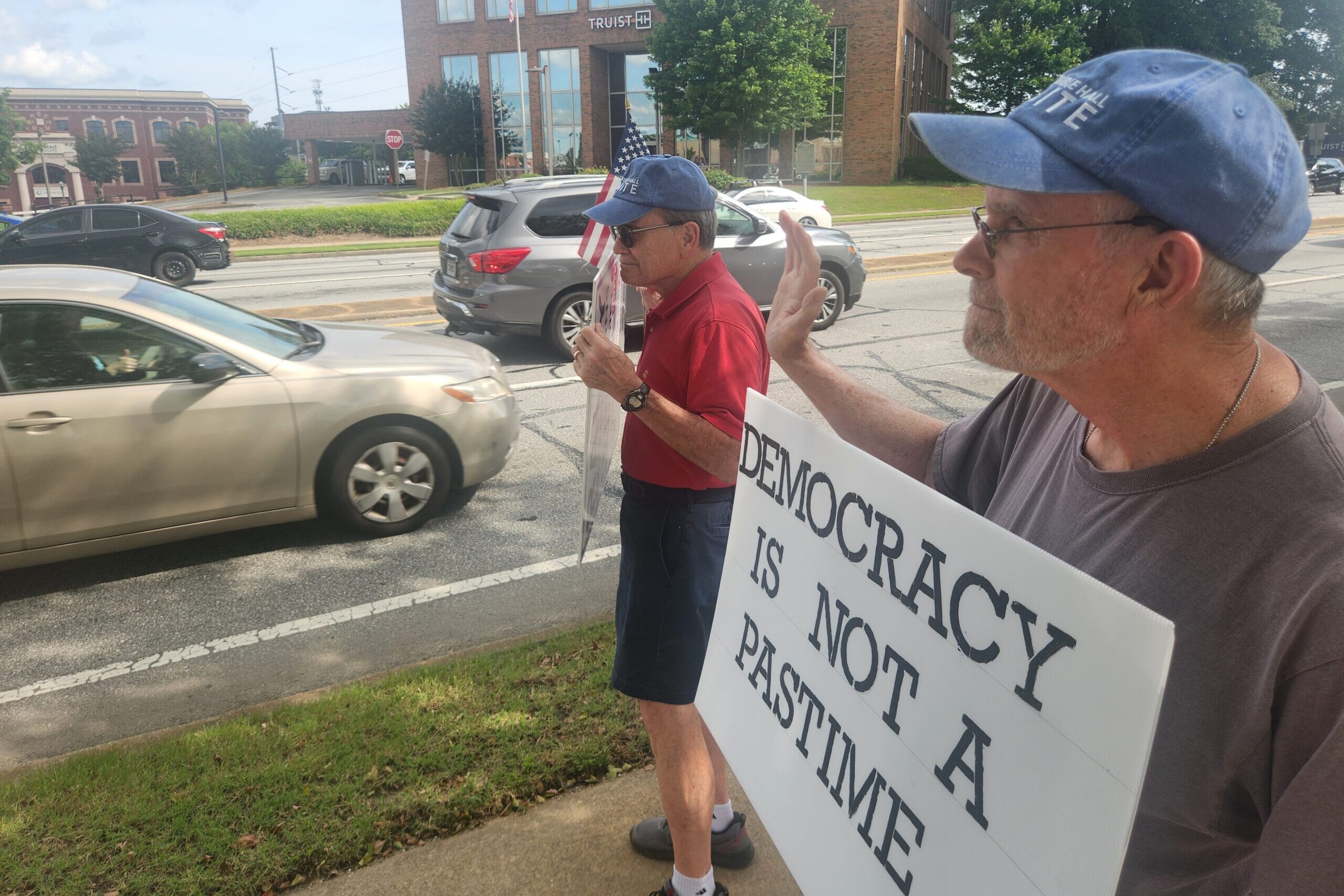
“It was a complete lack of transparency,” said Jim Robinson, a Vietnam War veteran and organizer with local civic engagement group Indivisible Hall, at a June 19 protest at Poultry Park in Gainesville, the Hall County seat. “The contract was executed without public bidding and without a single town hall meeting.”
DHS plans spark local alarm
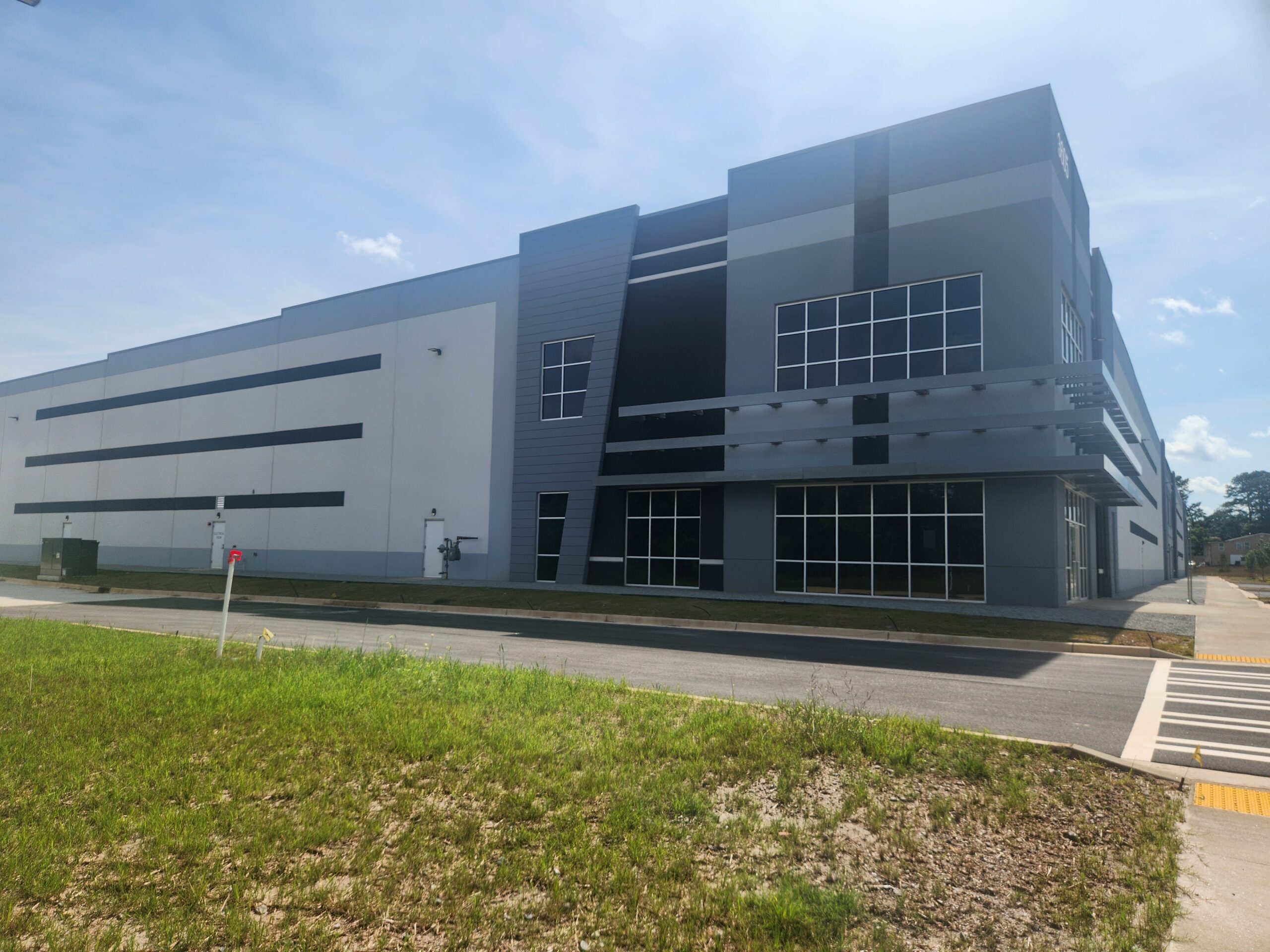
The controversy began in February 2026, when Oakwood and Social Circle officials disclosed that DHS had purchased a $68 million facility in Oakwood for up to 1,600 detainees, and a $128.5 million facility in Social Circle for up to 10,000 detainees.
The scale of the project alarmed both cities.
Social Circle, with a population of roughly 5,000, would have seen its population nearly triple overnight were the facility to open as planned.
Local officials and advocacy groups questioned whether the warehouse facilities were suitable for housing detainees.
“This is not a place for humans to live,” an Indivisible Hall organizer said. “This is a concentration camp.”
Local officials said federal agencies did not communicate with them directly during the property evaluation process.

In Oakwood, ICE officials briefed U.S. Rep. Andrew Clyde, the district’s Republican congressman, who then relayed the information to city officials; in Social Circle, DHS plans reached the city only through U.S. Rep. Mike Collins, whose district includes Walton County.
Both cities released statements expressing dismay at receiving no input or notification during the property evaluation process.
Weeks later, the Hall County Board of Commissioners enacted a 180-day moratorium on high-density developments and detention centers, citing fiscal and resource constraints.
Oakwood officials estimated an immediate loss of more than $771,000 annually in assessed property taxes, since federal facilities are exempt from local taxation.
“The federal government supersedes our local controls,” said Hall County Board of Commissioners Chairman David Gibbs at the start of the controversy in February.
Concerns grow in Georgia’s poultry hub
The proposed locations prompted additional opposition because of their proximity to Gainesville, Hall County’s economic engine — known as the “Poultry Capital of the World.”
Georgia’s poultry industry earns more than any other crop, generating an estimated $28 billion annually for the state economy and creating approximately 88,000 jobs for the sector — supported overwhelmingly by immigrant workers.
Kim, a Korean American worker with years of experience in the local processing plants who asked that her first name not be shared, said “No one but immigrants work in this industry because of the demanding, cold and dangerous conditions. I was terrified when I realized an ICE detention center was coming to my job and my town.”
The community is still recovering from a 2021 liquid nitrogen leak at a Gainesville poultry plant that killed six workers, five of them Latino, and injured at least a dozen others.
The Occupational Safety and Health Administration (OSHA) later concluded the deaths were preventable and cited the companies involved for 59 safety violations and nearly $1 million in penalties.
“Our community does not need ICE,” an Indivisible Hall representative said about the added cost of the prospective warehouses. “Our community needs resources.”
Local and elected officials push back
ICE’s proposed facilities sparked protests from state and local politicians.
“Due to the lack of communication from our federal and state officials, I’m not for this facility,” Hall County Commissioner and district Republican challenger Gregg Poole had said in February. “It will increase taxes for our Hall County citizens, and I do not support it.”
A DHS representative failed to attend a scheduled meeting with Social Circle officials that month.
“City staff and officials remained available for 45 minutes past the scheduled start time; however, the representative we were instructed to contact never returned our calls,” Social Circle officials said in a statement.
On March 9, the Oakwood City Council unanimously adopted a resolution asking DHS to immediately stop all planning, construction and preparation related to the proposed detention facility.
The facility became a flashpoint in Georgia’s May 19 primary.
Clyde defended the Oakwood project, saying that “In addition to assisting ICE’s mission and mass deportations, the forthcoming facility will also bring a major economic investment to the City of Oakwood and surrounding communities.”
Democratic primary candidate Caitlyn Gegen countered that the center would be “a stain on our history,” adding that “We have seen the horrors of ICE detention facilities. The people inside are being subjected to cruel and inhumane conditions.”
Gainesville Mayor Zack Thompson also weighed in, saying “Immigration enforcement is a federal responsibility, and national leaders will set those policies. But when those decisions land in our backyard, the conversation must shift from ideology to implementation … Our communities need more than short statements and predictable talking points.”
Opposition reaches Washington
As local opposition grew, lawmakers in Washington pressed DHS to reconsider the projects.
U.S. Sens. Raphael Warnock and Jon Ossoff toured the sites, pressed DHS in Washington and introduced amendments aimed at cutting off funding for the conversions.
On June 18, DHS withdrew from both projects, saying that it was “moving swiftly to utilize EXISTING detention space with our state and county partners.”
In Social Circle, the news reached city officials through Collins’ office; in Oakwood, through Clyde’s.
“For months, I have been working to stop the construction of a massive 10,000-person ICE facility in Social Circle,” Warnock said. “The power of the people is always more powerful than the people in power.”
“This news proves yet again that public pressure and opposition works,” Ossoff added.
Civil rights and immigrant advocacy groups celebrated the withdrawal as a victory for community organizing.
“This is truly a people’s victory,” Asian Americans Advancing Justice Atlanta said in a statement. “The people of Georgia rose up across racial, political, and generational lines to make it clear that ICE is not welcome in our state!”
At Poultry Park, the mood among organizers remained triumphant but watchful.
Candice, an Indivisible Hall member, noted the mixed reception the group still gets on the ground.
“We come out and get lots of honks” from passing vehicles, she said, “but also still have lots of middle fingers, too.”