


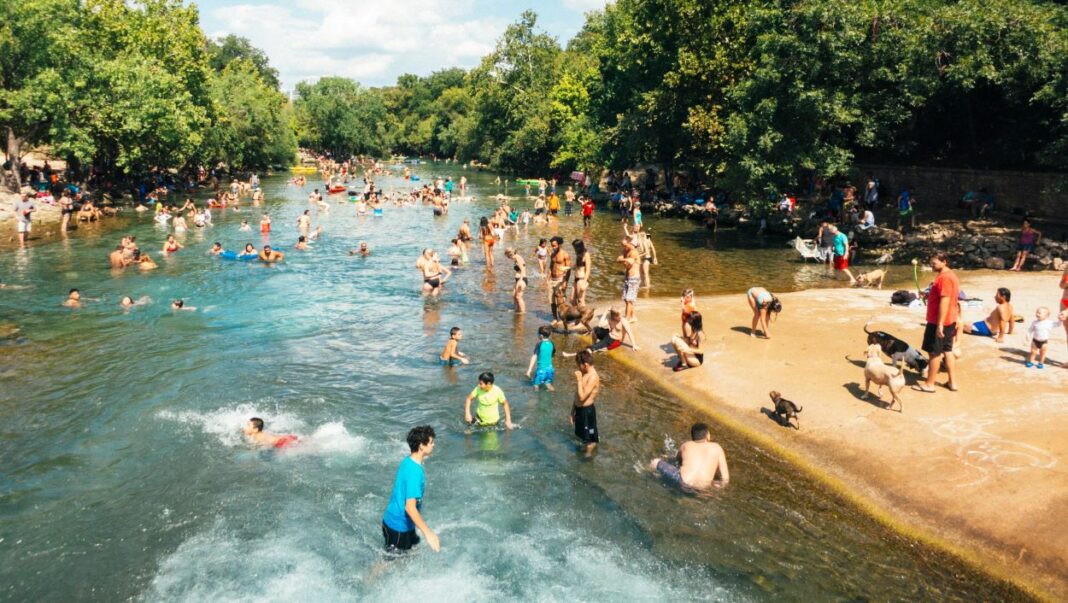
Extreme heat poses the greatest natural risk to human health. These days, there’s plenty of it, and more is on the way.
“This is not your grandmother’s summer,” Marta Segura, chief heat officer and director of climate emergency mobilization for the city of Los Angeles, warned at a July 13 press briefing, the first of three planned to discuss the health risks heat poses to Californians and the resources being marshaled to combat it.
The briefing, hosted by Ethnic Media Services and California’s Office of Community Partnerships and Strategic Communications, came the week after Planet Earth recorded highest-yet daily average temperatures on four consecutive days, from July 3-6.
Segura was joined by UCLA Professor V. Kelly Turner, Dr. Lucia Abascal of the state Department of Public Health, Dr. Kimberly Chang, of Asian Health Services and Sandra Young, founder of the Mixteco Indigenous Community Organizing Project.
Extreme Heat Can Kill
Two days before, OCPSC had launched a $20 million “Heat Ready California” campaign to help people stay safe from the deadly effects of extreme heat.
Turner spoke of how urban development has created “heat islands” where asphalt predominates over shade and green space.
Something as simple as a shade structure, she said — strategically placed tree plantings, awnings, or bus shelters — can reduce people’s body heat temperatures by tens of degrees.
But currently, she said, “most Californians are effectively living in shade deserts.”
Less Asphalt, More Shade
It gets worse according to where you live. For example, research conducted in Pacoima, in Los Angeles’ San Fernando Valley, found that less than 10% of the space at the schools provided shade.
“Play yards need less asphalt and more shade,” she said.
Other research has shown that some types of dwellings, such as mobile homes, even when air-conditioned, can’t always be sufficiently cooled.
She recommended “shade audits” for those communities that haven’t done them yet, as well as rental unit regulation not just for sufficient protection against cold, but for heat as well. And then, she mentioned, 40% of heat-related deaths currently are among those with no housing at all.
UCLA’s Luskin Center for Innovation, where she works, has published two extensive reports, Identifying and Addressing Heat Inequities in the City of Los Angeles, and Turning Down the Heat that detail disparities across Los Angeles’s communities that affect hot weather health, and recommendations for improvements.
Stay Cool
“Of all the natural disasters, heat is the main killer,” Abascal said. “It’s very, very important for everyone to understand the dangers of heat.”
“Stay cool,” she said. For those who can’t afford to run their home air conditioning or don’t have any, she recommended libraries, malls or cooling centers. A list of these and other resources is available by county at the “Heat Ready California” website.
Secondly: “Stay hydrated!” Especially high-risk populations such as those with disabilities, the young, the old, and pregnant women.
But “even somebody that’s healthy can suffer from heat stroke,” she said. Dizziness, leg cramps, disorientation are three warning signs.
Shade Structures
Neighborhoods that have been short-changed in access to nearby public parks and green spaces that might offer shade, or whose residents have to travel farther to get health care, also have higher incidence of heat-related health problems.
“Los Angeles wants to take the lead by investing in those areas that have been historically neglected,” Segura said. As part of the “Heat Relief for L.A.” campaign, she said, all 73 libraries will be open, along with 10 cooling centers.
Among the efforts she advocated are accelerating current plans to add shade structures to bus stops in communities that rely on public transit and finding ways to make air conditioning more affordable to low-income users.
Communities already impacted by pollution, she noted, are also additionally vulnerable, because “heat exacerbates pollution.”
Workers, she said, should be aware of their rights to take breaks and ensure they stay hydrated.
Workers’ Rights
Sandra Young also addressed the circumstances of agricultural workers, acknowledging that most are undocumented and therefore less likely to challenge employers about substandard working conditions.
Often, even when water is available, it’s too far from where the workers are to make it easily accessible without risking heat exhaustion and lost earnings.
She called for on-site advocacy for adequate working conditions and a health care system that goes beyond being service providers to being advocates for their clients.
“Our health care system still has a long way to go to meet the needs of the farmworker community,” she said.
Asian American Elders Are Vulnerable
Dr. Kimberly Chang addressed some issues for AAPI communities in Oakland, where she works, and in the Central Valley, where in a single decade there was a 53% increase in heat-related emergency department visits and hundreds of deaths.
In Oakland, despite the relatively temperate climate, her clients too often live in crowded apartments, without elevators. Older adults, who typically have lost some of their innate ability to regulate their body temperatures, need to be mindful of what they’re wearing – Bay Area residents often dress in layers to protect them from cold – and wear more white instead of black, she said.
In general, looser, lightweight clothing, and deploying fans are also simple but effective strategies, she said.
“People don’t like to be told what to do,” Segura said, in closing. But, “prepare in advance. It’s a long-term game.”