


A column in Inquirer.net highlights the Philippines’ recent pivot on China, after years of cozy relations between Beijing and Manila under former Philippine President Rodrigo Duterte.
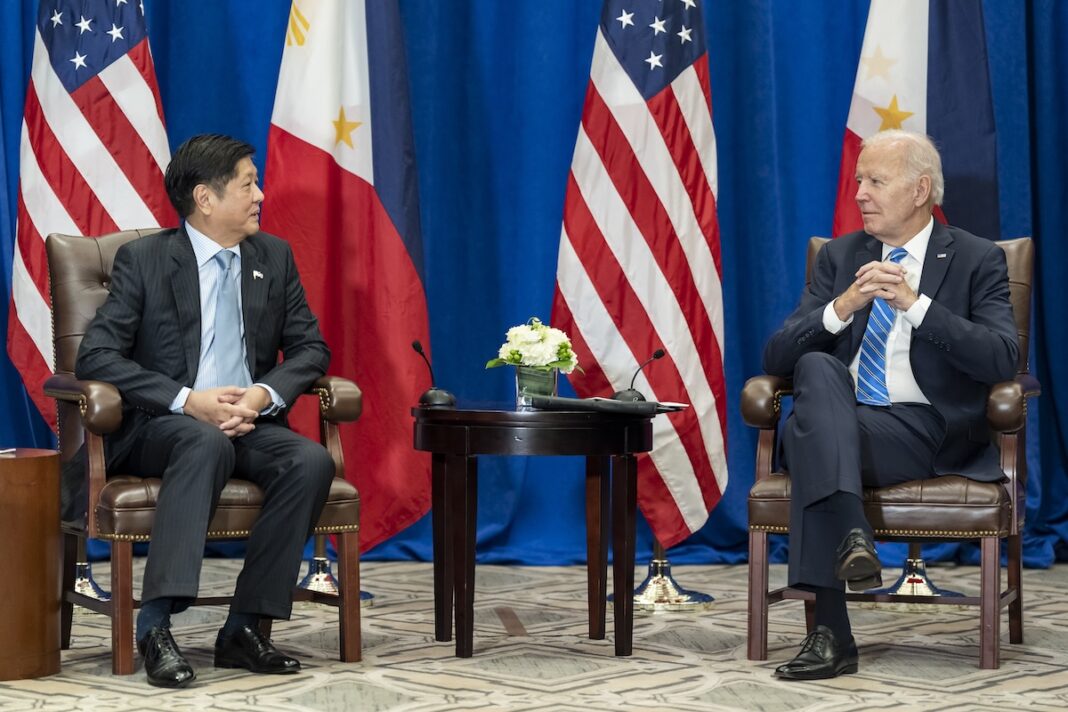
Manila’s shift towards a more combative posture toward Beijing under current President Bongbong Marcos comes as leaders of Japan and the Philippines are in Washington DC for a trilateral meeting with President Biden.
The gathering is part of a broader effort aimed at countering China’s growing military presence in the East and Southeast Asia region and comes amid escalating tensions over disputed waters shared by China and the Philippines.
“Countless government officials compete to criticize China’s latest bullying acts in our waters,” writes Richard Heydarian. “This is in stark contrast to the six years of the Rodrigo Duterte presidency when we had to endure either defeatist rhetoric by no less than the commander in chief…”
Under the current government, Heydarian continues, “Even senior allies of the former president have joined the patriotic chorus,” appearing at public events with shirts claiming Philippine sovereignty over islands in the West Philippine Sea and issuing statements condemning Beijing for its “bullying” of Philippine coast guard vessels.
Tensions between Beijing and Manila have been brewing for years over a string of islands between the two nations, with increasingly hostile maritime encounters raising fears of a potential conflict. A 2016 ruling by the Permanent Court of Arbitration in the Hague found Beijing’s claims over the islands had no basis in international law. Beijing has rejected the ruling and continues to press its claims.
Heydarian offers a note of cautious optimism over the emerging trilateral alliance, and pulls no punches in laying blame on Duterte for having “sabotaged our traditional alliances to please his patrons in Zhongnanhai,” a reference to the housing compound for leaders of China’s ruling Communist Party.
But he also notes that while countries in the region, including former Cold War adversary Vietnam, have enjoyed growing bi-lateral trade and investment with the US, the Philippines has yet to see such benefits.
“Mr. Marcos must make sure that the new trilateral grouping will not mean just more American (and, potentially, even Japanese) boots and bases in the Philippines,” he argues. “In particular, the JAPHUS alliance should serve as a springboard for comprehensive strategic cooperation, including the expansion of quality investments as well as high-end defense aid to the Philippines.”
Heydarian points out that erstwhile enemy Vietnam’s US trade surplus is 10 times that of the Philippines, calling current levels of American investment in the country “pathetic.”
Tighter security cooperation, he adds, should not “limit our room for maneuver” and that rather than bending to Washington’s will, Manila must find a way to “leverage our security partnerships for our national interest.”
Read the full story at The Inquirer.net