


The first time I filled out a college application, I checked the “Asian” box.
In 1998, as a high school student living in Saudi Arabia preparing to study in California, that seemed logical. A year later while studying at a Pasadena college, I realized America didn’t see me that way.
I am an American of Palestinian and Armenian origin born in Saudi Arabia. None of the boxes fit. “Asian” made sense geographically. Saudi Arabia, Palestine, and Armenia are all on the Asian continent. However, the U.S. Census Bureau classifies people like me as “white.”
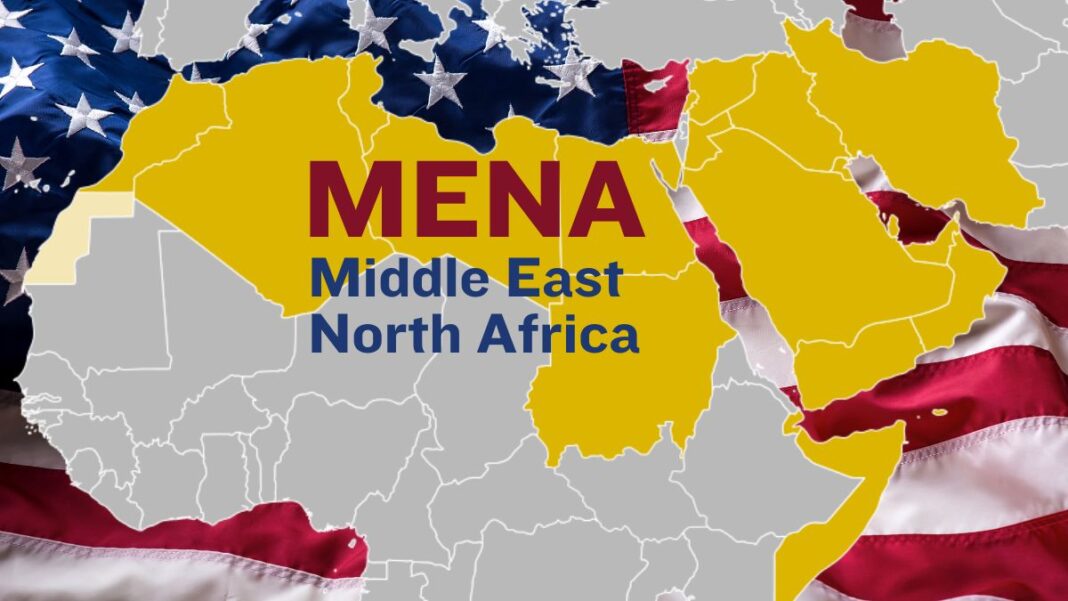
That bureaucratic label has never reflected our reality. For decades, Arab Americans and Middle Eastern and North African (MENA) communities have been erased in government data. Officially, we are “white,” but our lived experiences tell another story.
After 9/11, the gap between classification and reality became impossible to ignore. Hate crimes surged. Employment discrimination grew. The federal government implemented the NSEERS “Muslim registry,” targeting men from Muslim-majority countries for humiliating interrogations. Though I was a legal permanent resident and exempt, I didn’t dare travel abroad for years. Many of my community members weren’t so fortunate. Some have been harassed and a few deported.
White Americans have never had to endure government programs designed to profile them for who they are. Yet Arab Americans, officially considered “white,” were subjected to this treatment.
Later, when I became active in advocacy work, lawmakers often asked me: How many Arab Americans live in this district? I could not give them a clear answer, because no reliable data exists. Even in Anaheim’s Little Arabia, home to one of the largest Arab American communities in the state, we only have rough estimates.
In 2016, the Census Bureau tested a MENA category. We were hopeful. But in 2018, the Trump administration killed it. Our communities remained invisible.
That invisibility has consequences. Without data, discrimination is harder to prove. Arab-owned businesses miss out on access to state and federal support. Health disparities affecting our communities go unaddressed. Students are lumped into categories that erase their unique needs. Invisibility means inequity.
The COVID-19 pandemic made this data gap painfully clear. Without a MENA category, public health agencies lacked reliable information on how the virus impacted Arab and MENA communities. Infection rates, hospitalizations, vaccination rates, and economic fallout could not be tracked accurately, leaving policymakers unable to address the specific needs of these communities. Health disparities went unnoticed and families who were hit hardest remained largely invisible in the state’s response.
This year, California has a chance to change that. State lawmakers passed AB-91, the MENA Inclusion Act, which would require state agencies to collect data on MENA communities. For the first time, California’s 1 million-plus Arab and MENA residents could be accurately counted in education, health, housing, and economic data.
AB-91 is about more than numbers. It is about fairness, representation, and dignity. California prides itself on leading the nation in equity and inclusion. Signing AB-91 would ensure that MENA Californians are no longer invisible in the state’s data, and by extension, in its policies.
Governor Gavin Newsom now has the bill on his desk. The choice is simple: sign AB-91 and make California a national leader in recognizing the voices and needs of MENA communities or allow this cycle of erasure to continue.
For too long, we’ve been forced to check boxes that don’t reflect who we are. Governor Newsom, it’s time to let us be counted as we truly are.
Rashad Al-Dabbagh is the Founder and Executive Director of the Arab American Civic Council

