

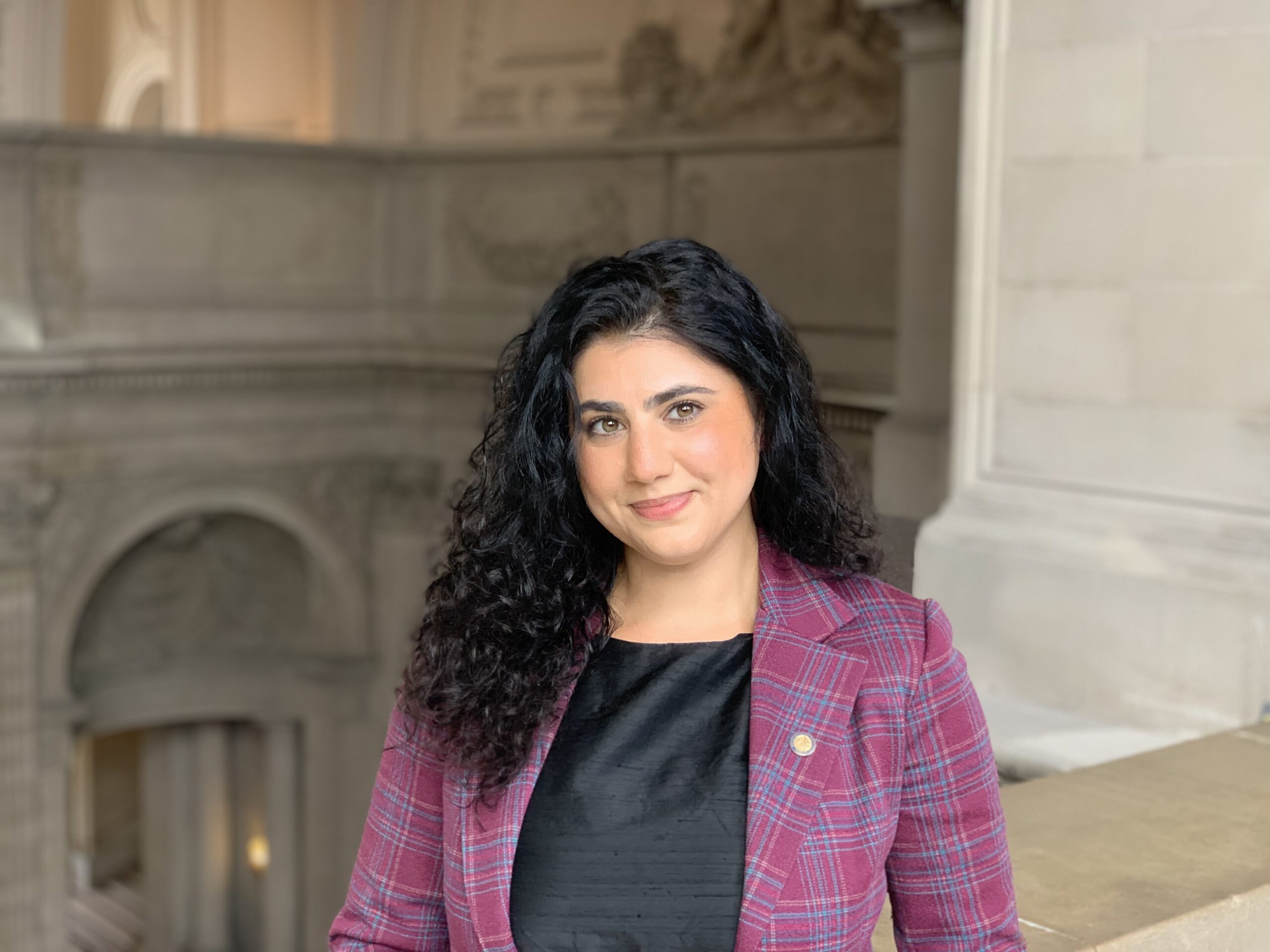
The corner stores, international grocers, and family-run shops that serve San Francisco’s diverse communities are facing mounting economic pressures, from the Trump Administration’s tariff war to a slew of new and outdated municipal ordinances. Arab grocers in neighborhoods like the Tenderloin say they are being hit especially hard after The City imposed a curfew on corner stores in the area as part of a crackdown on neighborhood crime. Miriam Zouzounis is with the Arabic American Grocers Association. She spoke to ACoM about how association members are weathering this current storm. (This interview has been edited for length and clarity.)
Hear full interview | SoundOnSight Podcast on Spotify and Apple:
SoundOnSight IS A NEW PODCAST INITIATIVE BY ACoM. CHECK OUT MORE EPISODES HERE.
A lot of corner stores in neighborhoods like the Tenderloin—home to a sizable Arab community—rely on imports. How are they responding to the new tariffs imposed by the Trump Administration?
The Neighborhood Business Alliance and Arab Grocers Association are developing a cumulative cost benefit analysis for small businesses buying goods. We are interviewing a sample of our trade association members to identify categories of goods that are most affected [by the tariffs]. Some of the product areas that we’re looking into are wine, produce, and ethnic goods, meaning spices and that sort of thing. Ultimately, we’re trying to mirror what the big box stores do, which is to buy items together so that we can get better prices.
What is the precedent for this strategy? And who’s involved?
The Arab American Grocers Association is our reference point. The association came into formation in the context of the farm worker strike in the Central Valley in the 70s’ in California. Latino, Filipino and Arab farm workers working together on the front lines called for a boycott up the supply chain for Gallo wine, lettuce, and grapes, and it reached the inner cities. Many of the corner store owners at that time were from the Arab world and they said very quickly, don’t boycott us, let us join the picket line. Four hundred plus San Francisco Bay Area businesses signed a letter that said, we hereby hold the picket line for this strike. Soon after, association members decided to share a warehouse and buy together from vendors that they all shared.
More recently, during COVID we built strong mutual aid networks… with Bayview Hunters Point community advocates in District 10 and the Tenderloin community. That was one of our pilots of collective buying. We were able to buy masks and sanitizer… as an organization and as a trade association. Our members paid dues, and we were able to supply free stuff to the community. The network was so effective, the city and state started funding it. What began as mutual aid evolved to where we were providing produce bags and boxes for pickup at corner stores free for the community.
The tariffs come as San Francisco implements policies, including an anti-loitering ordinance that have hit your members particularly hard. What are they saying?
From my role in the Small Business Commission, I’ve seen how San Francisco passes these big picture health or environmental policies that in practice turn out to be very anti-working class. And many of these came just as U.S. policy abroad drove new waves of immigrants, of refugees into our communities, increasing demand. For us, it’s personal. When the city unequally applies laws against Arab, South Asian, African, and Asian-owned businesses, it contributes to the othering and vilification of these establishments. So part of our role as a community merchant association has been advocacy, focusing on policy literacy, on providing case studies of what happens at the retail level when these laws get implemented.
A big talking point for SF Mayor Daniel Lurie is The City’s economic revitalization, part of which involves making it easier to do business here. It sounds like you don’t see that happening.
We did some of the groundwork for what Mayor Lurie is now implementing. He had this giant fee streamlining proposal that just went through and a lot of the fees that we identified were included. So the city is adjusting a little bit. But the takeaway is clear. We have put a business curfew on corner stores in the Tenderloin where they cannot sell goods, food, after midnight or before 6 a.m. We’re blaming these businesses for the street conditions and the illegal activities outside. A lot of times these are businesses that have food stamp licenses. We basically created a food access issue. The City did something similar during COVID and we got it ended. Now they are again sending cops into corner stores at 8 p.m. Can you imagine neighborhoods that don’t have big grocery stores like the Bayview and the Tenderloin cut off from food and diapers at 8p.m.?
One owner was prepping his business before opening to the public to receive a delivery. The cops were waiting outside and gave him a $1000 violation for breaking the curfew. The inequity is plain to see. We’re criminalizing the retailers that serve poor and working people in the Tenderloin as opposed to fixing the systemic issues. They’re now threatening to expand that retail closure pilot to the 6th Street corridor, South of Market and Citywide. Meanwhile, you have, as you said, entertainment zones being expanded, open container allowances, the time of which you can serve alcohol on-premise extended to 4 a.m. On-premise being bars and restaurants, off-premise being corner stores, retailers.
So there you have it. It’s clearly not about improving business and improving neighborhoods all around. It’s catering to downtown and the financial district and certain types of businesses while corner stores are sanctioned. Our message is clear: if The City is going to enforce new sanctions on the retail sector, there needs to be some mitigation.
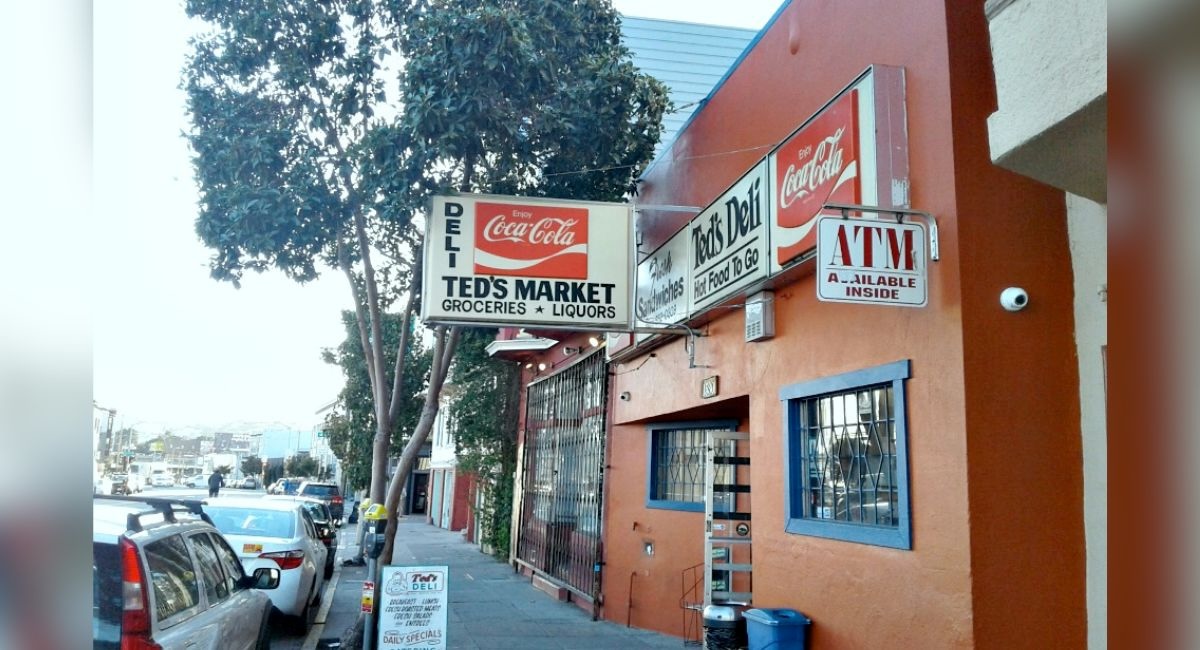
In addition to her role with the Arab American Grocers Association, Miriam Zouzounis is also on the SF Small Business Commission and the Neighborhood Business Alliance. Her family has run the corner store and deli, Ted’s Market in the SoMa neighborhood since 1967. Zouzounis is also an importer with Terra Sancta Trading Company, specializing in wine and spirits from the Middle East.