


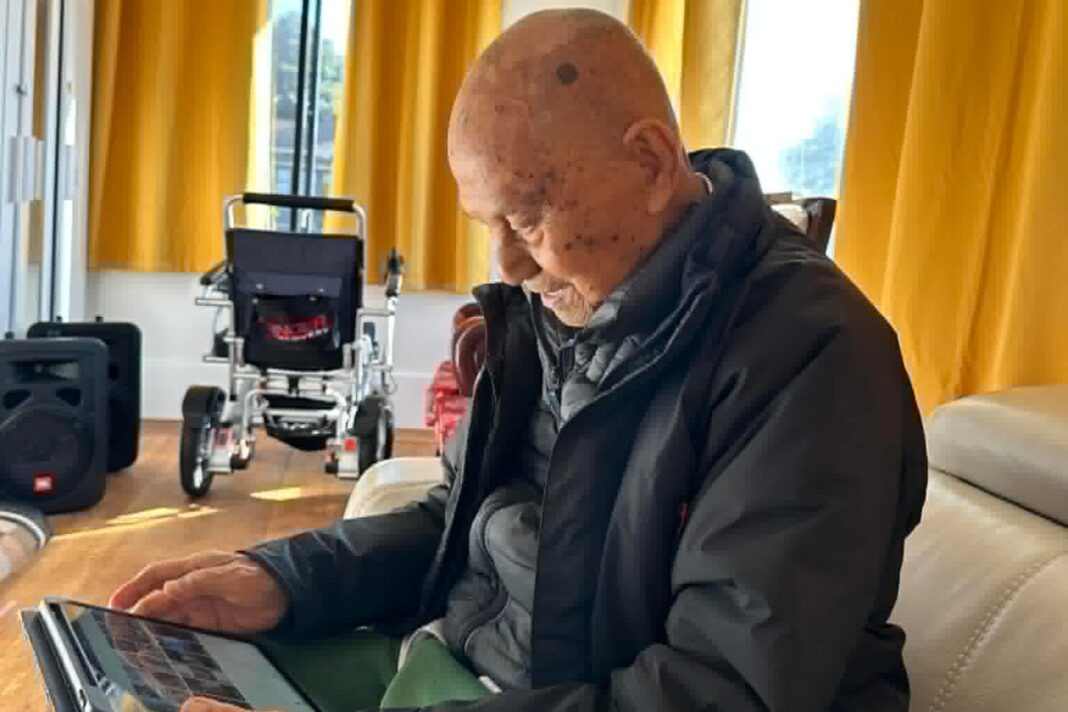
In Oakland, California, 102-year-old U Mya uses YouTube and Messenger to maintain spiritual and social connections. “When I talk to my friends online, I don’t feel lonely anymore.” he said.
Within the US Burmese community, digital literacy has become a lifeline. “Digital literacy is necessary for easier, faster communication,” said retired architect Myo Sein.
At the Gerontological Society of America 2025 symposium, University of Central Florida researchers Dr. Ladda Thiamwong and Chitra Banerjee highlighted how digital health’s portability and real-time feedback empower underserved seniors.
“Integrating digital health technologies that offer reminders and progress tracking can motivate low-income older adults to stay active and enhance both physical function and mental health,” noted Dr. Thiamwong.
Bridging the Gap in Health Equity
Despite the benefits, social inequalities persist. Dr. Su-I Hou utilized data from the Survey of Health, Aging and Retirement in Europe (SHARE) to expose a stark disparity: 93% of health-literate seniors come from financially secure backgrounds, compared to only 65% among those facing financial hardship. This data suggests that internet usage and digital skills are direct determinants of health literacy.
To bridge this gap, experts argue that digitalization must prioritize human rights over pure technical advancement.
“By bridging these digital gaps, we can lead our entire aging community toward healthier, more empowered lives.” Dr. Hou explained.
Human-Centered Innovation and Dementia Prevention
Digital literacy is also emerging as a powerful tool in reducing the risk of cognitive decline. Findings from the Finnish Geriatric Intervention Study to Prevent Cognitive Impairment and Disability — FINGER — study indicates that multimodal lifestyle intervention including cognitive training via digital devices significantly support brain health.
Anurag Ramchandran, co-founder of Kubo Care, advocates for a “human-centered” approach to this innovation. He believes technology should be built with seniors, not just for them.
“Technology shouldn’t run ahead of older adults; it should take them forward,” Ramchandran stated.
Cho Maung of the One Myanmar Community Center facilitates government-provided devices for low-income seniors.
“Wearables now enable real-time health monitoring, making digital literacy a daily necessity,” said Aung Naing, CEO of Peti Senior Center in Elmhurst, New York. He noted that digital engagement stimulates the brain and combats isolation, leading the center to integrate device training into its programs. However, leaders stress that this education must prioritize scam awareness to ensure senior safety.
Innovation vs. Legal Protection
As seniors go online, they face risks of privacy breaches and financial abuse. Dr. Mike Cantor, a geriatrician, attorney, and speaker at GSA, warned that the legal framework often lags behind the pace of innovation. He also pointed out modern companion tools like ElliQ that can be used to educate users against scams.
ElliQ is a proactive AI companion robot designed to reduce loneliness in seniors by initiating daily conversations, providing health reminders, and offering social engagement.
“Technology is evolving, but the law usually evolves more slowly,” Dr. Cantor said. “Technology isn’t positive or negative; it’s how you use it.”
(This article is written with support from The Gerontological Society of America, The Journalists Network on Generations and The Silver Century Foundation. Read the original in Burmese at Myanmar Gazette.