


By Yiming Fu | Originally published by AsAmNews
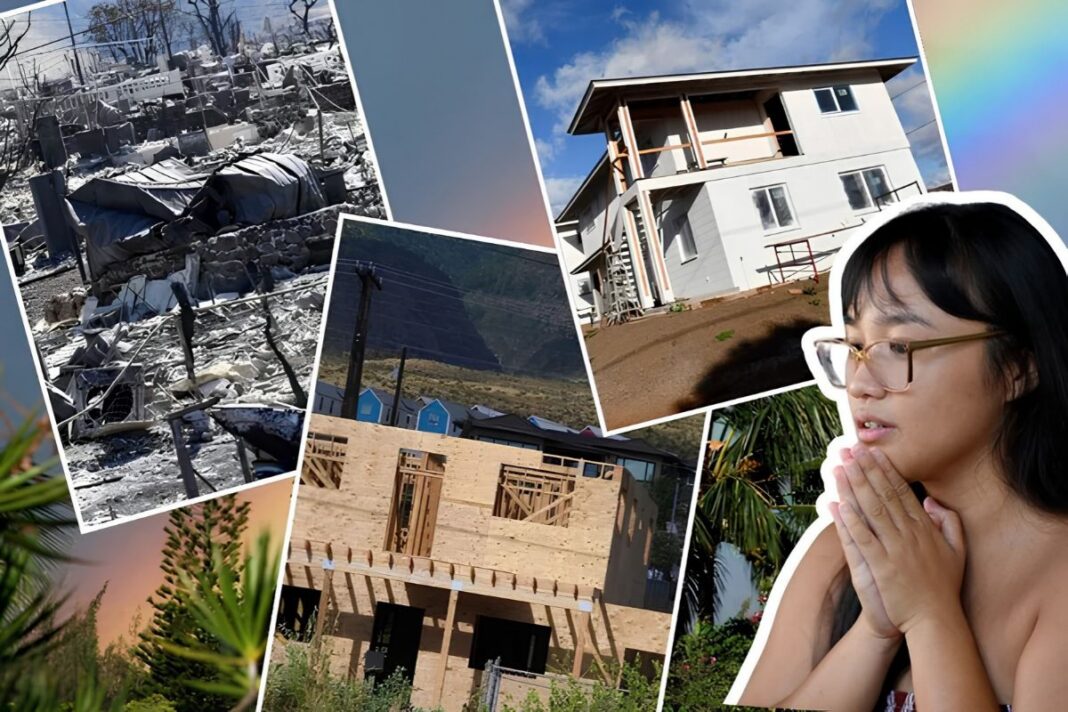
LAHAINA, Maui — Krizhna Bayudan wakes up at the same address she’s known all her life. But the bed is different, the room is different, even the house is different. And her neighbors are not there.
Before the 2023 fire, Bayudan’s cousins lived next door. If her family needed eggs, they would walk over and knock. If her cousins needed rice, her family would return the favor.
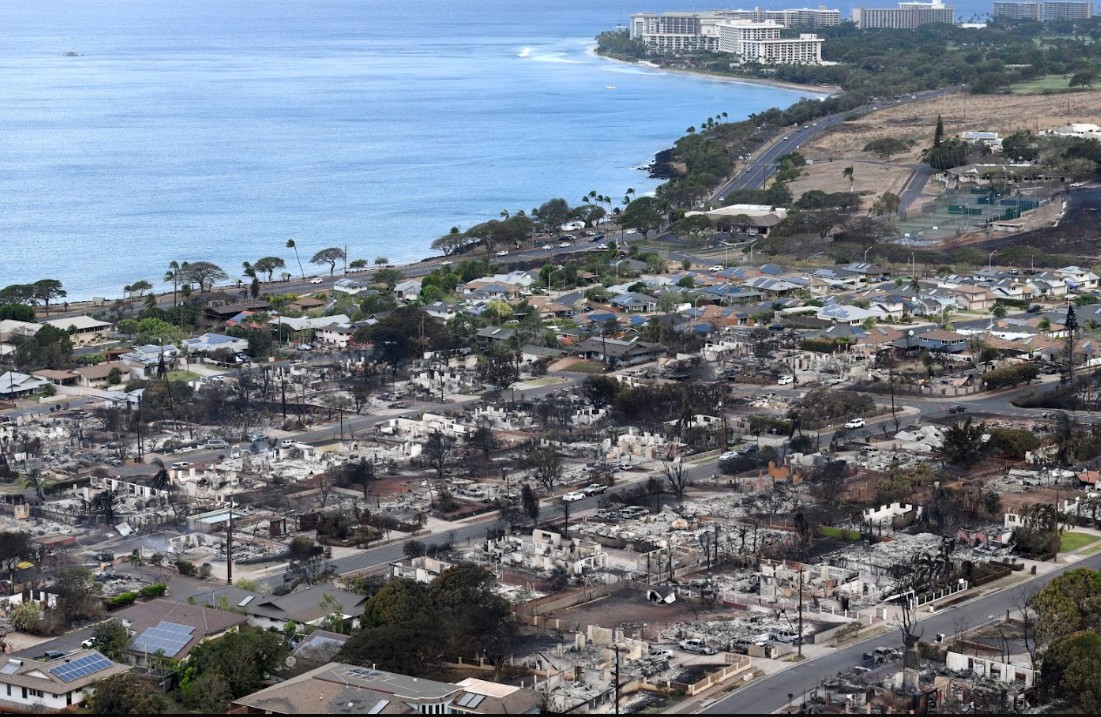
The fire turned all that upside down. The fast-moving flames burned Lahaina’s entire historic downtown on Aug. 8, 2023, wiping out more than 2,200 structures, causing $5.5 billion in damages, displacing thousands of residents, and killing 102 people. The official death toll puts Lahaina as the deadliest U.S. wildfire in the last 100 years. It burned Bayudan’s neighborhood and family home to the ground.
Finally, earlier this year, the Bayudan family moved back into their rebuilt home in the Wahikuli neighborhood, more than two years after the fire moved through. They were the second on their street to return.
“I think it’s still shocking that we’re back,” Bayudan said.
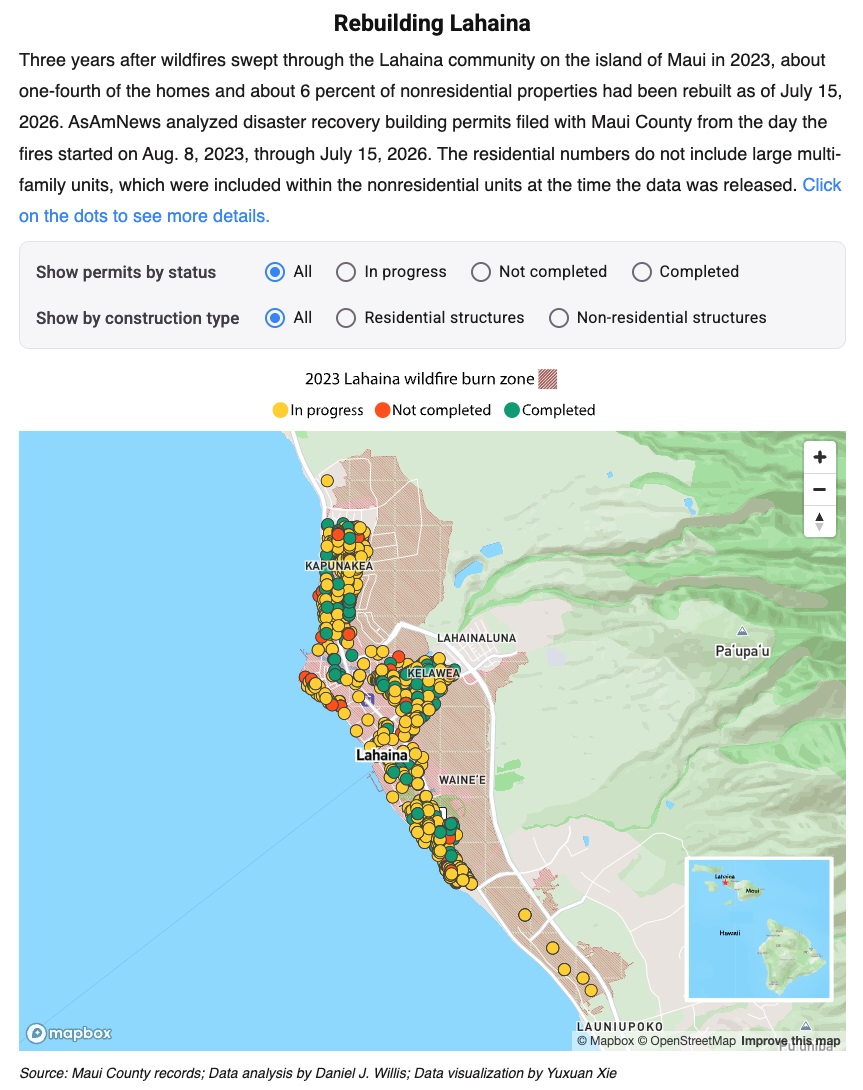
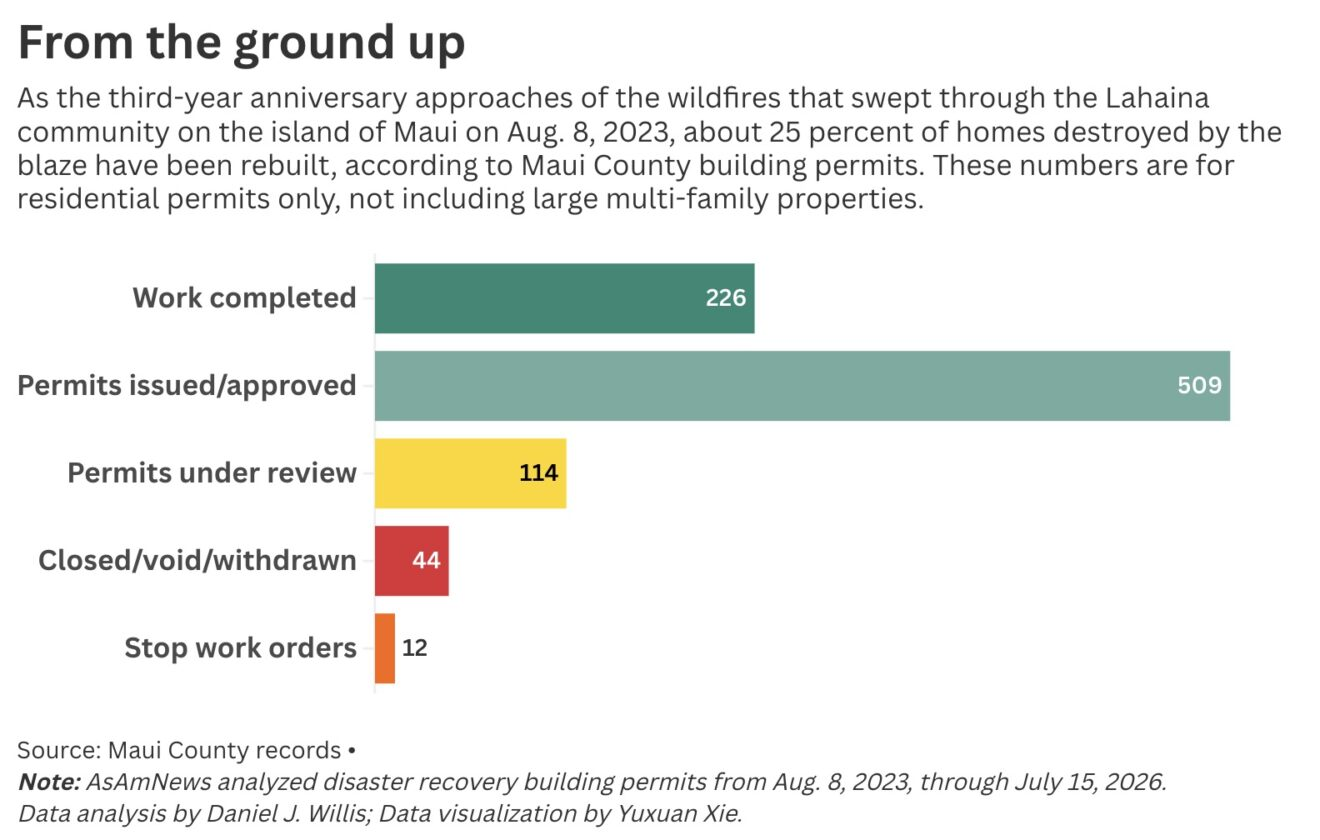
Recovery has been a long and painful process for Lahaina. With the third anniversary of the fire approaching, AsAmNews obtained more than 3,000 building permits from Aug. 8, 2023, through July 15, 2026, through a public records request, and analyzed nearly 1,000 disaster recovery permits.
The analysis found that about 25% of the single family homes destroyed in the fire have been rebuilt, largely in inland neighborhoods like Wahikuli. Homes closer to the ocean are even less likely to have been completed, in part because of additional environmental and erosion concerns.
“We understand why some people feel the recovery is moving too slowly,” Maui Mayor Richard Bissen said in a written statement to AsAmNews. “For families who are still displaced or working through the rebuilding process, every day can feel too long. Everyone’s experience is different, and perspectives often depend on where someone is in their own recovery journey.”
Details on multi-family projects became available on July 31, after Maui County revised its method of calculating residential rebuilding in response to questions from AsAmNews. The county’s recovery dashboard now includes apartments, townhomes and condominiums along with single-family homes being rebuilt.
“This will provide a more accurate picture of how many families have been able to return to Lahaina,” Maui County’s communications office said in a written statement emailed to AsAmNews.
The new numbers show that 38% of multi-family construction permits have been completed, with 313 individual housing units built since the fire. Of those, however, 200 units are in one long-planned development, Kaiāulu O Kūkuʻia, which broke ground before the fire but is considered a “new build,” according to Maui County officials.
Even as work continues, Lahaina may not be fully rebuilt for another four years, according to Jennifer Gray Thompson, founding director of After The Fire, a California-based nonprofit that helps communities recover from fires.
“[Lahaina] could have been rebuilt in two years, for sure,” Gray Thompson said. “But here’s the thing: who would it be rebuilt for, and what would those rebuilds look like? Because you could have had all of Lahaina town be white rectangle boxes, because those are inexpensive.”
A tight-knit, oceanside community where a grocery-store run can turn into an hours-long storytelling session, Lahaina has been a community defined by its people. But when Bayudan wakes up every morning, the view around her is empty. The homes are still gone.
“It’s like … where are you?” Bayudan said.
The slow rebuilding process has magnified concerns among residents about the changes underway in their community: Will Lahaina remain Lahaina?
Building back
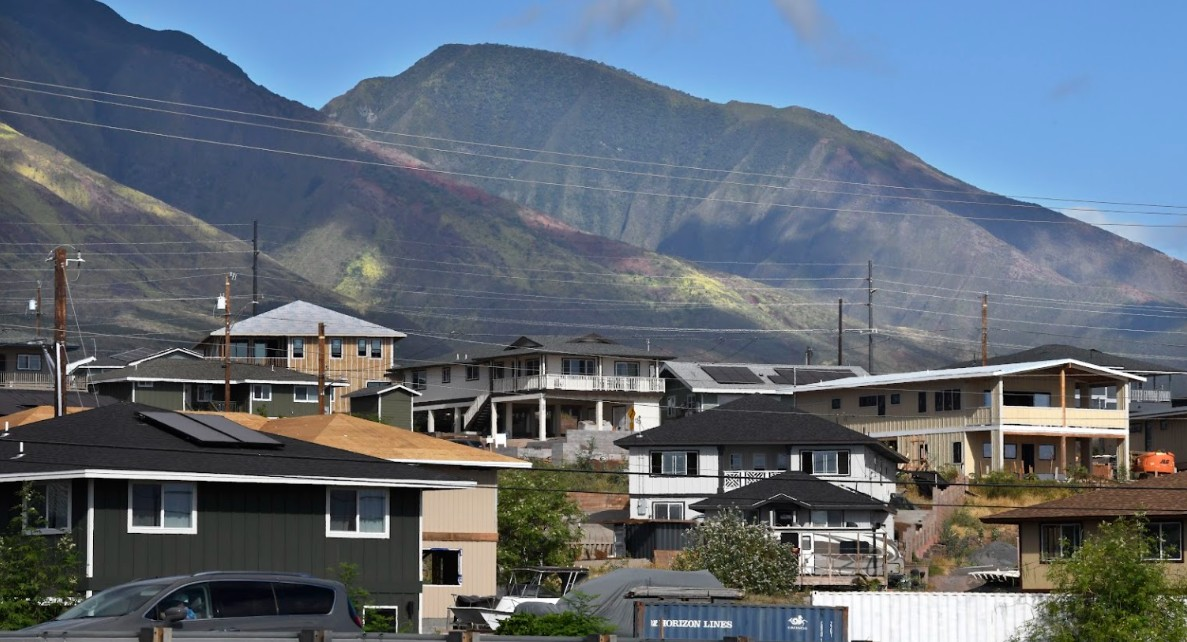
The widespread devastation from the fire has complicated projects that would have faced logistical problems under the best of circumstances.
As a small island in the Pacific Ocean, Maui must rely on building materials such as wood, roofing and sheetrock shipped in by boat, and it has a limited number of skilled construction workers and contractors.
Kekai Keahi, a Lahaina farmer who grows kalo, or taro, is a water rights activist and construction manager. He said it takes about the same time to build a house now as it did before the fire. A 1,700-square-foot home can be put up in three to five months with a team of five, Keahi said, but the complexity of the project, individual teammates and team synergy also influence how long any construction will take.
When homeowners applied for permits in the first year after the fire, many faced delays because they ordered materials such as cement from the same suppliers, Keahi said.
“Everybody [tried to] buy the same stuff,” Keahi said. “Stockpile wasn’t ready.”
Now, Keahi said, there’s enough to go around.
A change in the permitting process has made the biggest difference in speeding up the time it takes to rebuild, Keahi said. Maui County partnered with a private firm, 4LEAF, after the fire to create an expedited permit system for disaster recovery projects. The new disaster recovery permit combines electrical, plumbing, grading and building requirements into a single application.
Before the fire, owners could wait more than a year to get a permit, Keahi said, but they now can get a permit within two months under the new system.
Not all permits move that fast. County Councilmember Tamara Paltin, who represents Lahaina and who chairs the disaster recovery, international affairs and planning committee, said some shoreline permits are stuck because they have special problems. Some properties are being threatened by rising sea levels, while others fall into a Special Management Area, known as an SMA, with tighter restrictions to protect against coastal erosion and reef damage.
Rebuilds in Lahaina’s historic districts also face additional challenges. Historic properties have specific design guidelines to match the plantation and whaling-era architecture of old Lahaina town, and they may require cultural surveys to ensure the construction will not disturb Hawaiian remains.
Keahi’s family goes back nine generations in Lahaina, and his family’s property on Mala waterfront is Kuleana Land, he said. That means King Kamehameha III granted Keahi’s family the property when the Hawaiian Kingdom transitioned from public to private land ownership.
Keahi’s home was burned in the fire, but the property still remains vacant despite having a permit because it’s in an area threatened by rising sea levels. Neither the state nor county has yet said whether construction can begin.
“Are they going to give us new land somewhere else?” Keahi said.
Paltin, however, is generally happy with the pace of recovery, highlighting how Maui County worked with the U.S. Army Corps of Engineers to haul the fire debris out of Lahaina to a temporary site in Olowalu, a small town about six miles away, before moving it to a permanent disposal site in central Maui about 25 miles away. AsAmNews’ data analysis showed the debris removal is virtually completed, with more than 99 % of the 1,515 debris removal permits done as of July 15.
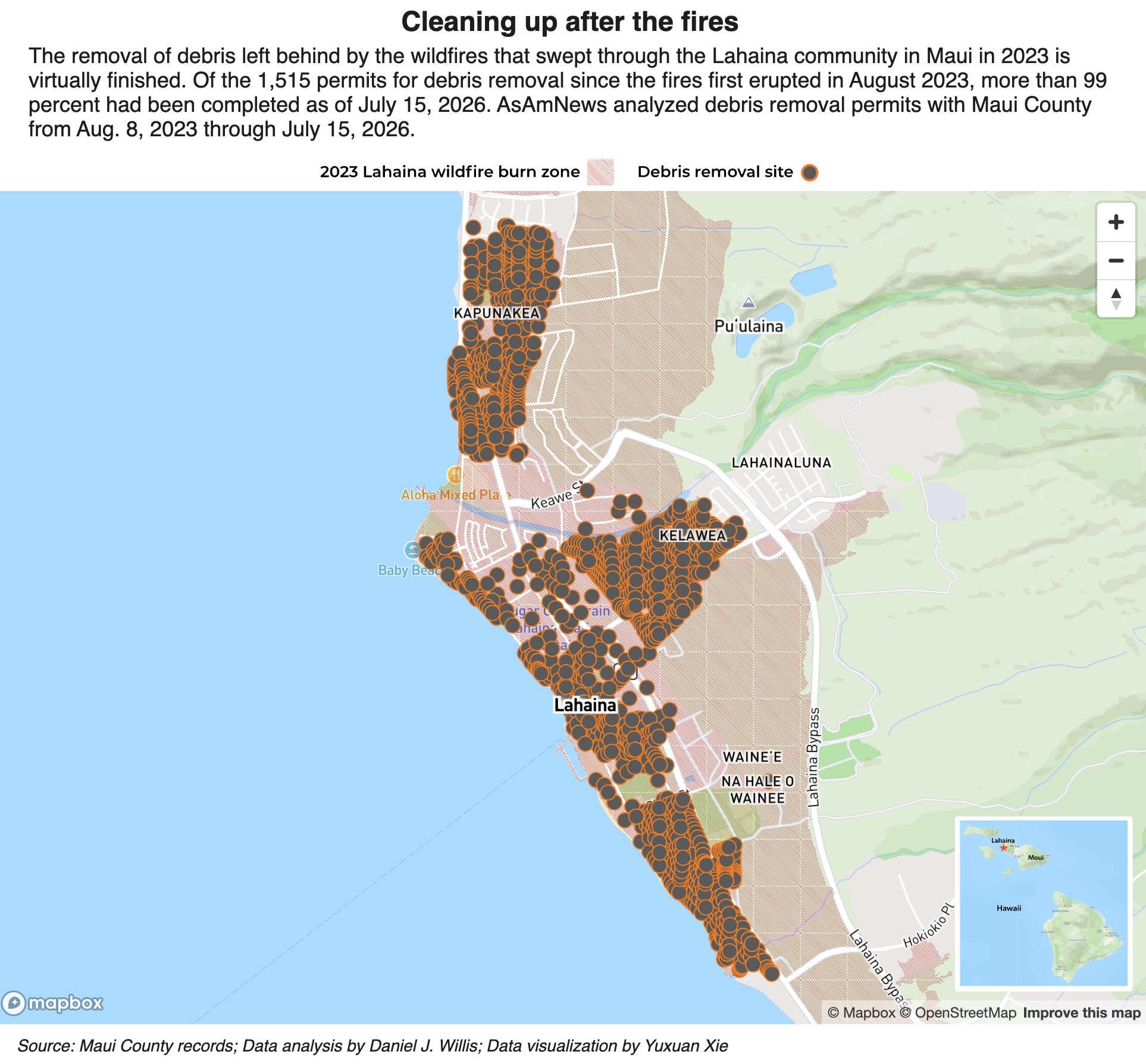
Rebuilds are also proceeding more quickly, Paltin said, on Lahaina’s mauka, or inland, side of Honoapiilani Highway, which divides properties with ocean access and those closer to the mountains.
Bayudan’s situation was unique. Her father worked as an owner/builder, meaning he oversaw the entire rebuild of the family home. He was able to hire people he’d worked with over the years doing building and renovation side jobs in Lahaina.
While the family lived in a Lahaina rental, Bayudan’s father worked on the house every day for 10 months with no breaks, Bayudan said. Today, six months after they moved back home, the family is still finishing up details such as closets and door stops, and buying furniture.
They weren’t spared the complications, however, of shipping times, sourcing materials and correcting mistakes, which can lead to long delays for typical rebuilds. The Bayudans, for example, had to wait an extra month for correctly sized roof trusses — and that’s with her family checking in frequently and assertively to make sure the materials were coming.
The Bayudan family largely built back what they had before, but they made everything a little bigger — bigger rooms, bigger bathrooms, a bigger communal space to host family parties. She lives with her parents, who bought the home in 1992, and her three siblings.
A changing town
Lahaina is the historic capital of the Hawaiian Kingdom and deeply sacred to Native Hawaiians. Throughout most of the 1800s, Hawaiian royalty ruled over the islands from their lush town of wetlands, freshwater ponds and waterways.
The first missionaries arrived in Lahaina in the 1820s, docking boats and transforming the Hawaiian Kingdom into a whaling town.
Sugar companies took over in the 1860s, diverting the town’s streams to create sugarcane plantations. Sugar companies recruited laborers from around the world, including from China, Japan and the Philippines.
After the sugar industry died down, tourism took over in the 1960s and remains Lahaina’s dominant industry. The Hawaii Tourism Authority reports over 11,000 units such as hotel rooms and other rental units for tourists in Lahaina in 2025, an increase after a drop of a few hundred units after the fire.
Lahaina soon became a hot spot for property investment, known for its bustling commercial oceanfront street, Front Street, which generated over $70 million in revenue each month. By 2020, before the fires, Lahaina had a population of 12,702.
The University of Hawaii reported 32% of Maui property owners are from the mainland U.S. or another country, more than for any other Hawaiian island. In Lahaina, over half of the property owners are not residents of Hawaii.
Today, Lahaina is a melting pot of cultures. Nearly one in three Lahaina residents is Filipino, and there are also strong Mexican and Micronesian communities.
Only about 5% of Lahaina’s population identifies exclusively as Native Hawaiian or Pacific Islander, but about one in four people in Lahaina is multiracial. About 40% are Asian, and 25.9% are White, according to U.S. Census data from July 2025. Less than 1% are Black alone.
Future generations
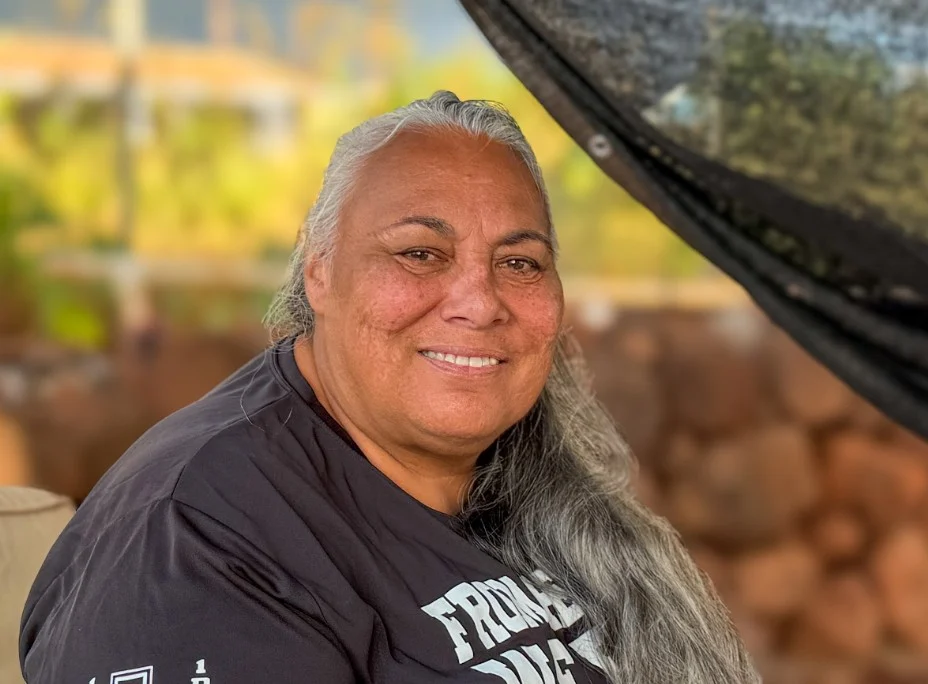
For decades, Lehua Iʻi has watched Lahaina change.
Born and raised on Maui, Iʻi, now 66, has lived on the island all her life except for two years when she attended school on Oahu. She grew up on the oceanfront with Baby Beach as her backyard. Her kids could surf any time they wanted.
Iʻi lost her Fleming Road home in the fire, where up to 12 family members had lived. Of Iʻi’s three daughters, one still lives on Maui, one lives in Las Vegas and the other lives in Oregon. I’i moved eight times after the fire, eventually landing at the Ka La‘i Ola state housing, which provides wildfire survivors a place to stay until 2029.
After the fire, Iʻi wasn’t sure if she should even try to rebuild. But the response from her children was an overwhelming yes. Even if they didn’t live in Lahaina anymore, they wanted a place they could come home to.
When asked how often she hears of people moving away, she said, “More than I ever did.”
She likes to go to special events and parties for kupuna, or seniors, where she hears of her friends moving to Wailuku on the other side of the island, or upcountry, because it’s closer to the store or hospital. She also sees people announcing their moves on social media.
Finding a home in Lahaina ranges from expensive to impossible. And wages lag behind high rent, electricity, groceries and gas prices. The median Lahaina home cost was about $1.7 million around the time of the fire. In 2025, Lahaina’s median household income was about $88,000 a year.
The other day, Iʻi drove past a “For Sale” sign on her way to the post office.
“I don’t like to see for sale signs, because you don’t know who is going to get it,” Iʻi said. “Outsiders? Or people from here? I don’t know.”
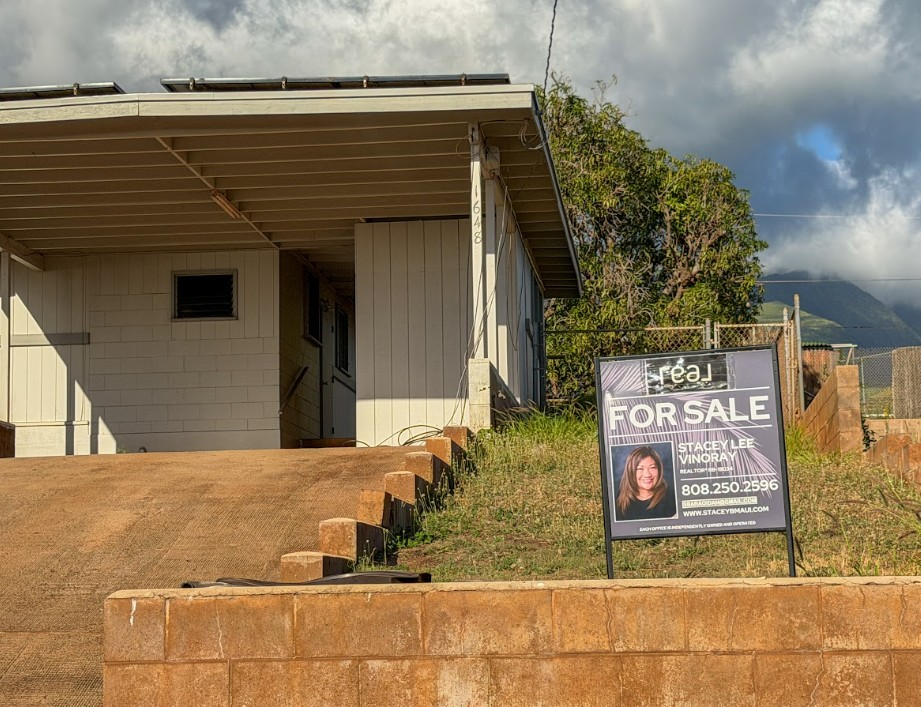
The data analyzed for AsAmNews found that 212 properties in Lahaina’s burn zone changed hands as of July 2026.
Of the properties, 43, or about 20%, were sold to an owner who listed an address outside the State of Hawaii, including seven sold to out-of-state corporations.
Will neighbors return?
Lahaina has always been a close community. Keahi said residents often say they’re from the “Island of Lahaina” because Lahaina is its own special place with its own special rhythm. Everyone goes to the same school, and the town is connected to the rest of Maui through a winding, one-lane highway.
Ask someone from Maui to name their favorite NFL team, and they might say the San Francisco 49ers, Keahi said. Ask someone from Lahaina to name their favorite NFL team, and they’ll likely say the Lahainaluna High School Lunas.
Bayudan knew all her neighbors on her street. Their moms would talk, and kids in the same age group would play together.
“Half of the street is my relative,” Bayudan said.
Bayudan estimates about 20% of her neighbors have returned. Most are working on their rebuilds, though the lot behind her home remains empty with no signs of progress.
Not everyone is returning. A 2025 study by the University of Hawaii found at least 1,000 people left Lahaina for another part of Maui, and more than 120 people moved to another Hawaiian island. The study found that 240 moved out of Hawaii, but researchers acknowledge that is undoubtedly an underestimate.
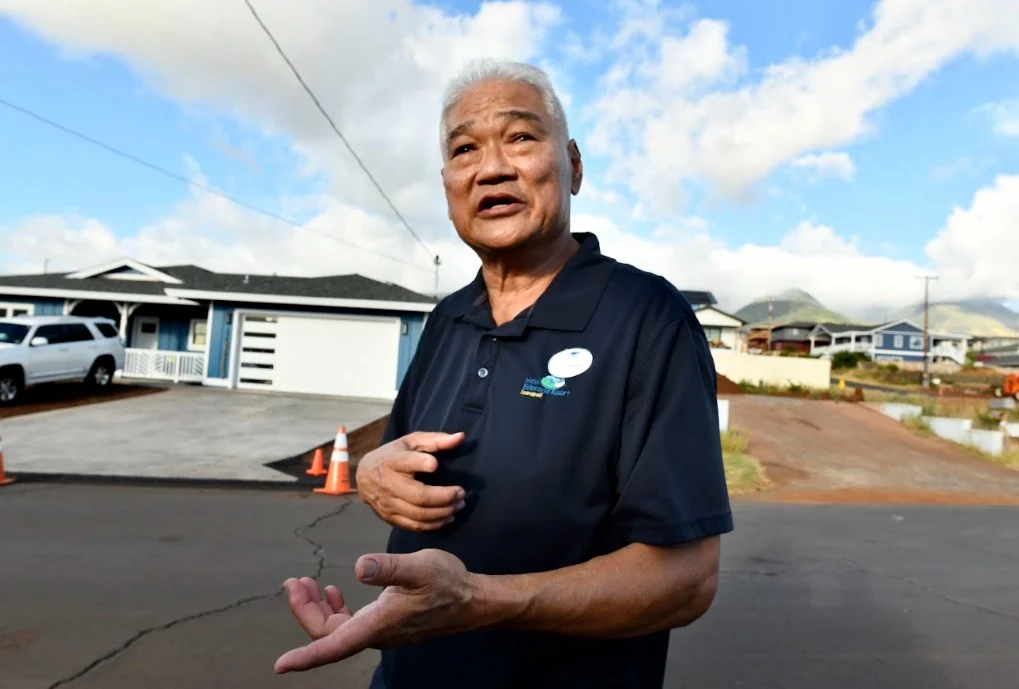
Craig Hayase moved back to Lahaina in July. Four generations of his family live in Lahaina, with three generations together in his replacement home, since two daughters and two grandchildren live with him.
His neighbors on the left sold their home. His neighbors on the right aren’t sure when they’re going to rebuild. He’s not sure of the status of the neighbors behind him.
“We were close with both side neighbors,” Hayase said. “It doesn’t make it whole yet.”
Lahaina resident Mikey Burke fears her kids won’t grow up with the same pilina, a Hawaiian word for deep, meaningful relationships with people and places, that she had.
At the time of the fire, her children were entering what she called the “goonie years,” the lighthearted, preteen years when she remembers playing with friends on the street and forming lifetime bonds.
While her home rebuilding is under way, and most of her neighbors are building back what they had, she doesn’t know if her kids will form the same bonds.
“My fear is that we’re going to move back …but that pilina they were moving into is not going to happen,” Burke said.
Building a Land Trust
Autumn Ness wants to create more housing opportunities for local families so Lahaina’s community can stay and thrive.
Ness co-founded the nonprofit Lahaina Community Land Trust after the fire to protect against outsider speculators, who began calling families to buy properties before the flames were even put out.
The land trust purchases vacant properties from Lahaina sellers and then becomes the stewards of those lands. So far, they’ve secured 20 parcels of land that can accommodate 55 housing units. Those units can only be sold to Lahaina families.
“This is the first at-scale initiative where we’re actually taking land out of the market that was pushing our people out and putting it into an entirely new market that is actually reserved for Lahaina people,” Ness said.
While there aren’t any land trust homes for sale yet, the land trust plans to list units for sale ranging from $300,000 to $700,000.
The land trust receives funding from independent donors, Maui County and through partnerships in the Kaluaʻehu program, where different businesses donate a portion of their sales to the land trust.
“I think the number of Lahaina families with home ownership opportunities is actually going to increase in the wake of the fire,” Ness said. “The trend is going to reverse.”
The land trust also has a “Keep Lahaina Home Program,” which helps homeowners address gaps between insurance and rebuild costs.
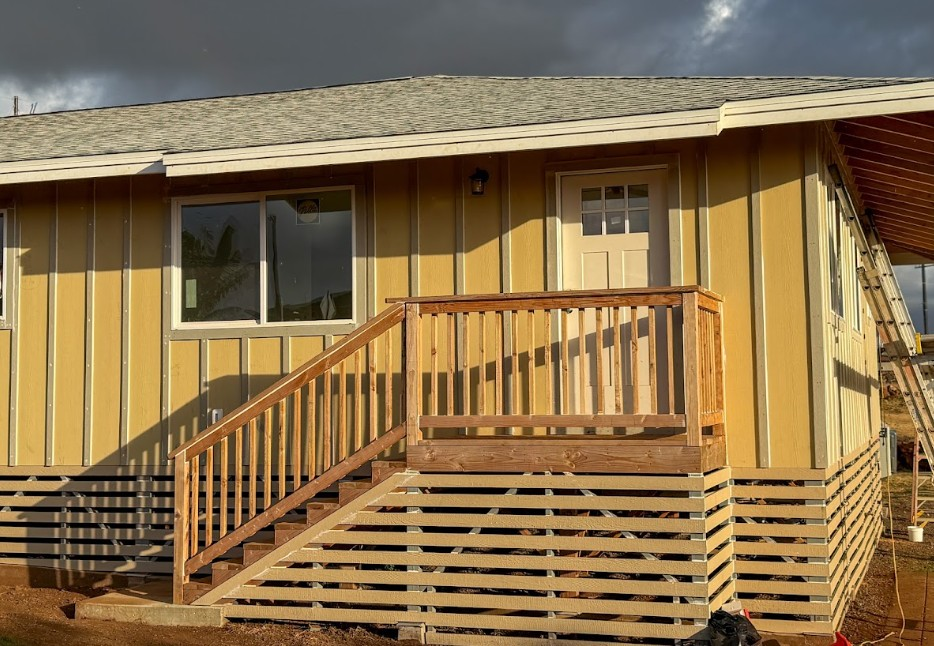
Other residents, such as I’i and Frank Perry, got help through religious aid organizations like the Mennonites and Samaritan’s Purse, which filed permits and built homes for low-to-no cost.
Perry moved back into his rebuilt home on Feb. 1 after living in a rental unit across the island.
“Without them, I’d probably die here,” Perry said last year from the rental. “I’d be terribly lost. I will be forever grateful.”
Some families, like Kekoa Mowat’s, qualified for a federally-funded homeowner rebuild program that provides up to $1.2 million in grant money and allows owners to choose from different pre-set floor plans. Congress finalized the funding in June 2025.
“I like the people in Lahaina, and I want the people to live in Lahaina,” Mowat said at a community recovery meeting on May 6. “In the end, I’m going to have a house. And we will be in Lahaina.”
Looking ahead
Though families have started to return, the fire altered Lahaina indelibly.
Every day, Bayudan talks about the fire or its impacts with her friends and family. Talking about it is part of healing, she said.
But she still has memories of her old house. Sometimes, she said, it feels as if her memories and reality don’t align. She misses seeing her neighbors walk their dogs, or listening to people bicker through thin walls. She doesn’t think the new house will ever feel as homey as the old one did.
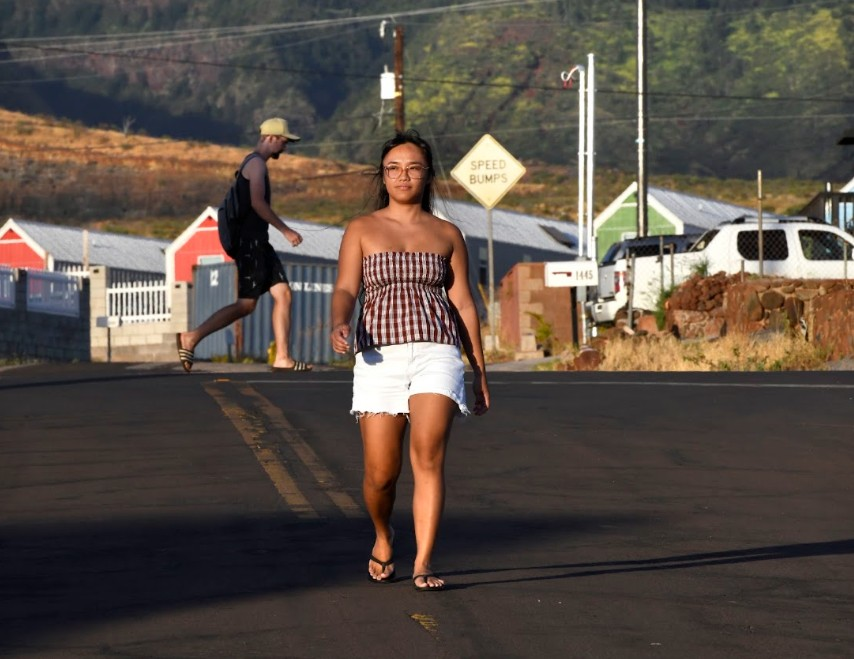
One day, while driving home from her job at a podiatrist’s office, Bayudan tried to picture what the drive used to look like. She couldn’t, so she looked through Google Maps to see the street views of her old neighborhood.
From her street, she realized she previously could see a line of 40 palm trees framing the ocean front. Now, there are only a few trees in view.
“It was my favorite view of Lahaina,” Bayudan said. “And it’s different now. It makes me sad. It’s bittersweet.”
As of July, however, Bayudan’s cousins began to put up framing for their new home next door. She can already see two floors and a roof.
She looks forward to the days when she can hang out with her cousins again. She remembers playing cards and Filipino board games, and eating good food. One of their obsessions was tracking down which local grocery stores had boba tea ice cream bars.
“I’m very happy and excited that those times will continue on very soon,” Bayudan said. “I can finally walk over there and knock on their door to get some eggs.”
This story was produced with the support of Report for America and Investigative Editing Corps, with Dianna Hunt as project editor. Journalist Daniel J. Willis contributed the data analysis and visualization journalist Yuxuan Xie the maps and graphics. Photographer Matthew Thayer took many of the photos.
This story is available for republication with full credit to AsAmNews.


Terrific reporting about a very tragic situation. Prayers for Lahaina.