


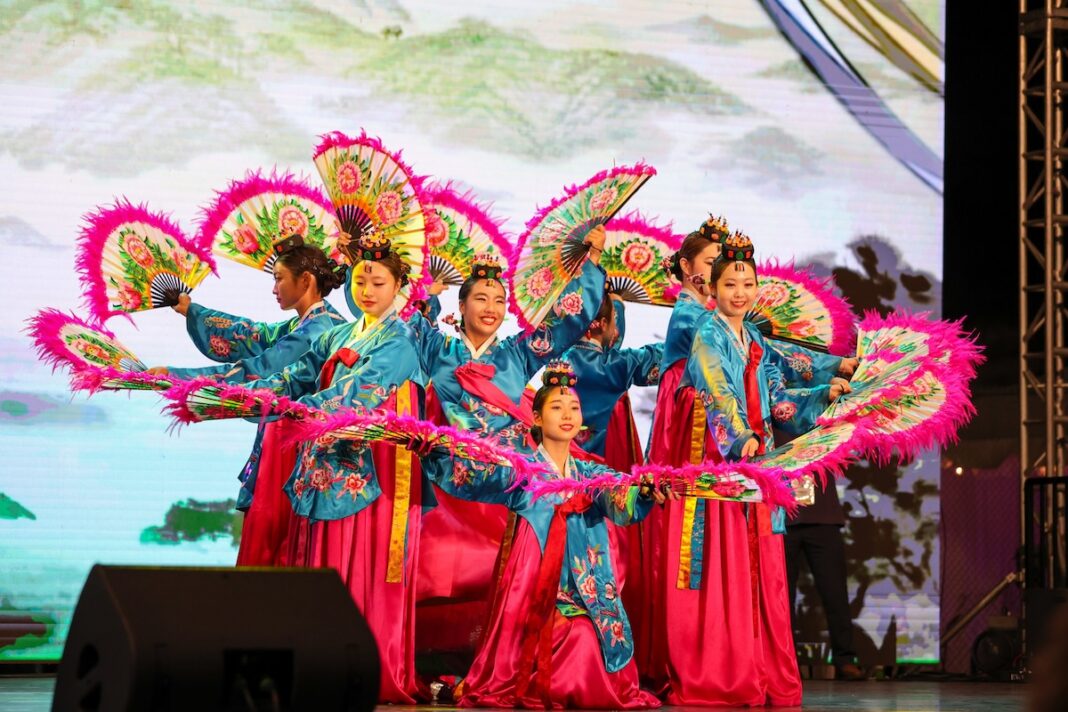

LOS ANGELES — By mid-afternoon of opening day, the walkways at Seoul International Park were bursting with visitors carrying bags of Korean food, stopping at cultural booths or lining up for snacks. Traditional music and dance intermingled with K-pop and the sound of street vendors offering samples to passersby.
What began in 1974 as an event organized by Korean immigrants to preserve their heritage has today grown into one of Southern California’s largest Korean cultural festivals.
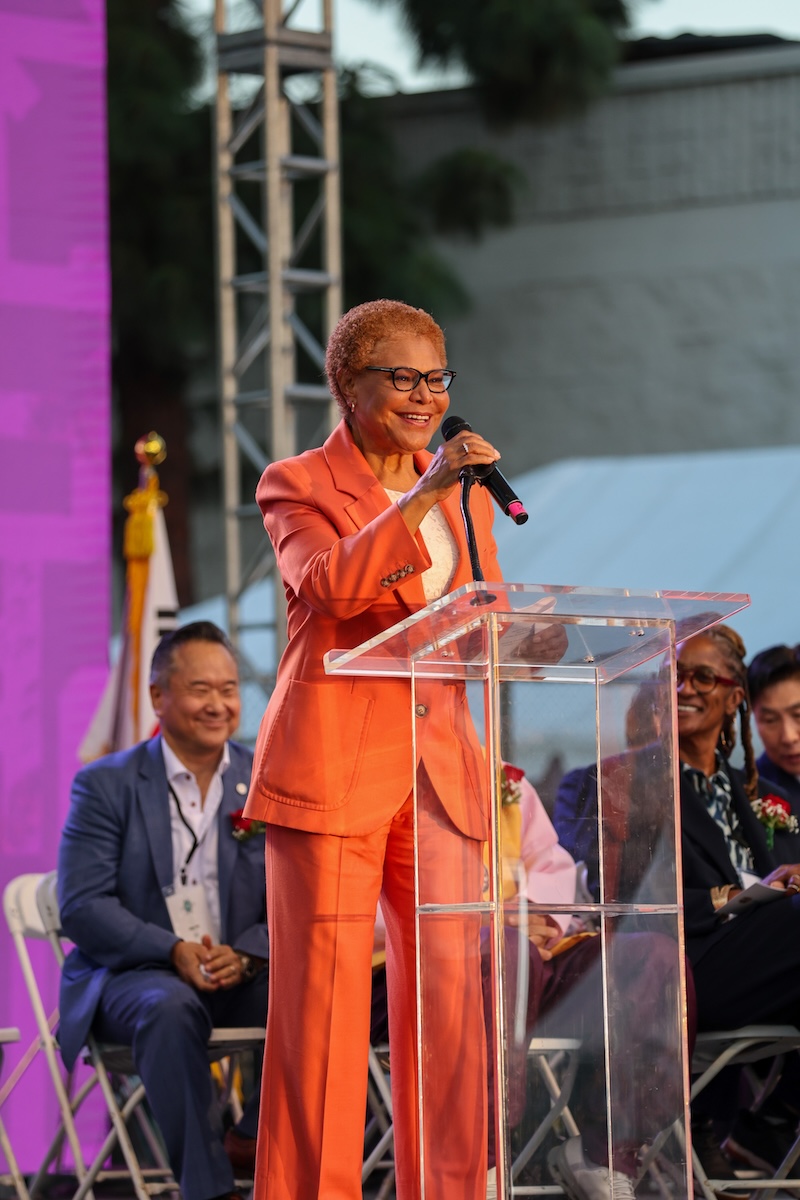
“For more than five decades, this festival has been a bridge — connecting generations, neighbors and cultures,” said LA Mayor Karen Bass during the opening ceremony. She also referenced the coming Olympic games which LA is set to host in 2028. “As we look ahead to the 2028 Olympic and Paralympic Games, that spirit of connection will be more important than ever.”
Organizers estimate that more than 400,000 people attended the four-day event, which opened Thursday in the heart of Koreatown, coinciding with Chuseok, a traditional holiday often described as Korean Thanksgiving.
“I know the Korean American community will play an important part in showing the world the very best of Los Angeles,” Bass added. “On behalf of the City of Los Angeles, congratulations on 53 incredible years. Thank you for enriching the culture and soul of our city.”
Bass’ remarks come as the nation grapples with the role of immigration in American society. Right wing politicians including Vice President JD Vance, widely considered the GOP presidential frontrunner in 2028, contend that immigrants – especially those from non-Western countries – struggle to assimilate.
Those views have helped propel the Trump administration’s current immigration enforcement policies which have led to record numbers of immigrants being detained and deported. Last year LA saw massive enforcement raids targeting the city, spreading fear in communities and harming local economies.
Event organizers acknowledged those fears. Alex Cha, president of the Los Angeles Korean Festival Foundation, said the organization relied on coordination with city officials, LAPD and community partners to ensure a safe and welcoming atmosphere.
“Let’s just have fun. It’s an Angelenos’ festival,” said Cha.
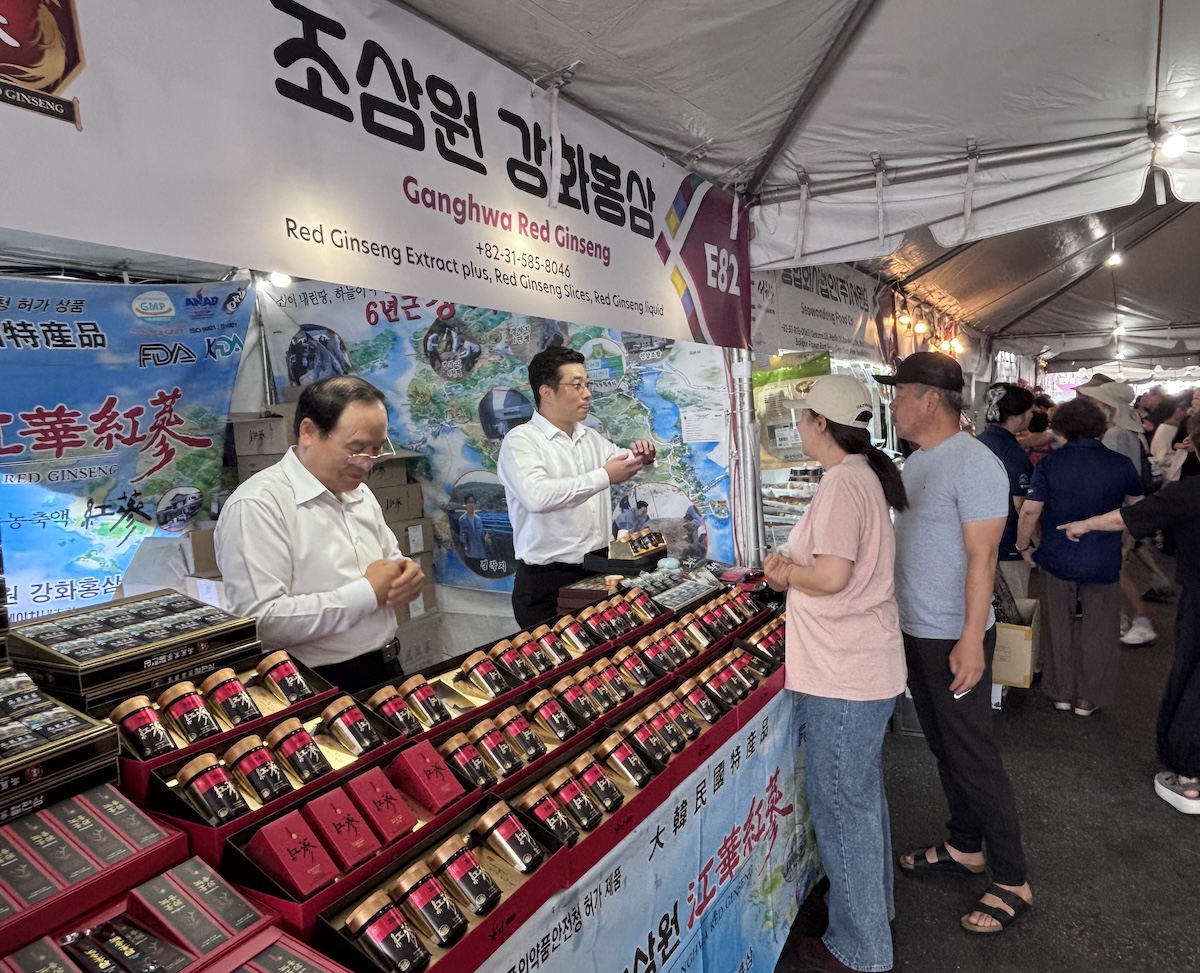
More than 290 booths filled the park, near downtown LA. Among the busiest attractions was the Agricultural and Seafood Expo booth, where vendors from across South Korea showcased a variety of seafoods, agricultural goods, sauces, snacks, and specialty foods.
Korean cuisine is having a moment in the US, with exports of food and agricultural products from South Korea topping $6 billion last year.
“I had heard about the Korean Festival for many years and knew it was a large event, but seeing it in person, it is even bigger than I expected,” said South Korea’s Consul General in Los Angeles, Jung Kang. “What makes it especially meaningful is seeing the entire community celebrate together.”
The opening ceremony drew city, county, state and federal officials, along with diplomats and community leaders. Los Angeles City Councilmember Heather Hutt, whose district includes Koreatown, said the event has become an annual tradition for the city.
“I’m really excited about the festival,” Hutt said. “You know we wait every year for this day to start the festival.”
Hutt has also noted that the event supports neighborhood restaurants, merchants and small businesses while showing the diversity of Los Angeles.
Councilmember John Lee, a second-generation Korean American, remembers coming to the festival with his parents.
“The Korean Festival, where people can see Korean culture and taste Korean food, is a symbol of the Korean American community, but it also represents the diversity of Los Angeles,” Lee said.
Robert Ahn, president of the Korean American Federation of Los Angeles, said the event’s longevity reflects the support it has received from generations of Korean Americans.
“I remember it starting when I was about 5 years old,” Ahn said. “It’s amazing that it has already reached its 53rd year. It has been able to continue this long because the Korean American community has stood firmly behind it.”
ABC7 anchor David Ono, who emceed the opening ceremony, said the event sends an important message.
“What I love about it is the passion, but also the constant connection to their immigrant roots,” Ono said of participants. “I think that’s such an important story to continue to tell in America today.”
Ono pointed to Korea’s growing influence in popular film, television, music, food and manufacturing.
“Korea has really risen up to give us beautiful quality in everything they do,” he said, calling those contributions “a beautiful part of the American fabric.”

NICOLE CHANG
Nicole Chang is a media veteran with 25+ years in journalism and community service, including at The Korea Daily, where she led coverage on public issues and managed content across platforms. She regularly covers immigration and the Korean American community for ACoM.