

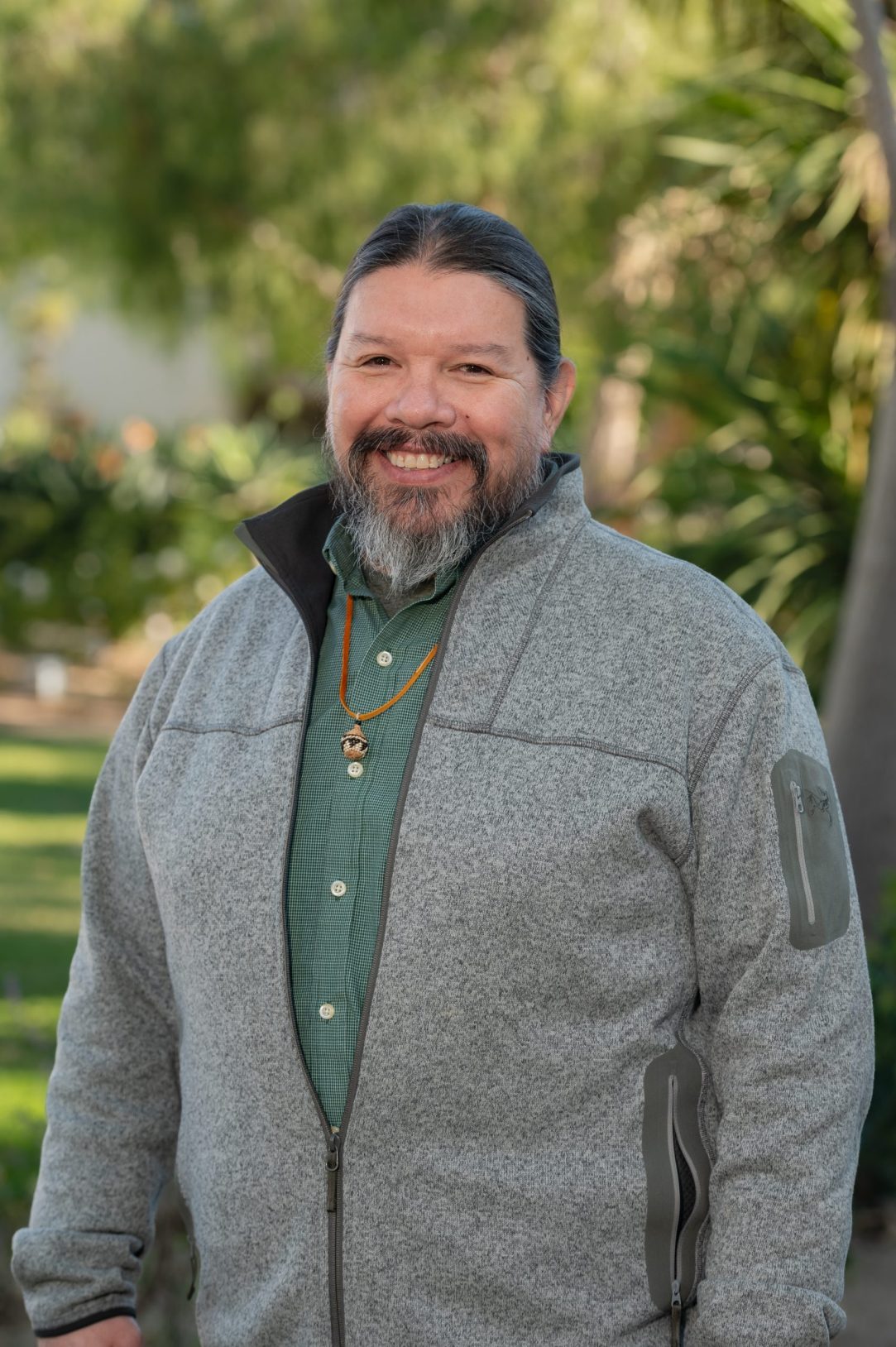
BERKELEY, Calif. – Calvin Hedrick remembers wishing he could disappear during his fourth-grade history lesson after his teacher told the class that the ‘poor pioneers’ coming to California were slaughtered by Indians.
That memory continues to animate Hedrick’s work to this day, ensuring Native and Indigenous people are seen and acknowledged amid efforts by the federal government to obscure Native identity and history from the official record.
“Students turned and looked at me like ‘you’re it. You’re the one who did this,” said Hedrick, director of Policy Training & Tribal Relations for the California Native Vote Project. “That might not have been what others were thinking, but that was how I felt.”
Hedrick, who is Mountain Maidu — with ancestral lands spanning the Oroville region and northern Sierras — ticks off a list of issues confronting the state’s Native population. These range from depictions of Native people in public schools, to systemic barriers that prevent many from exercising their vote, and the raft of policies at both the state and federal levels that he says are harmful to Native interests.
According to Hedrick, Native and Indigenous Californians celebrated Gov. Newsom’s 2019 apology, formally codified on Sept. 25 of this year as AB2115, or the Rowena Mae Ramos Act. The bill offers an official acknowledgement and acceptance of responsibility for the state’s role in perpetuating mistreatment of and violence against Native people in California.
But, Hedrick adds, there was also deep disappointment over Newsom’s more recent decision to veto two subsequent bills: AB2218, the Indigenous Water Rights Bill, which would have required state agencies to address water inequities and consult with tribes about water projects; and AB1881, the California Indian Freedom Act, which would have required state agencies to get written consent before altering Native American sacred sites on state property.
Despite the setbacks, Hedrick sounded a note of resolve. “We’ve got to keep moving forward.”
Part of that entails encouraging more Native Americans to vote. With the midterms fast approaching, Hedrick says many in the community hold to this idea that elections “are not for them. And that belief gets passed down.”
He added, “Nothing could be further from the truth … If we’re not voting for these rights, we’re letting someone else vote (and decide) for us.”
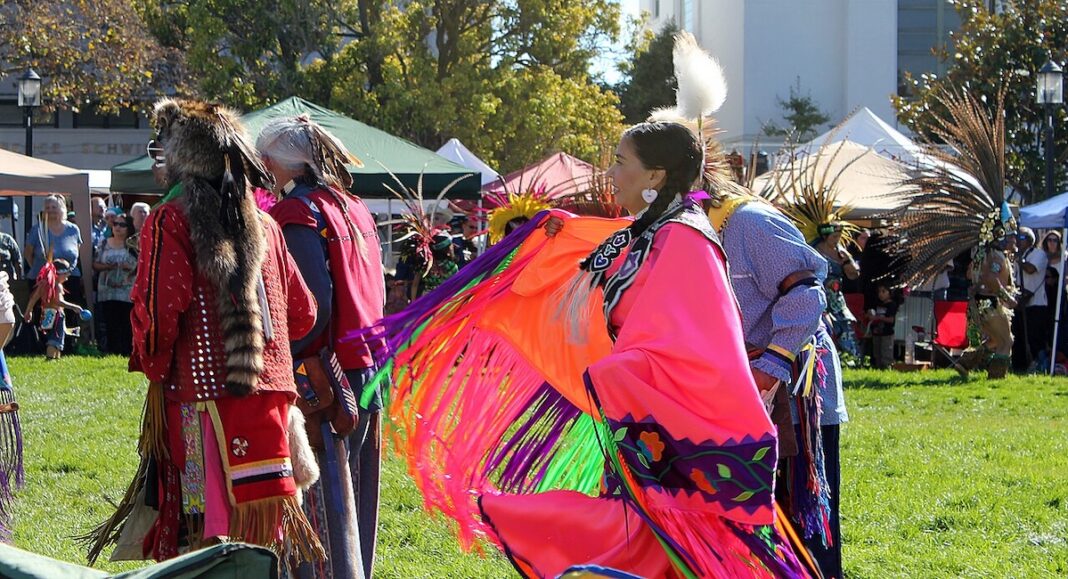
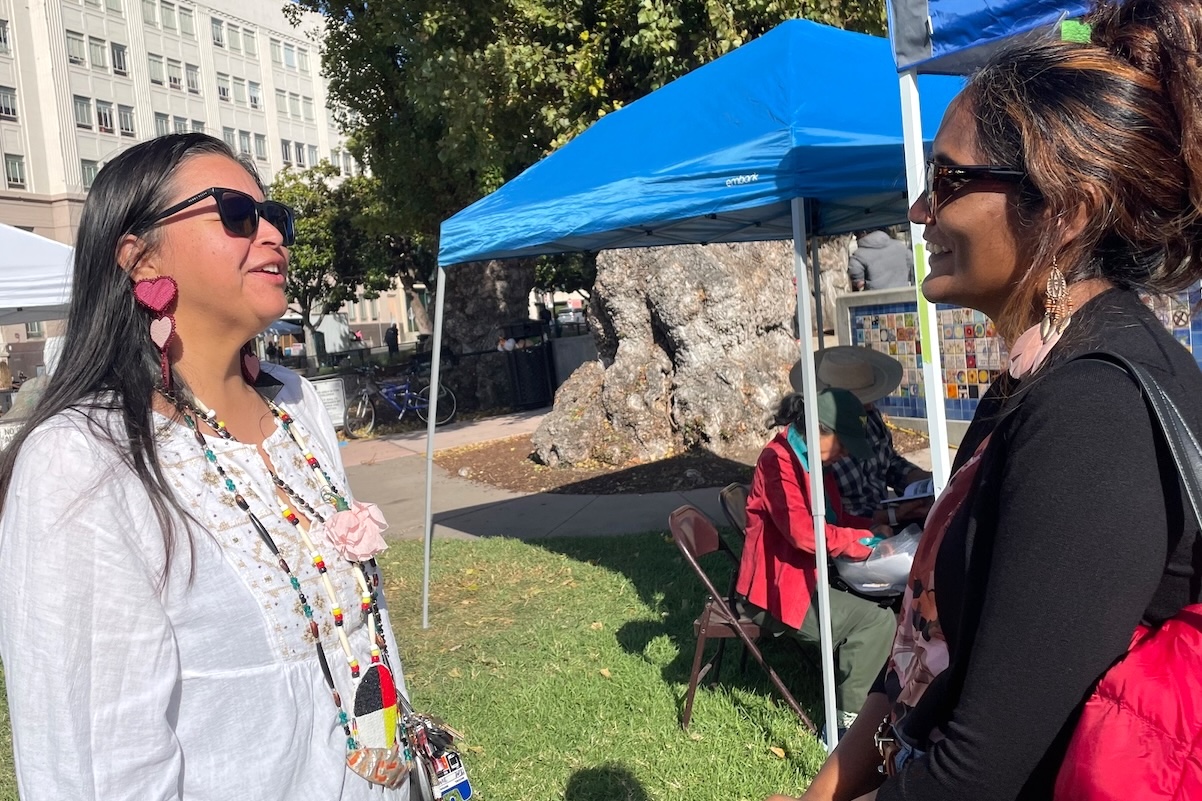
Marie Hernandez, Hoopa Valley Nation, serves as the coordinator for Berkeley’s annual Indigenous People’s Day Powwow and Indian Market, held October 10 at Martin Luther King Jr. Civic Center Park near downtown. She says the event is in itself a means of moving forward.
“Showing up and being in regalia, dancing and praying, all of these things were illegal on this land,” Hernandez explained.
Part of the first generation of her family to grow up outside the Hoopa reservation, located in the far north of the state — Hernandez was raised in Oakland and later Berkeley — she credits her master’s program in Indigenous People’s Law from the University of Oklahoma for teaching her about the extent of 534 years of resistance since the first point of contact.
“Even though there were efforts made to disconnect us from our culture, our language was cut off, our stories have continued,” she said.
As for voting, Hernandez understands the perspective of those who choose to opt out as a form of resistance. But, she says, as a child she often accompanied her own mother to the polls. That experience, she says, ingrained in her the importance of having a voice.
“There is no indigenous perspective” in most of the laws passed in the state, she noted. “We need more Native voices in those spaces and at the tables where decisions are being made, which means we need more Native and Indigenous People to run for office.”
California is home to the largest Native population in the country, many of them concentrated in and around the Los Angeles region. As a demographic, however, they remain among the least represented when it comes to holding political office. Less than 1% of elected officials in the state identify as Native American or Alaska Native.
Hedrick says every time a Native or Indigenous candidate enters a race is a win for Native and Indigenous people regardless of the outcome of the election.
“Whether or not we’re voted in, we win,” Hedrick says, citing the example of Frankie Myers, a member of the Yurok Tribe who ran unsuccessfully in 2024 to represent California Assembly District 2, which stretches along the coast from the Oregon border to Sonoma County.
“Every single person running against him had to learn about Public Law 280,” noted Hedrick, pointing to a 1953 law that transferred criminal and civil jurisdiction over American Indian Reservations from the federal government to state governments.
Other issues flagged by Myers during his campaign included Missing and Murdered Indigenous people and Native water and land rights issues.
“It was so powerful to hear [candidates] speaking about these things, and that they knew,” said Hedrick. “And then, you know, the person who was elected (Chris Rogers) is now writing legislation and assembly bills, to try to get land rights and water rights.”
Rogers co-authored AB2218, the bill Newsom vetoed Sept. 30, which would have required the California state government to integrate indigenous knowledge into water projects and to address tribal inequities through financial assistance programs.
Hedrick also referenced E.J. Crandal, a Robinson Rancheria Tribal Chair, who was elected to a seat on the Lake County Board of Supervisors in a race decided by just a few hundred votes.
“He won because people from his tribe, from his family and his community voted,” Hedrick says. “That’s a reminder that our vote really does matter.”
Both Hedrick and Martinez acknowledge the current headwinds, including a 2025 proclamation signed by Pres. Trump doing away with recognition of Indigenous Peoples’ Day alongside Columbus Day. Indigenous Peoples’ Day is not a federal holiday but is celebrated as a state holiday in California.
The administration is also taking steps to eliminate questions about race and ethnicity, including that of Native Americans and Indigenous peoples, from the upcoming 2030 Census.
But, Hedrick insists, “Whether or not President Trump acknowledges it, we’re not going to stop celebrating Indigenous People’s Day.” He added the challenge for the country as a whole is “not to erase the past, but to really understand it and make sure it doesn’t happen again.”
Sharon K. Sobotta recently joined American Community Media where she helps manage a new Native/Indigenous Voices initiative. She is as an editing fellow with the UC Berkeley California Local News Fellowship.