


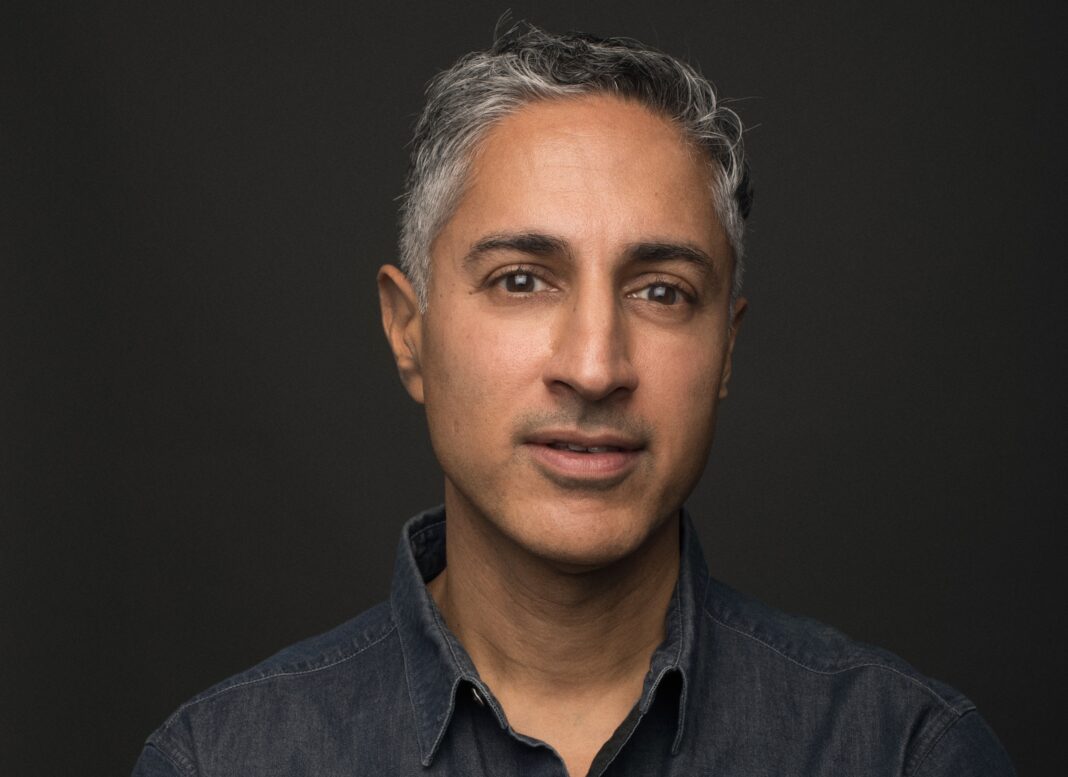
Writer and actor Maulik Pancholy, currently starring as Reverend Howard Layton in the Broadway musical adaptation of Schmigadoon, believes there is a lack of representation both on screen and in literature.
“There’s been a big pushback in the TV and film industry to really shy away from diverse stories. Diversity has become sort of this dirty word,” said Pancholy, in a Nov. 19 interview with American Community Media. “And to me, diversity in storytelling not only should be there, but needs to be there. It actually reflects the world we live in.”
Pancholy’s 3rd novel for young people, “Will They, Won’t They” Is set for release Jan. 12, 2027, by the Kokila imprint of Penguin Random House. It is the tale of two young men: Ajit Jain — a gay Indian American struggling documentarian living in Queens, New York — who randomly crosses paths in Mumbai with Zain Mansoor, the son of a Bollywood megastar. Zain is making his screen debut in a film produced by his famous father Khalid.
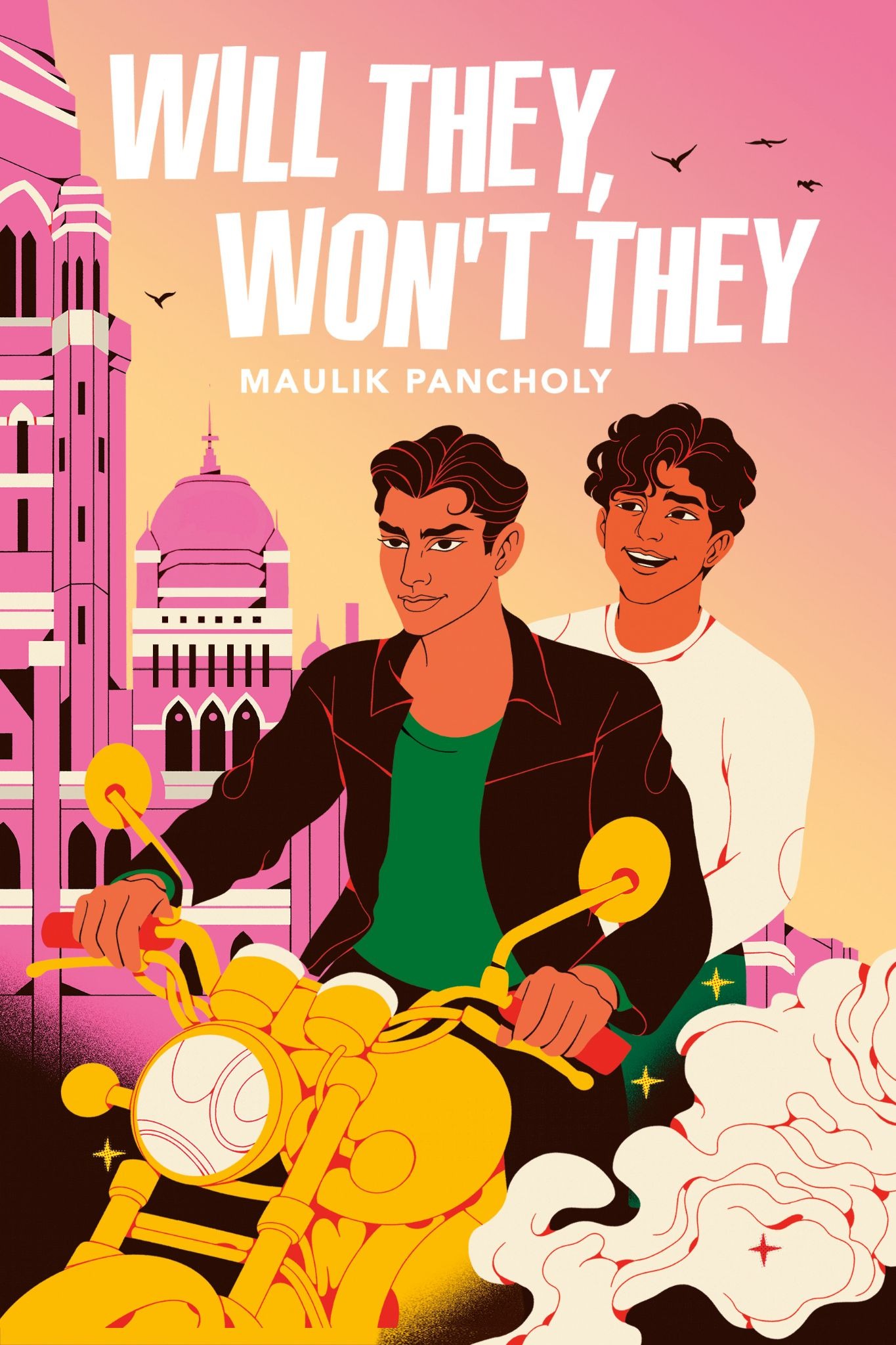
The Indian characters and settings will seem familiar to fans of Bollywood films.
Zain struggles to meet the expectations of his fans, who speculate whether he will have an offscreen romance with his leading lady Sachi. But, unknown to even himself, Zain’s heart lies elsewhere.
Before its release, “Will They, Won’t They” has received rave reviews. “This work will speak to readers who are afraid to dream big or be their authentic selves,” writes Kirkus.
“Young people deserve to see themselves in the pages of a book. Reading a book can provide them with the tools that they need to exist in the real world,” said Pancholy — who is known for his voiceovers in the animated series “Phineas and Ferb,” and “Sanjay and Craig,” as well as quirky characters in “Weed” and “30 Rock.” Pancholy also served in President Barack Obama’s Advisory Commission on Asian Americans and Pacific Islanders. He also founded Act to Change to combat school bullying.
Below are excerpts of the interview with Pancholy, edited for clarity and brevity.
ACoM: We’ve seen DEI policies coming out of this administration that render so many communities invisible or at increased risk to be targeted. Did you write “Will They, Won’t They” as a form of resistance to what you’re seeing right now?
Pancholy: This is such a great question. As you know, both of my previous books, “The Best At It,” and “Nikhil Out Loud,” have faced book bans. And a school district in Pennsylvania tried to ban me from coming to their school. It took a thousand people in that community to show up at a school board meeting and protest their own school board, and say: ‘these are not our values’ to get that school visit reinstated.
When we talk about books being banned, it is also the author behind the book being banned. It literally is an erasure of a person. And for me, especially in those first two novels, there’s such a semi-autobiographical nature. So when you’re banning the book, you are banning my actual experience. I think that’s a really dangerous and risky place for us to be as a culture, and certainly as a country.
And we are seeing this kind of movement happening in many countries around the world.
I don’t think I set out to write “Will They, Won’t They” as a form of resistance, but the resistance part of me says I’m not going to let anti-DEI policies stop me from continuing to write the books I want to write.
What are your hopes for this new Congress to bring back visibility to communities that have been marginalized?
Pancholy: What we’re seeing in the last few weeks is that — as a country — we are actually sick of the way humans are being demonized, cultures are being demonized, people are being shot in streets.
So I’m feeling very optimistic. I hope more protections will go back into place. I hope that we can see people being treated equally. Because ultimately, for me, that’s what DEI policies are. They’re about getting everyone onto an equal and level playing field. And I hope that that the silencing that has been put into place in the last couple of years can start to lift so that we can start having more diverse stories back in the world.
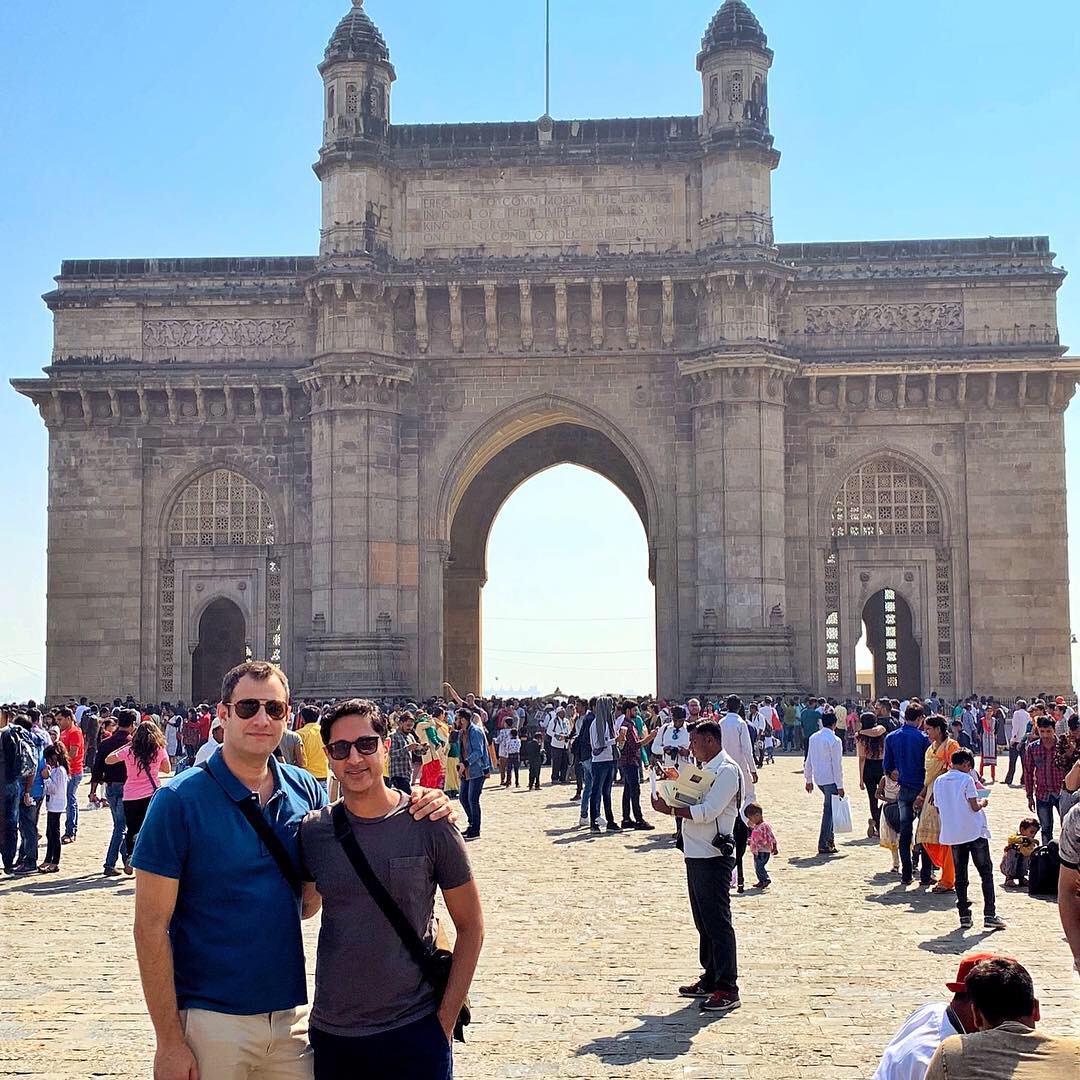
I wanted to write “Will They, Won’t They” because it’s a story that feels very personal to me on so many levels. It was inspired by a trip I took to India. I’ve never seen two brown boys in a romantic situation on the cover of a novel, and that’s an important story I wanted to write.
That’s a good lead into my next question. When you were growing up in Dayton, Ohio, did you ever see a gay Indian boy in anything you read or watched on TV? How did that impact your young adulthood, and your willingness to come out?
Pancholy: I didn’t. I never did. And I think it was a subtle erasure of identity without even realizing what’s happening, simply because I never saw myself in the stories around me. So the message that I got was: ‘hey, your story might not be valid. Therefore, you might need to change who you are to exist in the world.’
And so I spent so much of my teens, my early adulthood, trying to be someone I wasn’t, trying to be more straight, trying to be more white, and it’s why I write the books I write now.
If we don’t see ourselves in the stories around us, we question whether our existence matters. Our existence does. We are here, we make impact on other people’s lives. Just the very nature of being a human being is important.
I’m gratified to see that the books that I’ve written, they have a very specific story about very specific characters who happen to be Indian American, happen to be queer. But they have a universal appeal, because in the end, they’re stories about human beings. And I think what that allows is: if you are brown or queer, you get to see yourself in the pages of my book, maybe for the first time.
But if you aren’t, you get access to seeing a human story and realizing that you are no different in so many ways than someone who doesn’t look like you or have the same experience as you.
Bollywood has begun, much like U.S. media, to embrace gay characters here and there, but we still have very few, if any, mainstream actors who are out. So I was really interested in creating a possibility for these two young men who are setting out to be artists. Can they be part of facilitating that story so that it exists for other people?
I don’t want to give anything away here, but the story begins in Mumbai, at a gay wedding. And so it makes me wonder: will they?
Pancholy: I very much would love to write them to that next stage.