

By Katerina Machmer, Ethnic Media Services
Editor’s Note: Katerina Machmer, a recent graduate in journalism at California State University-Northridge, covers immigrant issues in Europe for EMS.
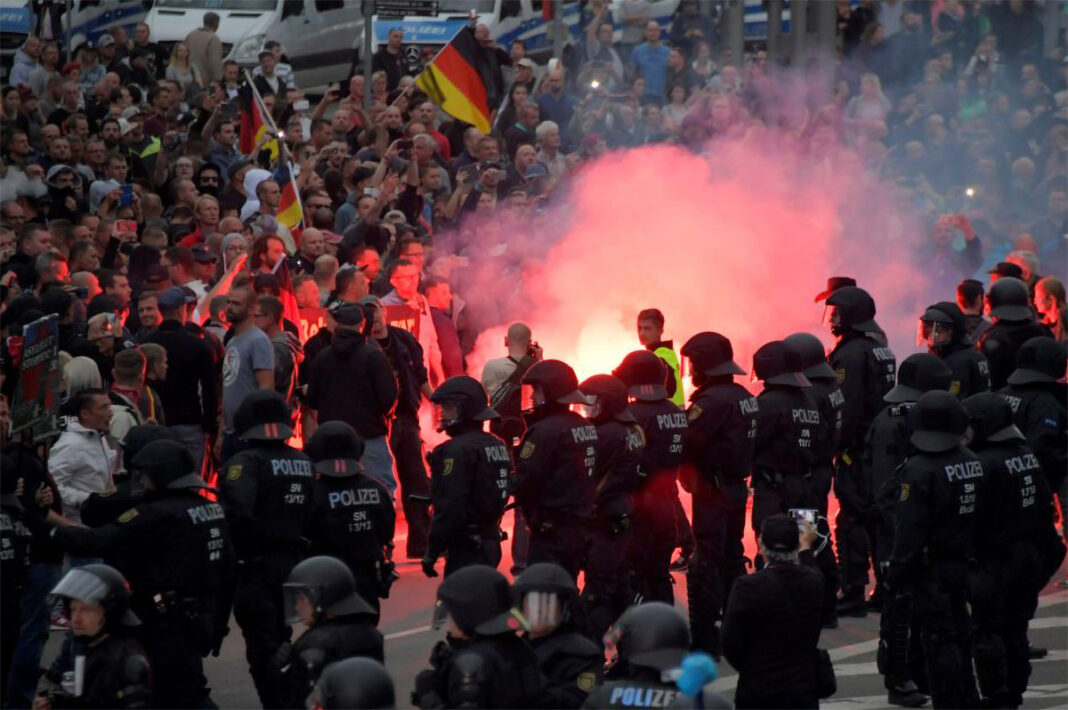
Munich, Germany – A democratically elected party in the German government is normalizing far-right perspectives in Germany, alarming advocates for pluralism and diversity.
The AfD (“Alternative für Deutschland”, or “Alternative for Germany”), the largest opposition party with the third largest faction in parliament, is fanning anti-immigrant sentiment. In an interview with the influential magazine DER SPIEGEL, former Obama advisor Ben Rhodes compared AfD’s polemics against immigrants to that of the Republican Party under President Trump.
“Being endorsed by the AfD, xenophobia has become more socially acceptable in recent times,” warns Tina Adomako, originally from Ghana and board member of the organization Neue Deutsche Medienmacher, which promotes race relations in German media.
As a party, the AfD fuels “everyday racism,” agrees Robert Lüdecke, publicity and press representative of the Amadeu Antonio Foundation. The latter is named after an Angolan contract worker who, in 1990, was murdered by far-right youths in the town of Eberswalde near Berlin. In his memory, the foundation champions pluralism and democracy in Germany while fighting right-wing extremism, racism and anti-Semitism.
Recent studies back Robert Lüdecke’s claims about the AfD: 94% of the party’s members endorse xenophobic attitudes, believing “foreigners” have only come to benefit from social welfare and that they should be sent back to their home countries when jobs are scarce in Germany.
At the same time, public opinion polls show that most Germans strongly endorse democratic values and oppose right-wing hate speech.
After a refugee camp in Moria, Greece, burned down in September, many asked the government to take in refugees despite opposition from members of the European Union to accommodate people in need. Robert Lüdecke thinks that as in 2015, when Germany welcomed roughly a million refugees, “many Germans still not only believe we have the capacity to accept refugees but also that we have a responsibility to do so”.
Germany still doesn’t embrace its growing diversity, advocates say. “It took us long to accept our status as an immigrant society,” explains Tina Adomako.
Racist comments directed at journalists of color are “commonplace,” she adds. Black people in particular are still not seen as Germans “regardless of whether they or their parents were born here.”
“Minorities do not have a voice unless they organize themselves,” says Robert Lüdecke. Germans with an immigrant background have little representation in public discourse and are routinely stereotyped or negatively portrayed by general market news media, reinforcing their status as “other.”
Interviewed by the influential German news magazine DER SPIEGEL, Obama advisor Ben Rhodes compared the AfD to the Republican Party, noting that both espouse extremist views and have members who reject science and spread conspiracy theories.
Indeed, the AfD has mobilized demonstrations against regulations to fight COVID-19 in Germany. At the protests, active supporters of the country’s far-right scene joined forces with conspiracy theorists. Robert Lüdecke worries that “this dangerous milieu could fuel the next terrorist attack by right-wing extremists in Germany.”
Lüdecke, however, believes that Germany’s democracy is strong enough to withstand these forces, and points to citizen initiatives initiated in the past years to support newcomers and advance their integration.
The fact that Germans with an immigrant background increasingly fight for their rights boosts a growing consciousness about Germans of color, adds Tina Adomako.