



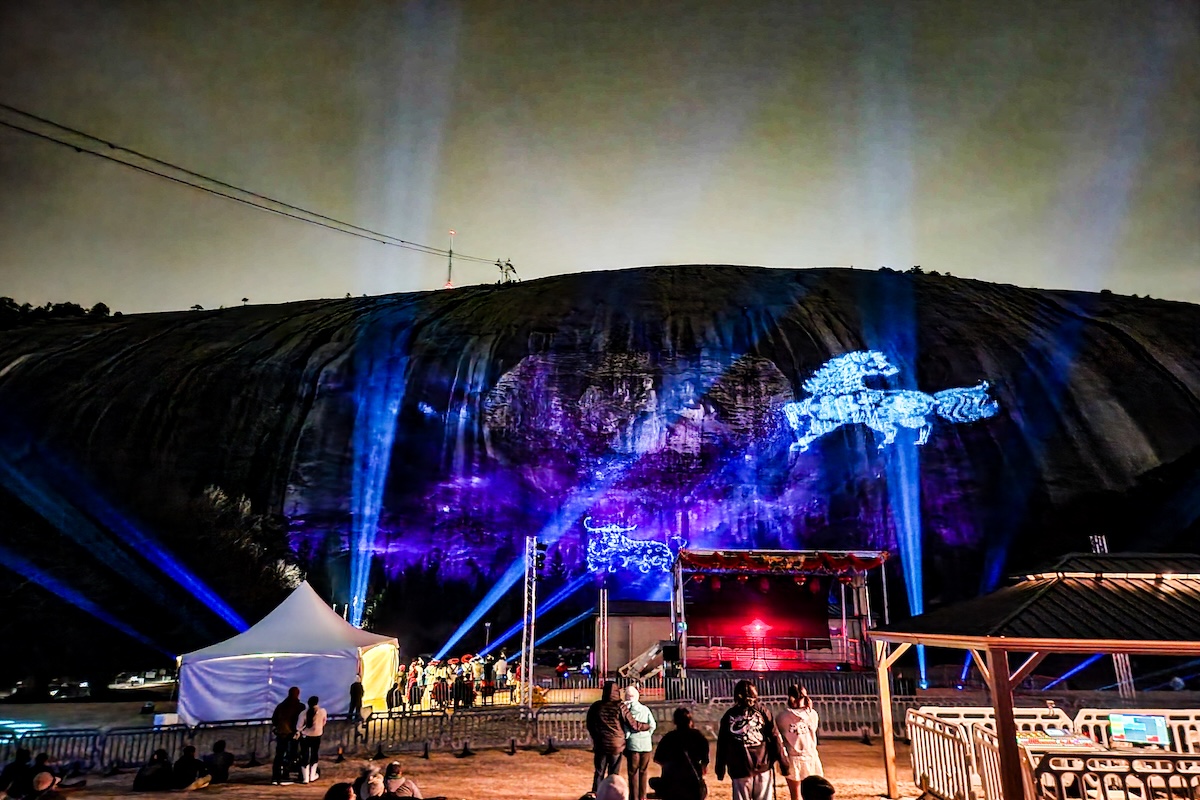
STONE MOUNTAIN, Ga. – Against the backdrop of the world’s largest Confederate memorial dancers in traditional Asian attire perform before a crowd of thousands. K-pop rhythms give way to more classical Asian tunes as fireworks illuminate Confederate icons, welcoming in the Lunar New Year.
As the South undergoes profound demographic change, the annual event highlights the contradictions between the region’s fraught racial past and its multicultural future.
“The 2026 Lunar New Year is a celebration—an extraordinary event honoring culture, community, and new beginnings,” said Edith Bell. Bell is principal of the Chinese Cultural School of Atlanta (CCSA), which offers language and other courses focused on aspects of Chinese culture.
A ‘monument to white supremacy’
Located some 15 miles east of downtown Atlanta, Stone Mountain is among Georgia’s most touristed sites. The area saw more than 12 million visitors in 2024. At an elevation of over 1,600 feet, the mountain’s north face is embossed with a 3-acre high carving—larger than Mt. Rushmore—of Confederate leaders Jefferson Davis, Robert E. Lee and Stonewall Jackson.
Completed in 1972, the carving was initially inspired by the rebirth of the Ku Klux Klan in the area half a century earlier. It is among some 2,000 Confederate memorials nationwide, according to the Southern Poverty Law Center (SPLC). Activists and civil rights organizations including the NAACP have long contended the work is a monument to white supremacy and have sought to alter it.
State law in Georgia, however, prohibits the removal or destruction of monuments on public property.
Margaret Huang is senior fellow at the Leadership Conference for Civil Rights and former CEO of the SPLC. She has frequently addressed the history of such sites. Speaking during a recent ACoM briefing, she said Confederate memorials were erected decades after the Civil War, part of an effort to reinforce specific historical narratives during periods of social change.
Huang argues that “the most effective efforts to counter sanitized versions of history are occurring at the community level” at events like the one at Stone Mountain.
Riding the K-Pop wave
Indeed, the area has become the site of increasingly multicultural gatherings, including this year’s Lunar New Year’s event marking the start of the Year of the Horse. The Feb. 14 celebration, the fourth annual at Stone Mountain, drew thousands as performers put on displays highlighting themes both modern and traditional from across Asia.
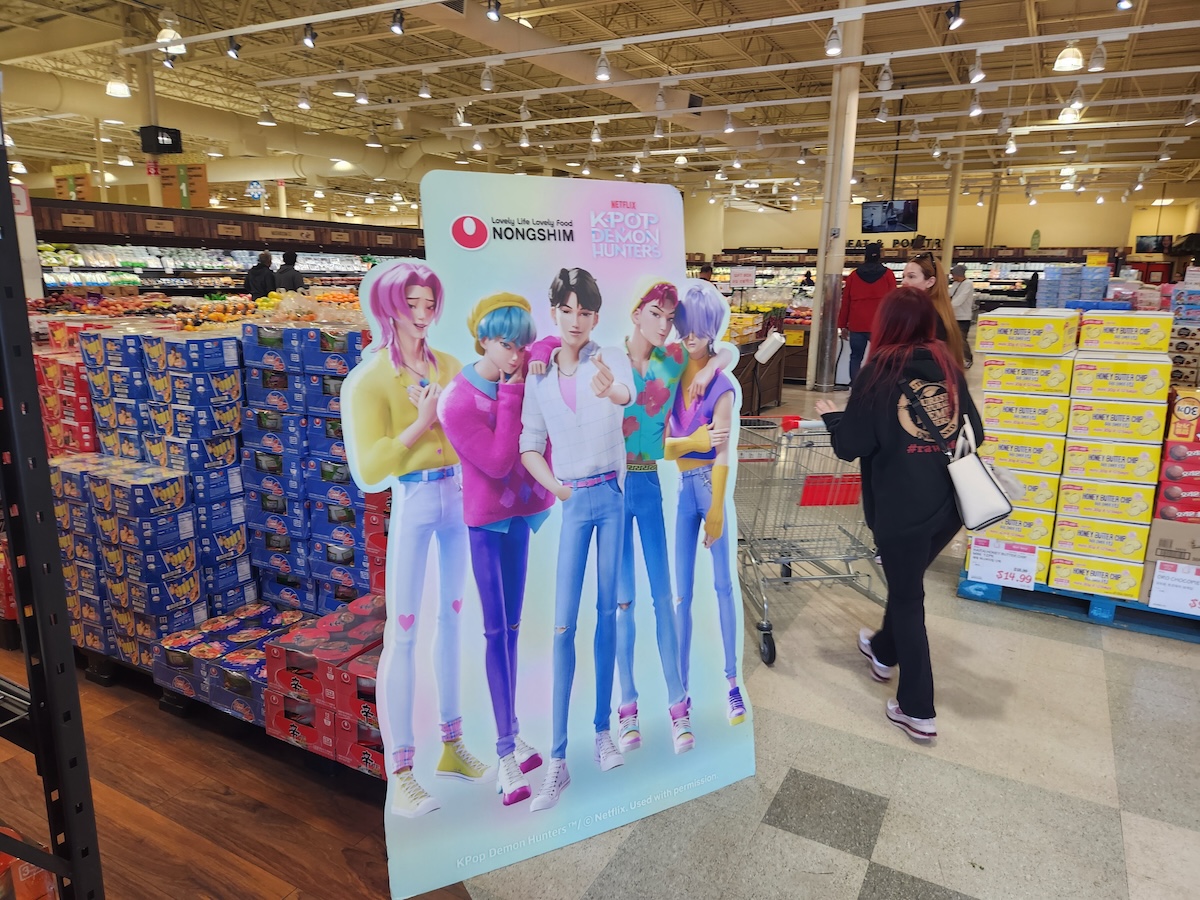
The festival’s K-pop competitions, which have expanded to a three-week schedule due to overwhelming interest, point to the surging popularity of the genre both across Atlanta, the country and worldwide. Not surprisingly, the smash Netflix series K-Pop Demon Hunters proved a fan favorite at this year’s event.
“Since 2025, K-pop’s popularity has surged, allowing us to expand our reach,” said CCSA’s Ching Hsia.
The animated series, about a popular all female K-Pop band that secretly hunts demons, became the most watched Netflix series ever with over 500 million views since it debuted last year. The series’ theme song, Golden, also became the second biggest global hit of the year.
Together with artists like Bad Bunny, whose Spanish language NFL Halftime show broke viewership records on one of the world’s biggest stages, the success of artists once relegated to the “ethnic aisle” of U.S. pop culture suggests a profound shift in how Americans see themselves and the wider world.
An economic boon
Hyunsook Yang of the Atlanta Korean Cultural Center notes the global success of K-Pop Demon Hunters has brought unprecedented interest to traditional and modern Korean performing arts in Georgia.
It has also proven to be a boon for the local economy. Gwinnett County recently promoted its “Seoul of the South” initiative. The state’s largest county located in northeast Atlanta, Gwinnett is now home to over 100,000 Korean Americans, whose businesses—from authentic bakeries to traditional spas—have revitalized the corridors of Duluth, Suwanee, and Lawrenceville.
In 2025, the region hosted K-POP MINICON, which featured Kevin Woo, the voice behind the “Saja Boys” in the K-Pop Demon Hunters series. Woo, a California native, expressed a deep connection to the region during his visit. “I feel like Atlanta is my home,” he said, “because it has great Korean food.”
Explore Gwinnett is the county’s official tourism agency. It leveraged Woo’s remarks to launch a “Seoul of the South Korean Food Tour” which ferries visitors to local Korean restaurants and bakeries.
“My job is to bridge the gap between Gwinnett’s hospitality industry and the local Korean community,” said Sarah Park, who hosts the popular food tour. “There are so many things to enjoy and celebrate about Korean culture,” she added.
This Lunar New Year marks the year of the Fire Horse, the culmination of a 60 year cycle. According to tradition, such periods are marked by intense energy, rapid change and bold movement.
Back at the festival, Taipei Economic and Cultural Office Director General Jared Lin grows animated as fireworks light up the night sky and a light show casts images celebrating the Year of the Horse against the face of the mountain. The images are superimposed over those of the Confederate soldiers.
“We are hard-working, team-oriented, and resilient,” Lin said of his fellow Taiwanese in the US. “I hope that Taiwanese Americans have made the USA a better country. Happy Year of the Horse.”

