


Keyang Pang | UNE News Express
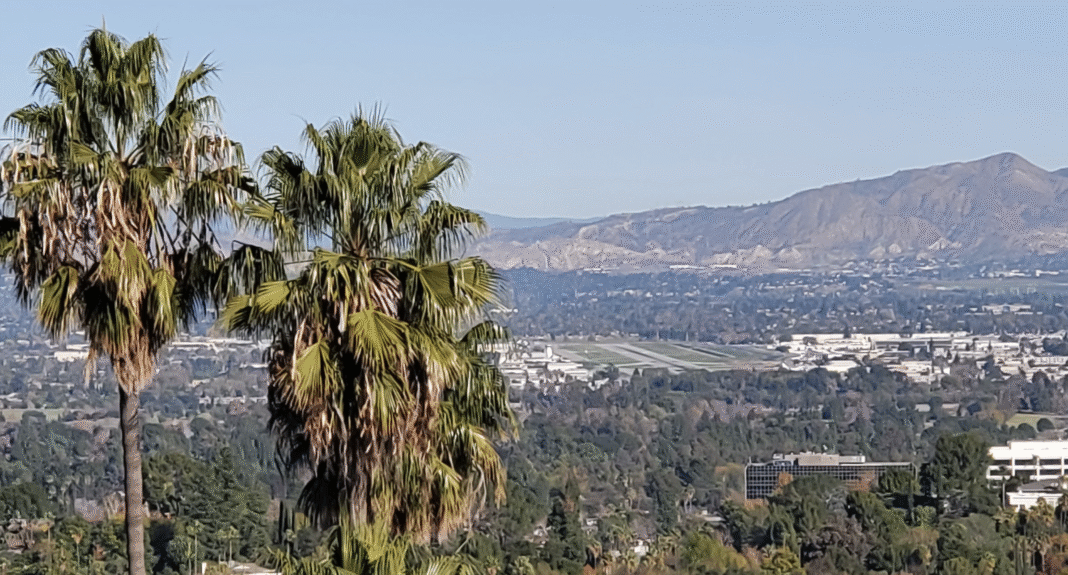
In California’s San Gabriel Valley, parks and green space are vital gathering-places for Asian immigrant families.
The San Gabriel Valley, in eastern LA County, hosts one of the nation’s largest Chinese immigrant communities. Cities like Monterey Park, San Gabriel and Rosemead have Asian populations above 50%, with Chinese residents forming the largest subgroup.
Amid this diverse social fabric, Monterey Park Councilmember and former Mayor Thomas Wong, who was born and raised in the city, shared: “In many Asian cultures, especially Chinese, going for walks in the park and having access to green spaces are deeply valued. Even though my parents were immigrants, our summer vacations were always spent visiting national parks. That spiritual, personal and existential connection to nature is incredibly meaningful to us.”
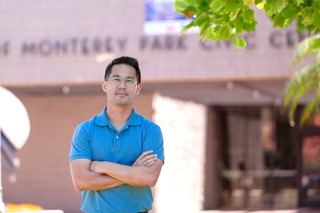
Wong explained that his early service on the San Gabriel Valley Municipal Water District and as a Monterey Park environmental commissioner deepened his awareness of long-standing regional environmental challenges, from groundwater contamination to toxic landfill sites. Over time, he broadened his focus to include the San Gabriel Valley’s severe lack of parks and green infrastructure.
He noted that “In the past decade, L.A. County has already passed several landmark measures —Measure A for park funding, Measure W for water resilience, Measure M for transportation and Measure H tackling homelessness. Through strategic integration across domains, we can transform the fabric of city space into a more equitable and sustainable green system.”
“Water, transit, and parks are interconnected,” he said. “Parks can function as stormwater capture and natural water filtration systems. And investing in transit must include improving access to parks and nature.”
Wong continued that low-income communities in the San Gabriel Valley have lacked basic public green space for too long: “We must maximize use of every available resource, especially access to the San Gabriel Mountains, so people can truly enjoy nature close to home.”
As a Nature For All volunteer, Wong has worked to elevate environmental justice and community empowerment for diverse Valley communities.
He also supported efforts led by former U.S. Labor Secretary and L.A. County Supervisor Hilda Solis to expand the Save the San Gabriels campaign. That initiative secured designation of the San Gabriel Mountains as a National Monument last year — and Wong is now pushing to elevate it to a National Recreation Area to gain federal investment and improve transit and infrastructure access for neighboring communities.
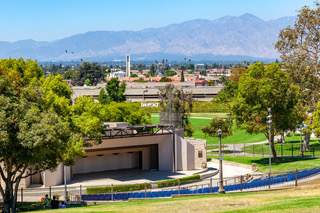
With Congresswoman Judy Chu’s help, Nature For All launched a pilot shuttle service connecting Pasadena to trailheads in the San Gabriel Mountains.
“This small initiative,” Wong noted, “makes a big statement: nature belongs to all, and it should be accessible, welcoming, and supported with infrastructure.”
Yet, he stressed that true environmental equity means bringing nature into neighborhoods themselves: “It’s one thing to increase mountain access, but we also need community parks and shaded pedestrian paths where residents don’t need a car to reach green space. Our goal is to ensure everyone, regardless of income or location, has the right to public nature nearby.”
A lifelong resident of Monterey Park, Wong was elected to the city council in 2022 and became mayor in 2024. This city holds historic significance as the first in the U.S. with a majority-Chinese American population and became a beacon for Chinese presence in mainstream urban politics in the 1980s.
Wong shares a deep personal connection to parks, rooted in childhood memories.
“Growing up in the Highlands neighborhood, we would often walk to Highlands Park and Barnes Park,” he said. “I have a photo of my brother and I playing on the old playground at Highlands Park — that picture was even part of my campaign. My elementary school, St. Stevens, didn’t have any green space or a track, so we had our PE classes at Barnes Park across the street. I still remember seeing my grandma walking there to do her exercises. My brother and I would sometimes spot her during class. Those parks were really a part of our everyday life.”
He highlighted that early city leaders had foresight in planning parks within walking distance of every neighborhood — a legacy that sets Monterey Park apart in the Valley.
According to the 2025 ParkScore report by the Trust for Public Land, Monterey Park has 15 parks totaling 137 hectares, with 87% of residents living within a 10-minute walk of a park. This rate surpasses many nearby Asian-majority cities including Alhambra, San Gabriel, Arcadia, Rosemead and Temple City.
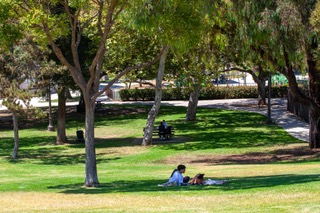
Wong said “Monterey Park truly values its park system. In recent years, the city has adopted more strategic planning, from library and economic development strategies to current plans for parks, recreation and sustainability. These guide how we invest in public works and city operations for a more livable community.”
He acknowledged budget constraints and stresses careful allocation of resources that balance community value with cost. For example, in response to growing interest in pickleball, the city converted some tennis courts into temporary pickleball courts.
Residents have also requested community gardens, dog parks and micro- parks.
“By optimizing existing spaces and smart investment,” he said, “we can make our parks do more.”
The city is now conducting its first-ever Parks Master Plan, engaging residents widely—including historically underserved groups and those most affected by long-term planning decisions.
With more than two-thirds of Monterey Park’s population being of AAPI descent — predominantly Chinese — its parks are vibrant with cultural life daily: Tai Chi, dancing, and senior exercise routines are beloved community scenes.
Wong said “I hope we can build even more spaces where people can do these activities freely and safely—and where public space remains open for everyone, whether Chinese or from other communities.”
Beyond recreation, Wong wants parks to reflect heritage and identity through cultural programming and public art. The city’s library, senior center and some parks already host Mahjong classes and Chinese cultural activities.
“We aim to expand these offerings, making culture part of everyday services,” he explained.
Looking to the future, Wong stressed that as the population in Monterey Park continues to grow, so must its investment in green space: “State-led housing growth raises questions: what does population increase mean for public space? It means more places to gather, cool off, and connect.”
“Our mission is to sustain the original vision of this city, that every resident can access high-quality parks and nature,” he added. Parks are public assets we must continue to invest in and pass on to future generations.”
This story was produced by Ethnic Media Services in collaboration with the Laboratory for Environmental Narrative Strategies (LENS) at UCLA as part of the Greening American Cities initiative supported by the Bezos Earth Fund. Read more stories like this by visiting the Greening Communities homepage.