


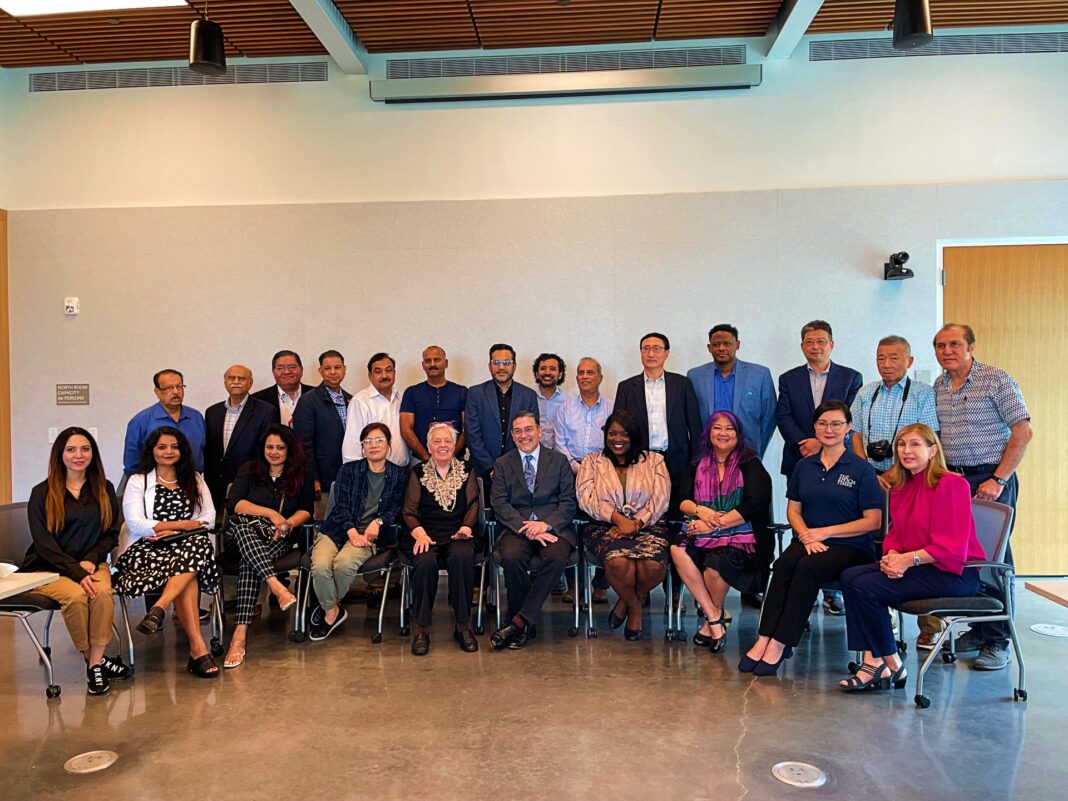
When he was 4 years old, US Census Bureau Director Rob Santos told over two dozen ethnic media reporters in Houston this week, a mouse crawled under the covers of his bed, up and down his legs and across his chest. For weeks he couldn’t sleep and was terrified the mouse would find him again.
His grandmother taught him “how to get rid of my scariness by being my whole self.”
Today Santos brings his life experience to the job of running the country’s largest federal statistical agency – responsible not just for the decennial Census but three other Census projects including the ongoing American Community Survey and a survey about Finance and Business.
What Santos says he is discovering is a “societal renaissance” as the country grows “beautifully diverse” and more people seek to understand their own culture and identity, even doing their own DNA analysis.
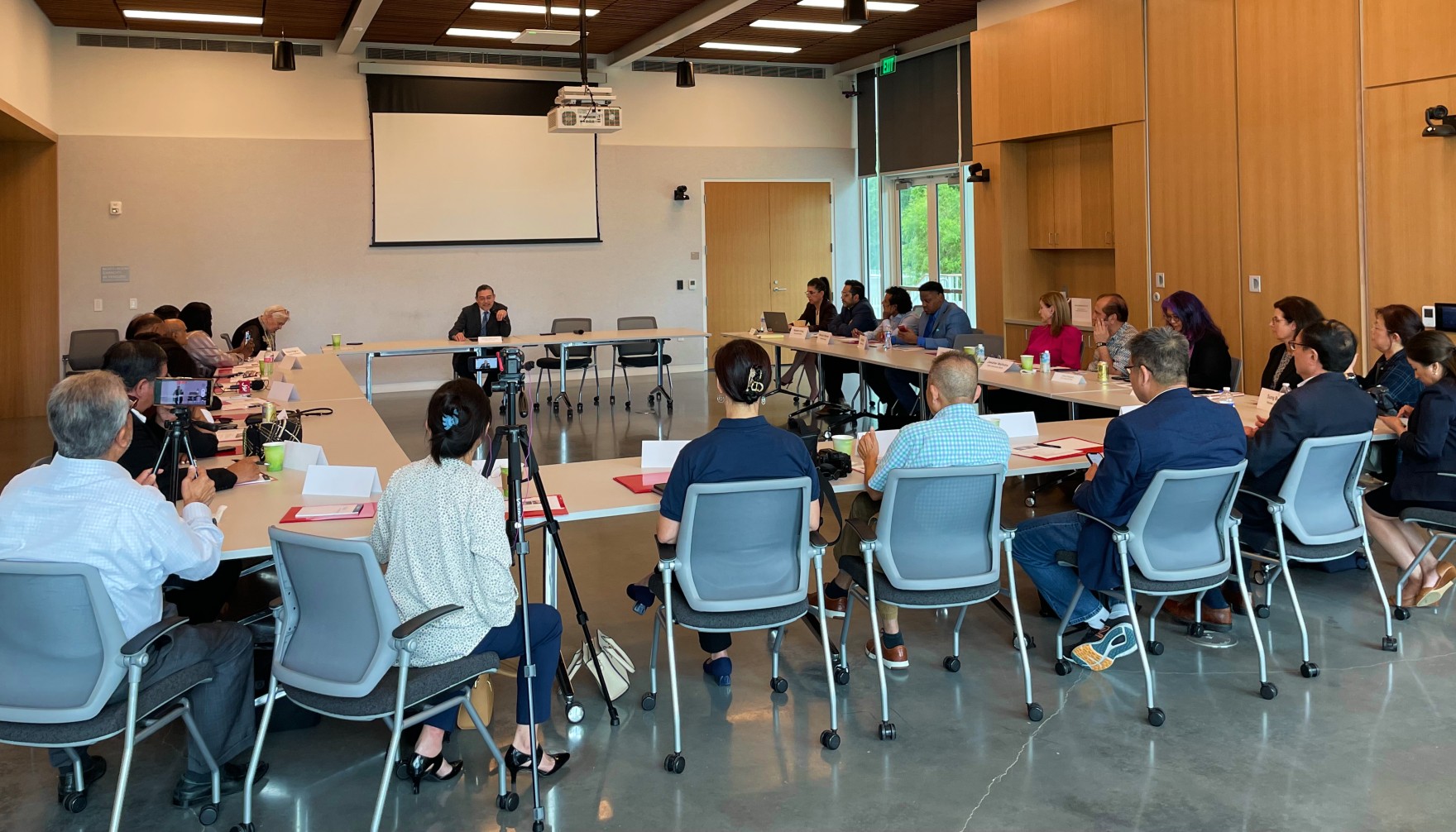
“We need to leverage that through more detailed data,” Santos says, and through revising the outdated categories we use to describe who we are becoming.
Today, for example, one out of 10 people identified as Black or African American was born in another country. The race and ethnicity standards adopted in 1997 need to be updated, a process Santos says will be completed by 2024.
But will people trust the Census takers enough to share information about who they are after the controversies surrounding 2020?
Santos is optimistic that through holding sessions like the one with ethnic media in Houston, and being transparent about the Bureau’s goals, public trust will grow, especially among communities that fear being visible to the government.
“If I say, please answer the survey,” people will shrug it off. If that message comes from you and community-based agencies that people know, that’s a different thing. We have to start the process now, not wait until 2027.
Recalling the effect his “abuelita’s” message had on him, Santos said he recently watched a mouse make its way across the floor of a cafe where he was eating. Without hesitation, he whisked the mouse out of the room.