

Eugene Levin | Panorama Media Group
Residents of Los Angeles and other Southern California cities spend most of their time at work, in their apartments, or on the roads in their cars. Even on weekends and holidays, they don’t always have the opportunity to travel outside the city to diversify their leisure time and relax in nature. Therefore, park areas often become a haven and a family recreation spot.
Before coming to America, each of us had our own favorite park – Gorky Park in Moscow, Tumanyan Park in Yerevan, Shevchenko Park in Kyiv, the Summer Garden in Saint Petersburg, Narimanov Park in Baku, or Dyukovsky Park in Odessa. Parks are associated with memories of our past lives. We remember the names of these parks well, because for many of us they became favorite places where you could relax, meet friends, and reconnect with nature.
In our new country, we have found our own favorite places, and, of course, there are parks among them. Often we choose parks that are close to where we live, or those that are easiest and quickest to get to.
For our community, parks have also become cultural venues – places for art and cultural festivals. The festivals showcase the diversity of cultural traditions of the United States, from music and art to local customs, attracting many participants and visitors to events in the parks every year.
The festivals include a variety of events held outdoors or in special halls. These include dance and theatrical performances, art festivals, children’s competitions, painting and photography festivals, food fairs, and folk festivals, which attract a wide audience and are held in the parks.
Initially, and still to this day, Plummer Park in West Hollywood, a traditional area of settlement for the Russian-speaking community in Los Angeles, served as such a place. It’s no coincidence that this park is also called Russian Park. The Russian Community Center held many events there, and Plummer Park is home to two monuments built with funds raised by immigrants.
For more than 35 years, the community has held festivals and competitions, exhibitions and concerts, children’s parties, meetings with military personnel, firefighters, and representatives of city authorities, law enforcement agencies, and many other interesting and important events in the park, in which the Russian-speaking population of the city participates.
While previously the community was mainly concentrated in the West Hollywood area, it later began to spread to Santa Monica and the San Fernando Valley (Studio City, North Hollywood, Van Nuys, Sherman Oaks, and Encino). Gradually, more and more Russian-speaking immigrants began to live in Tarzana, Woodland Hills, Reseda, Beverly Hills, Northridge, and other areas of Greater Los Angeles. Accordingly, people began to frequent the parks located in these areas.
In this new country, unfamiliar to most of us, we’ve discovered our favorite places, and of course, parks are among them. Some visitors to city parks come for the whole day with food, while others simply settle down on benches, at tables, or under trees for a few hours.
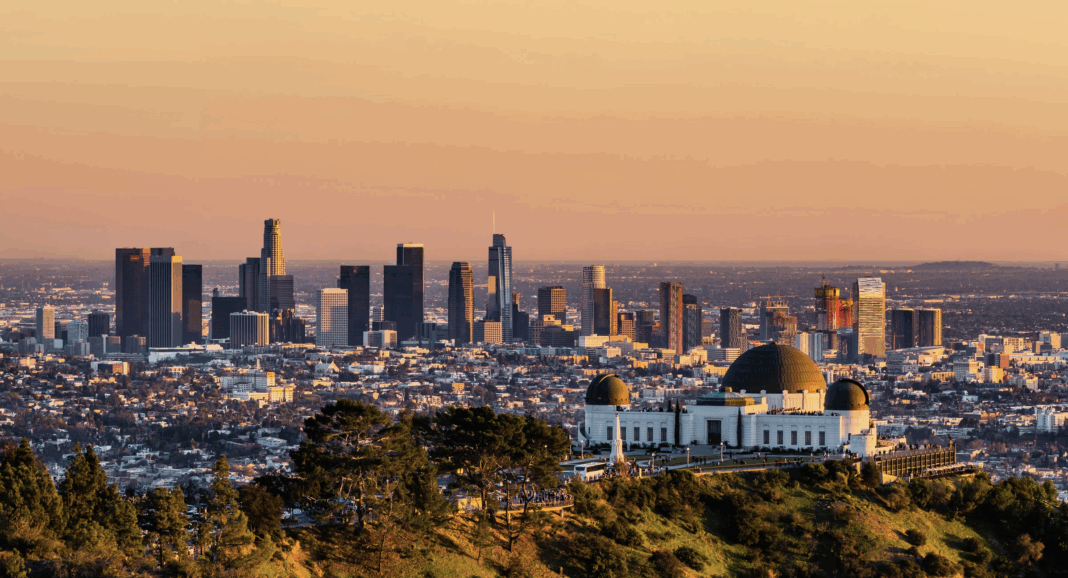
Perhaps one of the most popular parks in our community is Lake Balboa Park in the San Fernando Valley. While Lake Balboa Park, as many emphasize, is notable for its scale and landscape, another city park – Van Nuys/Sherman Oaks Park – is not only a place where people can enjoy their free time, get to know each other better in a safe environment, and escape the hustle and bustle of the city, but also a place for active recreation. Among other city parks popular in our community are Griffith Park, located in the Los Feliz area. Several other city parks in Los Angeles that enjoy consistent popularity among the Russian-speaking community include Laurel Canyon Mulholland Park, Encino Park, Coldwater Canyon Park, Temescal Canyon Park, and Valley Village Park.
Parks and recreational areas are the heart of the city and play a significant role in the lives of each of us, in the life of the entire community, which consists of immigrants from different republics of the former Soviet Union, and now independent states. Park art festivals play a significant role, both cultural and educational, in the life of our community. They help people feel needed again, and provide the joy of communication to fans in the format of live interaction and creative collaboration.
In Plummer Park, cultural festivals are regularly held in May, most notably the Mishka Festival – an annual celebration of our community with music and cuisine from post-Soviet countries, as well as the Colibri Dance Festival dance competition. Folk dances and costumes are an integral part of the festival program. These community celebrations of multilingual unity and culture have become a cherished tradition.
The event (Mishka Festival) was previously officially called the “Russian Culture Festival,” but after the start of the war in Ukraine, in May 2022, instead of the festival, the city hall held a charity marathon to raise funds for Ukraine, and this event was called “Mishka.” Incidentally, not only Russian-speaking residents of Los Angeles attend the festival. As one resident of our city who attended the festival said: “I don’t speak Russian, I have no connection to the culture of the Russian-speaking community, but it’s important to me that my children participate in the life of the city’s communities; such diversity is what makes our society unique.”
About 20% of the population of West Hollywood today is representatives of the Russian-speaking community – Jews, Russians, Ukrainians, Belarusians, Armenians, and others. The city hall says that a few years ago, the number of immigrants from Russia, Ukraine, and Belarus in West Hollywood was decreasing; they were settling in other areas of Los Angeles. The current wave of emigration that has poured out of these countries after the start of Russia’s invasion of Ukraine is also settling in West Hollywood.
The Mishka Festival is the culmination of West Hollywood’s Russian-Speaking Community Cultural Heritage Month. It is a family-friendly outdoor event aimed at exploring and sharing the rich traditions and arts of immigrants from the former Soviet Union (including Armenia, Moldova, Russia, Ukraine, Georgia, and others) who make up a significant portion of the city’s population.
Residents and visitors of the state flock to the festival from early morning not only to have fun, but also to enjoy exhibitions by local artists, enroll their children in a Russian-language school, listen to their favorite hits, dance to modern songs, sample dishes of their favorite cuisine, and discuss the situation in America and their former homeland; additional play areas for children are set up in the park, and representatives of the city and state authorities, as well as local Russian-speaking businesses, are present. Stage performances usually begin with performances by children’s groups from various schools and organizations.
Participants in the festival, performing on the park’s stages, have repeatedly included the International Kids Theatre, the popular music group Leo Chelyapov & Klezmer, the famous circus artists Master of World Circus Aga-Boom, the “Happy Notes” group, and the children’s show Marmalade.
Every year, a large gala concert is held featuring famous artists. For example, in 2025, Grammy Award winner Thelma Houston and international pop star Abraham Russo performed.
Admission to the festival and parking are free. Guests can enjoy music, dancing, theatrical performances, art exhibitions, and interactive activities for children, authentic food, and goods from local vendors.
During the festival, a food fair (or food market, gastronomic festival) is held in the park – this is an event where ready-made food, drinks, and products are sold and offered for tasting, often in the format of street food, from food trucks, kiosks, and stalls representing different national cuisines and regional delicacies. In essence, it’s a place where you can eat delicious and diverse food, and get acquainted with the culinary trends and traditions of different nations.
Another popular event in our community, also held in the city park, is the Colibri Dance Festival. This festival brings together dancers and families, showcasing the power of art and culture.
The organizers of this festival emphasize: “In a world where art becomes a universal language connecting people of all nationalities, the Colibri Dance Festival under the auspices of the Unity in Diversity Arts Foundation occupies a special place. It’s not just a dance event – it’s a synergy of cultures, emotions, and youthful energy embodied in choreography, color, and music.”
The Unity in Diversity Arts Foundation project is based on the idea that art can break down barriers and connect people. Dance, as a universal language of body and soul, becomes an instrument of harmony and understanding. At the Colibri Dance Festival, various styles meet – from classical ballet and jazz to contemporary styles and ethnic dances, reflecting the richness of the participants’ cultural heritage.
This event contributes not only to the artistic development of young artists, but also to the formation of a sense of mutual respect, support, and creative solidarity. Young performers can apply in categories such as piano, string instruments, and keyboard instruments. Each participant needs to present two musical pieces. The competition provides a unique opportunity to showcase their skills, gain recognition, and become part of an inspiring musical community.
Public organizations and local city authorities traditionally play an important role in organizing the festivals, providing comprehensive assistance for the successful conduct of these events. National dances, folk songs, costumes, unique souvenirs – all this can be heard, seen, and purchased by festival guests.
Festivals in parks are more than just a celebration of art. A park is primarily about people and for people. A park is not just green spaces, walking paths, benches, and sports facilities; a park is much more. A park is a part of our lives.
This story was produced by American Community Media in collaboration with the Laboratory for Environmental Narrative Strategies (LENS) at UCLA as part of the Greening American Cities initiative supported by the Bezos Earth Fund. Read more stories like this by visiting the Greening Communities homepage.