


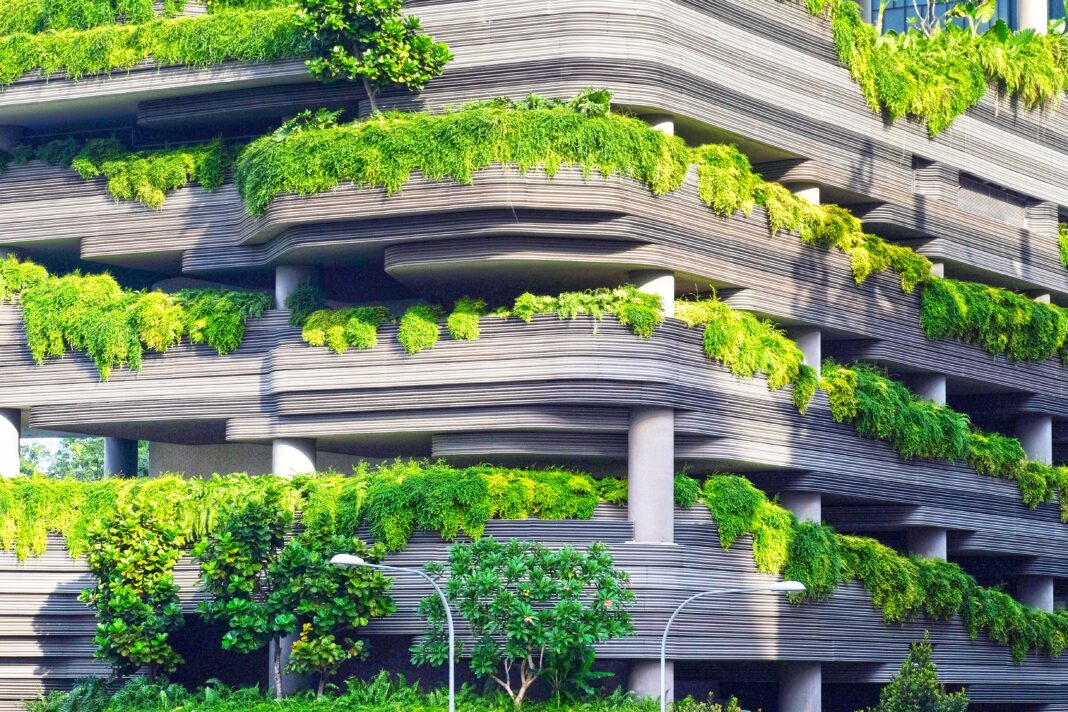
As humankind grows increasingly urban, planting trees and parks — far from merely beautifying cities — increasingly becomes a matter of life and death.
At a Friday, Dec. 1 Ethnic Media Services briefing, Los Angeles Forestry officials and urban greening experts discussed the city as a case study of the link between green space and human health, and explained how adding nearly a million years of life expectancy in LA County through urban greening could serve as a model for other cities.
Green space and life expectancy
The more parks and trees there are in a given neighborhood, the higher the area’s life expectancy, said Michael Jerrett, referring to a July 2023 UCLA study he co-authored, which found that bringing green space in LA County to median levels could add up to 908,800 years of collective life expectancy to residents in under-resourced communities.
While the study found that life expectancy in wealthy and verdant Beverly Hills was 90, the median in south LA communities less than 15 miles away was 77. The total expectancy ranged countywide from 68 years in poorer south-central areas to 93 in affluent places like Malibu, said Jerrett, a UCLA environmental health professor and Center for Healthy Climate Solutions co-director.
In already “very leafy areas, like Brentwood, or parts of West LA, there’s not a lot of impact in adding more green space,” he added, but in disproportionately less green areas in the east, south and far north — where two-third of LA County’s Black and Latino population resides — merely expanding parks to county medians would add 164,700 years of life expectancy to the region, with Black and Latino residents receiving 72%, or 118,000 of these years.
Healthy trees, healthy people
The health benefits that come from more parks and trees depend on more than just planting, said Rachel Malarich, the first City Forest Officer for the City of Los Angeles. “In order to achieve those benefits, we need to have healthy trees, regularly maintained to live their own full lifespan in the neighborhoods which most need them.”
The city’s Urban Forest Management Plan has four pillars, she continued: planting new trees, maintaining existing trees, preserving these trees amid new construction and development, and engaging the communities who live with these trees.
“When we talk to community members, there is often frustration because the trees haven’t been maintained,” Malarich explained. “The industry standard is to inspect trees and trim them as needed every five to seven years; the city’s current cycle is closer to 18 years … we’re now holding community engagement workshops and feedback surveys both to improve inequity of access to green spaces, and inequity in how these spaces are maintained.”
Greening on-the-ground
The most sustainable urban forests are planted and supported by members of their own communities, said Marcos Trinidad, Senior Director of Forestry at TreePeople.
Now in its 50th year, the urban greening nonprofit has been shifting from an all-volunteer model of planting, maintenance and community education to a hybrid model which includes “workforce development,” particularly training youth interested in environmental careers to work with community organizations to green “neighborhoods which need trees the most,” like northeast and southeast LA, he explained.
Though TreePeople is based in LA County, Trinidad said that its model of community investment in “what is needed to have sustainable, sustainable urban forests” — namely planting, maintenance, preservation and education — is meant to be shared well beyond LA: “We’re currently in the Inland Empire and Antelope Valley … and want to share our process with the rest of the world.”
Green equity as green stewardship
To invest in more green space for underserved communities means investing in those communities as caretakers of this space, said Bz Zhang, Project Manager of the Los Angeles Neighborhood Land Trust (LANLT) — which, since its inception in 2002, has created about 30 parks and gardens across 21 acres of green space for over half a million LA County residents.
Since majority non-white communities “have 64% less access to park space than those in white neighborhoods, and lower income communities have 66% less,” greening LA County best means “doing so explicitly from an equity lens,” Zhang explained. Most crucial to this equity is community-centered stewardship: LANLT maintains the parks they plant by “hiring part-time stewards from within the neighborhood they’re located.”
“In these communities we create stewardship training programs … particularly for youth, through our Garden Apprenticeship Program, which has worked with over 350 high school students in south LA since 2013 to arm the next generation with the skills to tend to these spaces which are so crucial to their health … We can always build parks, but we also have to make sure those most impacted by green inequity have access to them,” Zhang added.
‘A matter of life and death’
This access to urban greenery is ever-more crucial as humankind becomes an increasingly urban species, said Jon Christensen: “As of 2007, over half of us live in cities, and that’s expected to go up to 70% by 2050. Cities are our habitat and our resilience to climate change — the resilience of our own health as a species — requires that we invest in cities, which means remedying the inequities which have shaped our urban environment. It’s a matter of life and death.”
In its efforts to remedy green inequity, “Los Angeles is a model of global concern for understanding urban ecosystems,” said Christensen, adjunct assistant professor at the UCLA Institute of the Environment, Luskin Center for Innovation, and Laboratory for Environmental Narrative Strategies.
In California alone, he continued, “$100 billion dollars will be spent on green infrastructure, urban greening and climate resilience over the next several years — half of it from the federal government and half from the state.” As governments worldwide begin to implement similar measures, “We need to recognize that planting trees is not enough; we need to ensure that the communities which most need them can thrive with them.”