

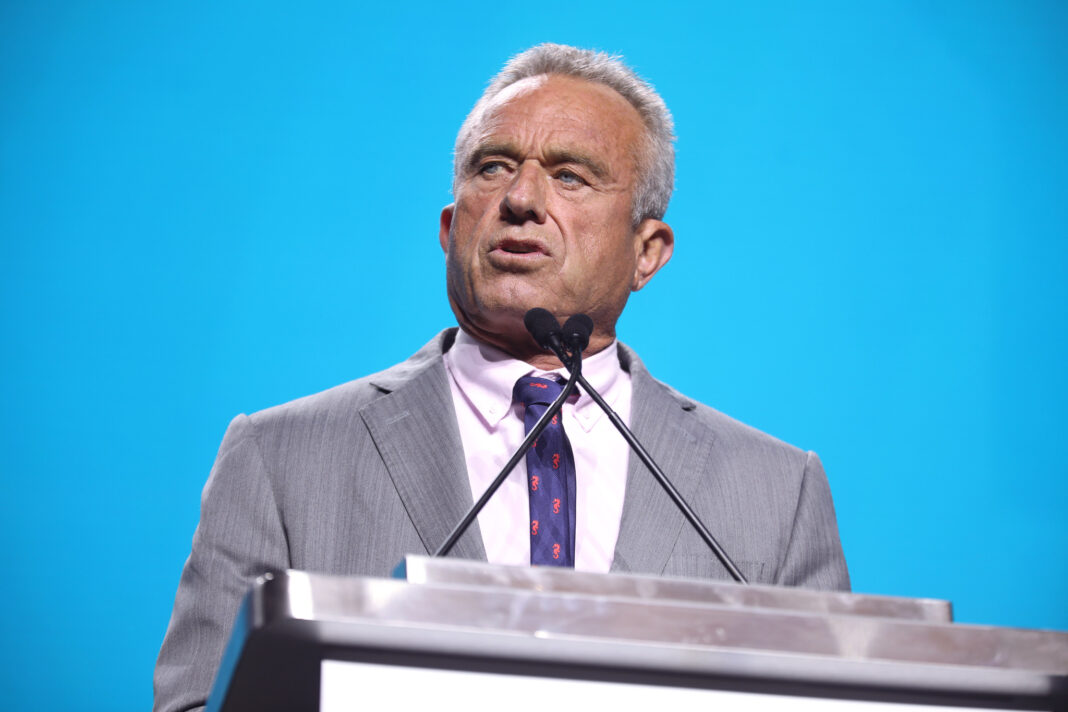
Robert F. Kennedy Jr., confirmed by the Senate Feb. 13 to head up Health and Human Services, is likely to gut public health research, including the development of new vaccines to address the onslaught of diseases the US currently faces.
Kennedy, who was grilled extensively during the confirmation process for his anti-vaccine bent, was confirmed by the full Senate on a 52-48 vote. Former Republican Majority Leader Sen. Mitch McConnell, a polio survivor, was the sole Republican to vote against Kennedy’s confirmation.
“I’m not here to attack vaccines,” Kennedy repeatedly stated during his confirmation hearings.
No Funding for New Vaccines
“It’s not clear how much of what Mr. Kennedy is saying is just hype and words and how much is going to be action,” said virologist Dr. Ben Neuman, a professor of biology at Texas A&M University. “But I can confidently say that if he carries out everything he says, it would gut the infectious disease research landscape in the United States of America.”
“That’s a thing that may not have immediate consequences because the process of going from a new virus to a new vaccine or drug takes several years. But when you shut off the pipeline, it creates this downstream effect where eventually nothing is going to be coming out. So that is very much my concern and we will see how that plays out,” said Neuman, at a Jan. 10 Ethnic Media Services news briefing (see related story).
Vulnerable Children
Neuman expressed concern about Kennedy’s anti-vaccine stance regarding vaccines that are now mandatory for school children. “Since the time we’ve had vaccines associated with school, those have been a big part of the eradication of polio, for example, which is a disease that a lot of younger children catch. There are easily preventable viruses out there.”
“And if the immunity of the youngest group who are the most susceptible and the most likely to spread the viral franchise, I think we’ll see a lot of spillover into older people, parents, communities, and we don’t really know what the effect will be except to say that it will be bad.”
“It’s depressing, but yes. We are seeing a very large decrease in the vaccines that are not obligatory.”
Spikes in Infectious Diseases
Neuman said he expects to see spikes of whooping cough cases, measles, chickenpox, and other illnesses currently protected by vaccines.
11 million fewer doses of the flu vaccine were taken up in 2024, and compared to 2020, 49 million fewer doses were delivered. “And we’re seeing the results in the numbers of virus infections, not only in hospitals,” he said, noting that the H1N1 strain of flu can be effectively stopped with a vaccine because it’s a more recent virus. The H3N2 strain is harder to control with vaccines.
“We are seeing about equal numbers of both of those out there. And that is disheartening,” said Neuman. Just 8% of the US population has received a booster Covid-19 vaccination, he added.
Vaccine Skepticism
“I’m worried that the anti-science movement will make people not take advantage of all the tools that we have,” said Dr. Peter Chin-Hong, an infectious diseases specialist at the University of California, San Francisco.
Defend Public Health, an organization comprised of public health academicians, released a letter Jan. 13, expressing concern about Kennedy’s vaccine skepticism.
“The nation’s health department must be led by someone who respects and believes in science – robust basic research, pandemic preparedness and evidence-based approaches to all conditions that threaten Americans’ lives and well-being and are designed to protect us from cradle to grave,” said the letter, which bore over 700 signatures.
“Mr. Kennedy is well known for his conspiracy-driven theories on vaccines, COVID-19, HIV, and fluoridation. His unfounded, fringe beliefs could significantly undermine public health practices across the country and around the world,” wrote the signatories.