



Stroke is the 4th leading cause of death in the overall U.S. population. But it is the 3rd leading cause of death for women, in whom stroke presents differently than it does in men.
According to data from the American Stroke Association, stroke kills 90,000 women each year. One out of 5 women over the age of 55 will suffer a stroke.
Yet as women live longer than ever before, often spending a third of their lives after menopause, researchers are only now beginning to understand how aging, hormones and vascular disease interact to shape long-term brain health.

“In every decade after 50, women are more likely to experience stroke compared to men, especially severe strokes. This significantly fuels the risk for cognitive impairment, and — eventually — dementia,” said Dr. Farida Sohrabji, head of the Department of Neuroscience at Texas A&M University, where she is also Experimental Therapeutics Director of Women’s Health in the neuroscience program.
Misdiagnosis
Women experience an average two-year delay in diagnosis across hundreds of medical conditions, said Dr. Liisa Galea, Treliving Family Chair in women’s mental health at the Centre for Addiction and Mental Health in Toronto, Canada, and lead of theWomen’s Health Research Cluster.
“A two-year delay in diagnosis is a huge problem. Earlier interventions are most important for effective outcomes,” she said, in an interview with American Community Media.
Galea added that women who may have suffered a stroke are often misdiagnosed.
“We are still largely treating stroke as a male illness,” said Galea. “You go to the emergency room and you’re sent home. The doctor is saying: ‘No, no, you’re fine.’ That’s going to have more cascading issues for you.”
Risk Factors
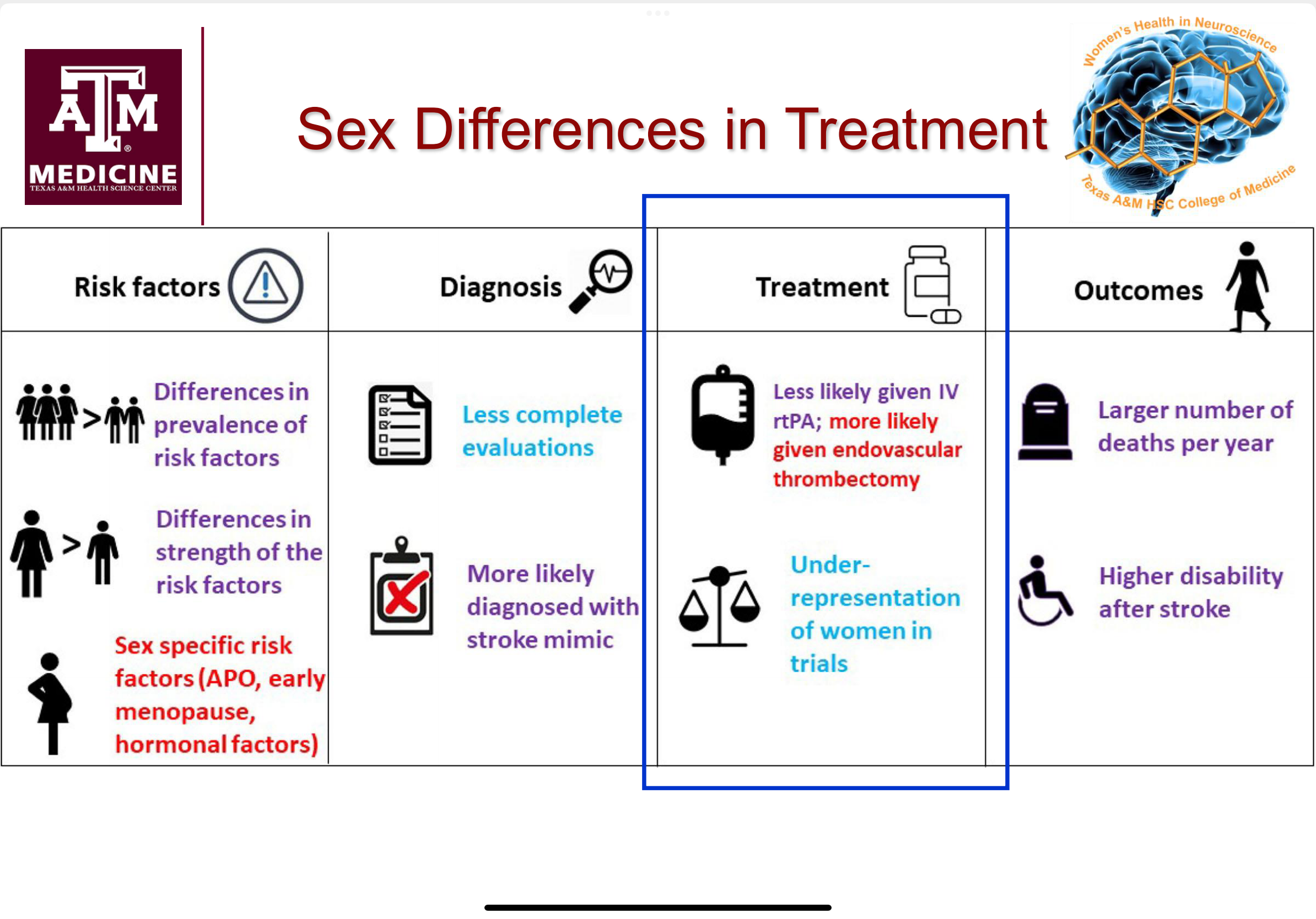
Black and Latina women suffer strokes at disproportionately higher rates than their white counterparts. The prevailing risk factor for Black women is hypertension. And the largest risk factor for Latina women is Type 2 diabetes, said Sohrabji, in an interview with ACoM.
After menopause, all of these factors increase, especially hypertension, irrespective of ethnicity. But if you’re starting from a higher baseline, that adds to it, she added.
Black women experience stroke-related death at higher rates than any other racial groups. Socioeconomic factors further compound those risks. Limited access to health care, delayed diagnoses, medication costs and barriers to healthy nutrition can increase the likelihood of stroke and complicate recovery, said Sohrabji.
“All of those things contribute to your elevated risk.”
‘Time is brain’
Because men experience strokes at a younger age than women, they are more at risk for having a second or even third stroke.Nearly one in four stroke survivors will have another stroke in their lifetime.
But women tend to suffer strokes later in life, after menopause, when naturally occurring estrogen levels decline. Ovarian hormones like estrogen and progestins have been shown to be protective for cardiovascular risk and cerebrovascular risk, said Sohrabji.
“There are so many more severe strokes in older women,” she continued. “At that time, they might be living on their own. They may have outlived their spouses. Then when they have a stroke, there’s nobody that they can call because they have lost function,” she said.
“Women may lose consciousness, and may not have the wherewithal to make a phone call. And so treatment gets delayed. And when treatment gets delayed, the effects of the stroke just rocket on. You’re losing more and more brain tissue.”
Rapid loss of neurons
“The most common public service announcement is ‘time is brain, because we lose neurons so quickly. And older women may suddenly find that they are not getting to care centers quickly enough,” said Sohrabji.
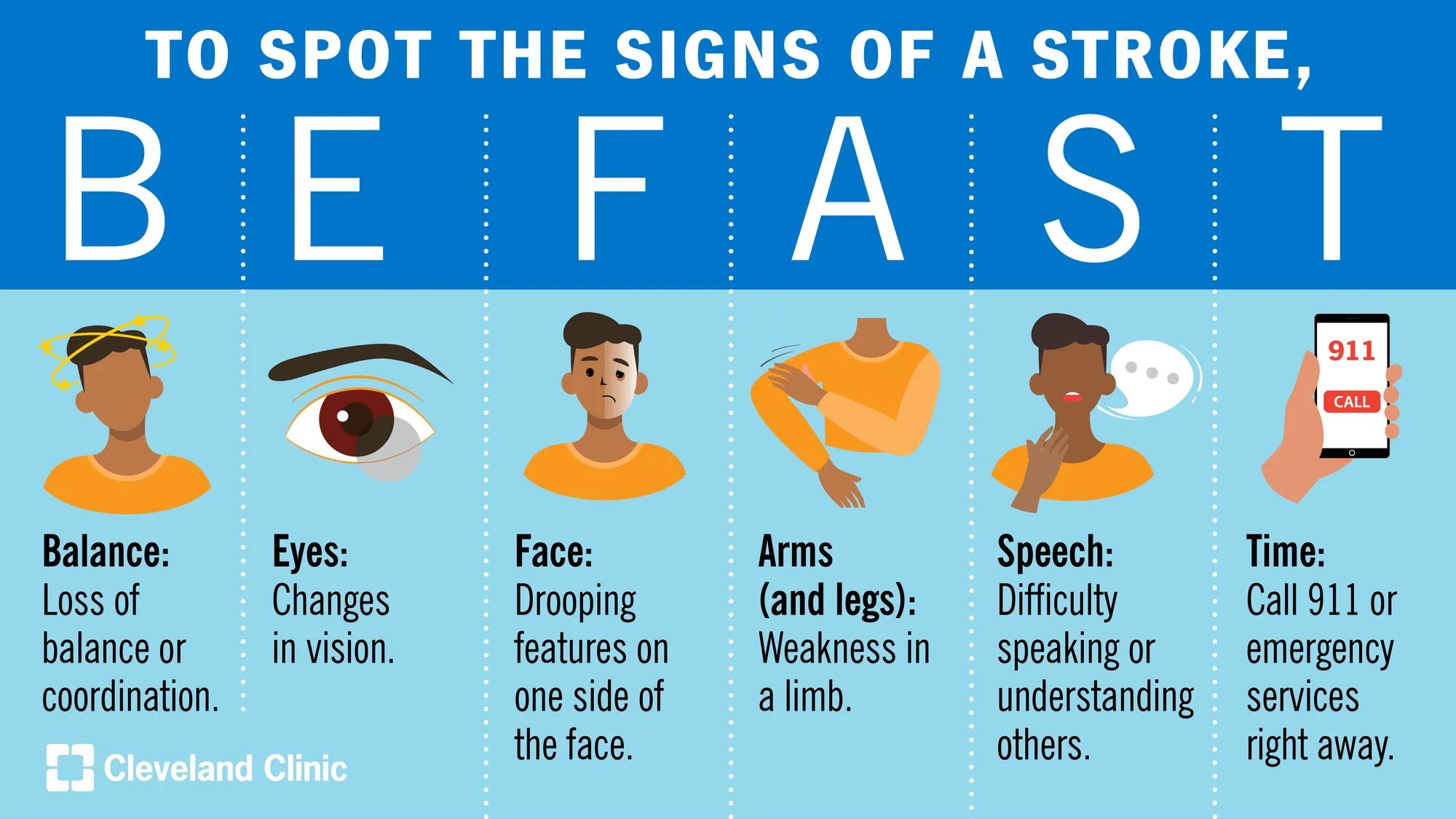
Most public health campaigns focus on classic stroke symptoms such as facial drooping, slurred speech and weakness on one side of the body. But women are more likely to experience symptoms that can be overlooked or misdiagnosed.
“There are subsets of people, many of whom are women, who will report symptoms such as migraine, pain from the jaw radiating upward, confusion and anxiety,” said Sohrabji. “Those symptoms will not get you diagnosed as an urgently stroke-needing individual.”
The seeds of decline
Stroke acts like a seed for cognitive decline, Sohrabji explained, fueling the buildup of certain proteins in the brain — amyloid or tau accumulation — often associated with dementia. Even before dementia develops, however, many patients experience mild cognitive impairment, which can affect memory, judgment, decision-making and executive function.
But caregivers should also watch for less obvious symptoms.
“Personality changes should also be paid attention to,” said Sohrabji. “People often report the forgetting. But when a patient talks about changes in themselves, they’re much more likely to talk about the depression.”
Loss of social engagement, withdrawal from previously enjoyable activities, anxiety, aggression and depression can all be warning signs of post-stroke cognitive decline. Women may also display more aggression, she said.
“Caregivers are in a very good position because they know what the baseline was, and they know what changes are occurring,” said Sohrabji.
The gender health divide
In a report released May 1, the World Economic Forum noted that men’s health has been the default globally. Historically, medical research, clinical trials, and healthcare products are designed around male biology.
Women spend 25% of their lives in poor health, resulting in 75 million lost years of life globally. Addressing the health divide could boost the global economy by $1 trillion by 2040, noted the WEF.
“Women’s health research is severely undervalued and severely underfunded,” said Galea.
“There was a long-standing assumption — and I think it’s still true to this day — that women don’t really differ from men. We’re just smaller in general, we weigh a little less, we’re a little bit shorter in height. Outside of pregnancy, there’s not really any difference between the genders. So why do we need to study women specifically when we can just use men and the data around men.”
But that ignores some very basic physiology, she stated. “In every single cell in our body and every single organ that we have, there are XX, XY, or X0, XXY chromosomes. So those sex chromosomes will affect the signaling within those different organs,” she said.
Women have more estrogen and men have more androgens. Those hormones have a “lock and key” impact on receptors which impact every single organ in the body, explained Galea.
“And so it shouldn’t be super surprising that we’re going to have different influences of our hormones on these different organs. But yet that’s been largely ignored.”
Concerns around pregnancy also left women largely out of clinical trials.
Federal initiatives
In 1993, the National Institutes of Health mandated that women and minorities must be included in clinical trials. However, there is no fixed percentage. The NIH requires that women be included in numbers proportionate to the prevalence of the condition under study in the general population. So, if a disease affects men and women equally, the participants must be 50% men and 50% women.
But the NIH only funds about 15% of all clinical research, noted Galea.
In 2024, former President Joe Biden signed a memo requesting $12 billion in funding for research focused on women’s health. He also established the White House Initiative on Women’s Health Research.
“Never before has there been such a comprehensive effort from the federal government to spur innovation in women’s health research,” said Carolyn Mazure, former chair of the initiative. “This is a huge opportunity for transformative change that can improve the health and the lives of women across this country.”
The initiative initially faced funding cuts when President Donald Trump took office, but was restored following public outcry.
Stroke awareness

Dr. Eliza Miller, a vascular neurologist who serves as the chief of Women’s Neurology at the University of Pittsburgh, and as chief of Neurology, UPMC Magee-Womens Hospital, believes women need to be more aware of their risk for stroke.
Traditional advocacy has focused mostly on older men. But women are presenting with stroke at a much younger age, including some in their reproductive years, Miller, an active volunteer with the American Heart Association/American Stroke Association told ACoM.
“I have lots of young women in my clinic who have had strokes. They feel invisible: like nobody understands what they’ve gone through. I had three patients this morning who were all just struggling with their post-stroke mental health: anxiety, depression, isolation, social anxiety, afraid to go to the grocery store,” said Miller.
Stigma
“There’s stigmatization of stroke and neurological disorders in general. People are embarrassed, especially if they have a disability,” said Miller. Survivors with speech impairments or cognitive issues are especially embarrassed to discuss their challenges, she noted.
“The AHA/ASA has done a really good job in bringing survivors into the conversation and combatting the stigma surrounding stroke,” said Miller. She likened it to initiatives empowering women to discuss breast cancer, also once a “hush-hush” illness.
Miller also advocated for gender-specific clinical trials. “We have to power the trial to look at men and women separately. And we in the research community are recognizing and pushing the idea that sex is not a covariant. You can’t adjust away someone’s sex. Instead you have to stratify by sex.”
The AHA/ASA’s Research Goes Red is the largest women’s health registry and platform, encouraging women to participate in clinical trials. More than 24,000 women are active participants on the platform.
The organization’s Go Red for Women campaign informs women of their risk for stroke, and underlying conditions that contribute to the illness.
Editor’s note: Dr. Farida Sohrabji, a source quoted in this story, is the cousin of the reporter. This article was written with the support of a journalism fellowship from The Gerontological Society of America, The Journalists Network on Generations and The Silver Century Foundation.