


Farm Work is Honorable: In this short video, we hear from Juana Chavoya, a farmworker in Tulelake, California, who says former President Donald Trump’s campaign rhetoric targeting immigrants leaves them feeling “attacked and discriminated against.”
By Sandra Martínez | P360 Press
Migrant farmworkers in the US say they feel attacked and discriminated against by former President and current GOP candidate Donald Trump’s hostile campaign rhetoric, in which he has referred to migrants as criminals, mentally unstable, and abusers of US immigration law.
Manuel Ortiz, director and cofounder of Peninsula 360 Press, traveled to rural Northern California where he spoke with farmworkers about their response to Trump’s anti-immigrant attacks which have long been a hallmark of his political career.
Juana Chavoya, a farmworker originally from the state of Jalisco, Mexico, works harvesting mint and other crops in the fields surrounding the town of Tulelake, just south of the Oregon border. Contrary to Trump’s statements, she insists that those coming to the US are in search of a better life for themselves and their families and not to do harm.
“We feel attacked and discriminated against by Donald Trump. We work and fight to help grow this country,” she said.
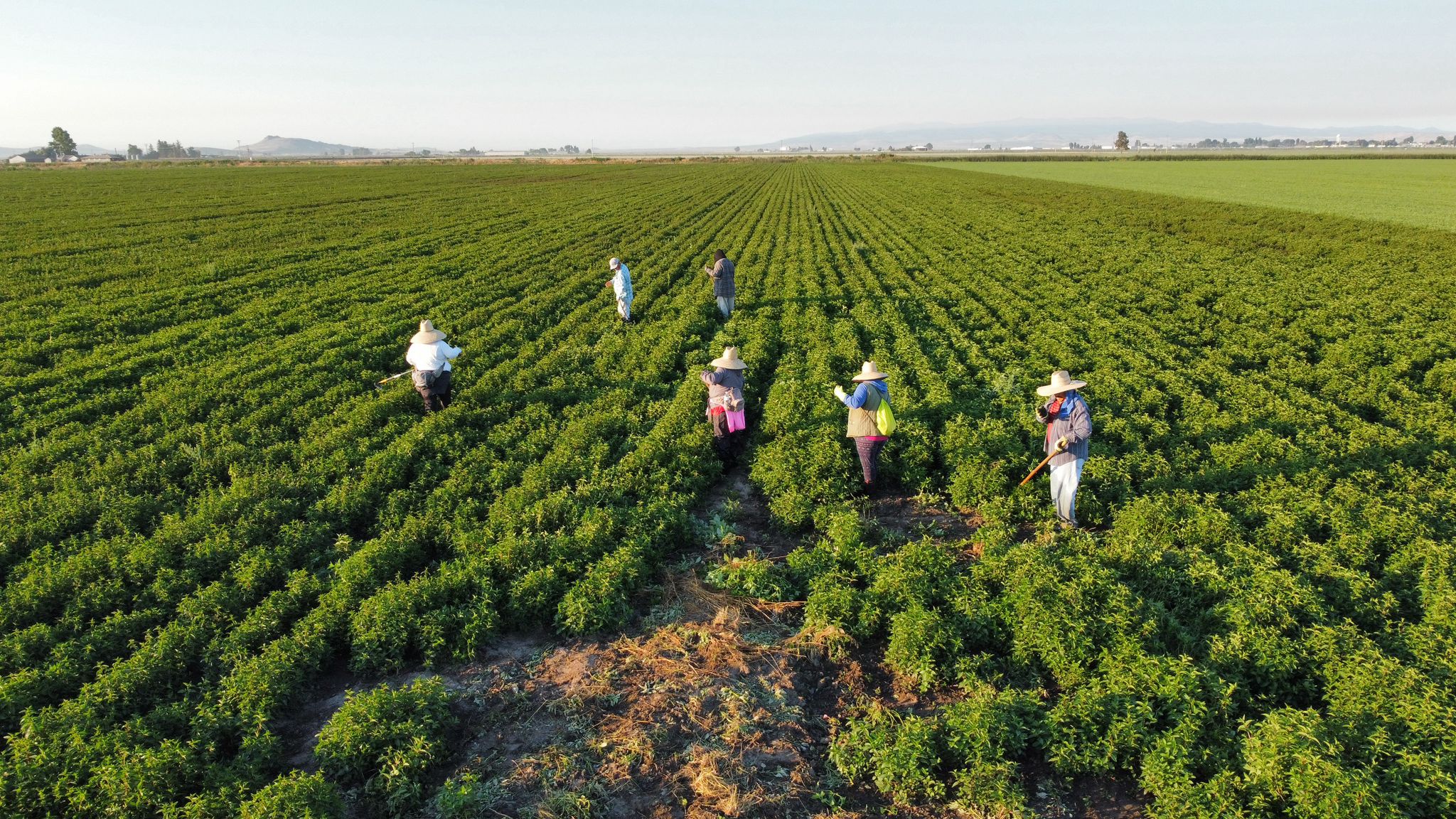
Over the 16 years that she has worked in Tulelake, she says she has only seen three Americans who tried to work the fields. “They didn’t last long, they couldn’t manage it,” she said, leaving it to migrants to grow and harvest the food that Americans consume.
Chavoya says it’s very easy to open a fridge and grab some fruit or veggies to eat, and easier still to forget about the tremendous amount of labor needed to bring those fruits and veggies to market, hours spent under the sun, caring for and tending to these crops.
At the same time, farmworkers constantly confront extreme fatigue, pain, illness, heat and cold, all the while dedicating themselves to their work.
Pointing to those with the privilege of not having to work in the fields, Chavoya says she is constantly urging her son to study hard so that he does not have to labor so intensely in the same way as his parents.
“Prepare yourself, because you have all the rights and benefits of being here. Be ready, because we are here pushing you forward. That is why we came, to get ahead, to help our children move forward, and to be a blessing to others.”
This story was originally published in Spanish by Peninsula 360 Press. You can listen to a radio broadcast of this story at Hecho en California.