


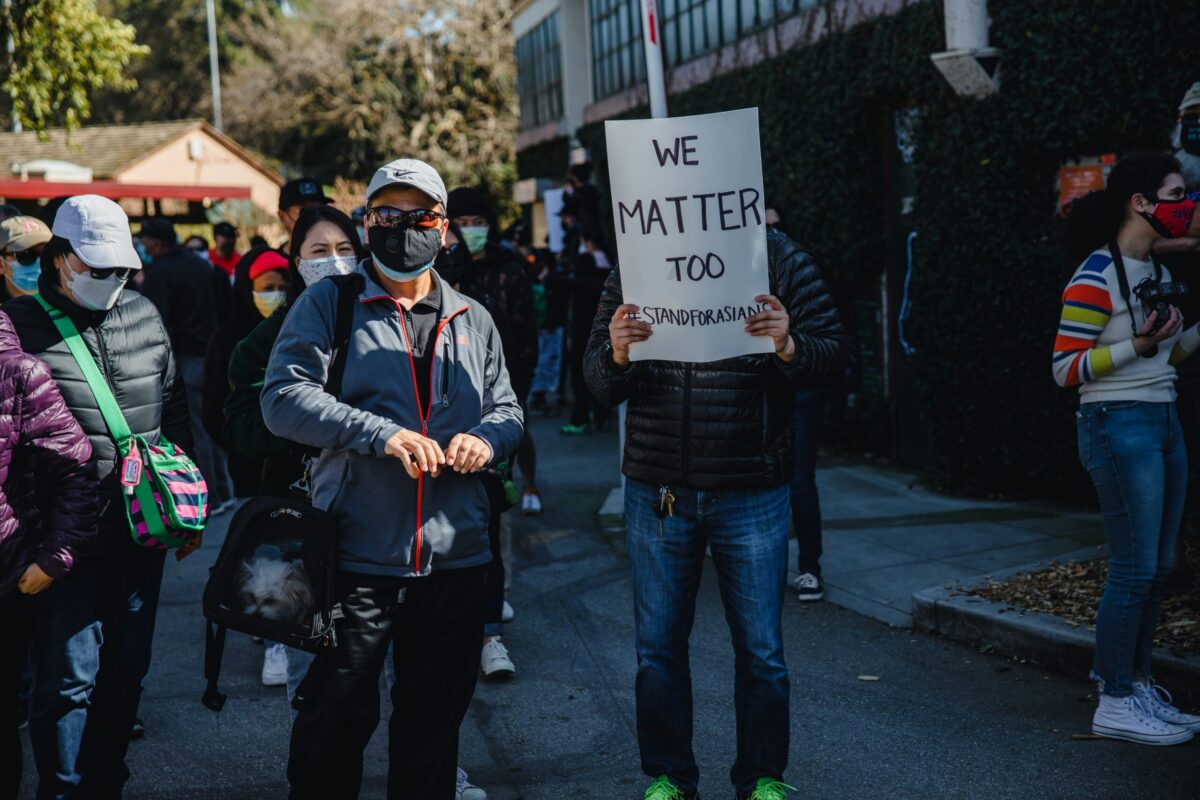
The fastest-growing U.S. racial and ethnic group is disproportionately absent from the current debate around immigration in the U.S. Experts say that absence leaves millions vulnerable to rising hate.
The U.S. Asian population grew over 108% from 11.9 million in 2000 to 24.8 million in 2023, according to Pew. Today, 54% of Asians are immigrants; among adults, that share rises to 67%.
Research from Stop AAPI Hate released in February 2025 shows that one month after President Trump took office, Asian Americans already faced a renewed spike in hate—mirroring rhetoric around H-1B visas and Chinese-owned tech companies like TikTok and DeepSeek AI, and echoing earlier surges in anti-Asian hate during the COVID-19 pandemic.
To understand how anti-immigrant policies are affecting Asian Americans now, American Community Media Co-Director Julian Do turned to Connie Chung Joe, executive director of Asian Americans Advancing Justice–Southern California (AJSOCAL).
Founded in 1983 — one year after Vincent Chin, a Chinese American man, was killed in Detroit by two autoworkers who blamed Japan for the decline of the American auto industry — AJSOCAL has since grown into the largest civil rights organization in the U.S. dedicated to serving Asian Americans and Pacific Islanders (AAPIs), serving over 15,000 AAPIs across Southern California alone.
In California as in the U.S., Asian Americans are the only major racial or ethnic group that is majority immigrant: 59% of Asian Californians are foreign-born, compared to 27% of Californians overall.
For that reason, says Joe, many in the community have been deeply shaken by ramped-up Immigration and Customs Enforcement (ICE) raids.
Where do you trace the roots of this current wave of anti-immigrant sentiment? And what makes Asian Americans particularly vulnerable?
Immigrants have been fundamental to the development of America since its inception. However, as an easy target, they have consistently been made political scapegoats throughout history.
Trump, using an old playbook, exploited immigrant populations, blaming them for the economic woes of his base to secure votes. The Trump administration’s actions extend beyond targeting undocumented immigrants and those with criminal records. ICE has also arrested, detained and deported law-abiding individuals including students, green card holders, professionals with working visas, legal residents, DACA recipients and even war veterans.
Stereotypes aimed at Asians perpetuate the perception that we are untrustworthy outsiders and security risks. This was evident with events like the pandemic, the Vincent Chin murder, the incarceration of Japanese Americans during World War II, the aftermath of 9/11 and ongoing conflicts between America and China. These narratives suggest we are insufficiently American or patriotic, leading to the villainization of Asian immigrants.
There’s a view among many Asian Americans that they will not be impacted by current anti-immigrant policies. Why do you think that is?
Unfortunately, this perspective is inaccurate. We often hear about large-scale, visible ICE raids targeting Latino immigrants in agricultural settings, food processing plants, community businesses and day laborer sites.
But less visible, smaller raids targeting Asian immigrants are also occurring in garment and fashion wholesale shops, shopping centers, massage parlors, nightclubs, restaurants and grocery stores across California, Texas, Georgia, Louisiana, Washington and Minnesota. Asian immigrants have also faced quiet arrests at workplaces, at courthouses and during routine check-ins with immigration authorities.
Southeast Asian immigrants, alleged to have violated records, have been deported without due process to third countries in Africa and Latin America. (A Vietnamese immigrant died in a Texas hospital on July 19 after being transferred from a detention facility where he had been held for seven weeks.)
Although one out of seven Angelenos is Asian American, our voices are not often heard partly because many of us do not report unlawful arrests, civil rights violations and raids due to cultural stigma, language barriers and fears of retribution or legal entanglement.
What about Asian Americans who have citizenship? Are they safe?
Unfortunately, no. Last month, the Department of Justice announced that naturalized citizens could face denaturalization if they’re found to be national security risks. This policy disproportionately affects Asian Americans, who represent the largest racial group to naturalize in the U.S. In 2022, for instance, 37% of new naturalized citizens were Asian Americans.
So what are the implications when a naturalized citizen can be stripped of their citizenship and deported?
We don’t know because the denaturalization memo is deliberately vague and broad. Historically, policies like these were often used against suspected communists. In the current climate, I believe it’s an enforcement strategy for specific removals, where those suspected may not receive due process.
Still, there are those within the community who support the current spate of anti-immigrant policies. What are you hearing from them?
The Asian community is far from monolithic, encompassing a diverse spectrum of demographics and political affiliations speaking a multitude of languages, so yes, there are Asians who oppose a pathway to citizenship for undocumented immigrants. Their perspective is rooted in the belief that it is unjust for those who entered the country illegally or overstayed their visas to bypass the lengthy, legal immigration process they endured to arrive here. We respect this viewpoint.
However, we believe that undocumented immigrants who have maintained a law-abiding record and have contributed significantly to society — working as farm pickers, food deliverers and caregivers, among other roles — deserve protection.
And for undocumented students, it’s often assumed that all Deferred Action for Childhood Arrivals (DACA) recipients, or “Dreamers,” are Latinos, but even some of the earliest Dreamers included individuals like Tereza Lee, a South Korean whose parents overstayed their visas.
What are some of the impacts you are seeing from these ongoing ICE raids and migrant detentions?
Asian immigrants play a crucial yet often overlooked role in the U.S. healthcare system. They serve as doctors, nurses and lab technicians in hospitals and clinics. Additionally, many nursing homes and senior care facilities heavily depend on Asian immigrants who provide caregiving services at very low salaries.
Most of these individuals are in the U.S. legally on employment-based H-1B or L-1 visas, so revoking current visas and restricting the number of new visas is leading to a decline in healthcare services and increased costs.
The clothing industry in Los Angeles has also been severely affected by immigration policies. After ICE raids in the downtown garment district, where shops are largely owned by Koreans and employ Latino workers, the area became deserted overnight. This multi-billion-dollar industry experienced an immediate and drastic impact.
Anti-Asian hate incidents at various public locations over the years — including train stations, workplaces, shopping centers, schools and religious institutions — have already instilled fear among Asian Americans. The added stress of ICE raids, with individuals being apprehended at grocery stores, public events and courthouses, has significantly worsened this situation.
Many Asian Americans here are increasingly hesitant to leave their homes, opting to skip work and medical appointments and cancel their usual activities in public spaces.
How is AJSOCAL responding to all these challenges?
We are facing a multi-front battle including dwindling federal grants and resources, a surge in demand for our services, a hostile legal landscape and staff burnout. Furthermore, we are constantly scrambling to respond to this administration’s ever-evolving legal interpretations of laws to protect our members. These are the biggest tests we have ever faced.
In collaboration with Asian organizations including AAPI Equity Alliance, OCAPICA, Catalyst for San Diego, Thai CDC and CAA, we have a Rapid Response Network enabling us to track hate crimes, conduct bystander and immigration rights training, monitor Asian businesses for ICE raids, represent clients in courts, gain access to detainees and address family separation.