


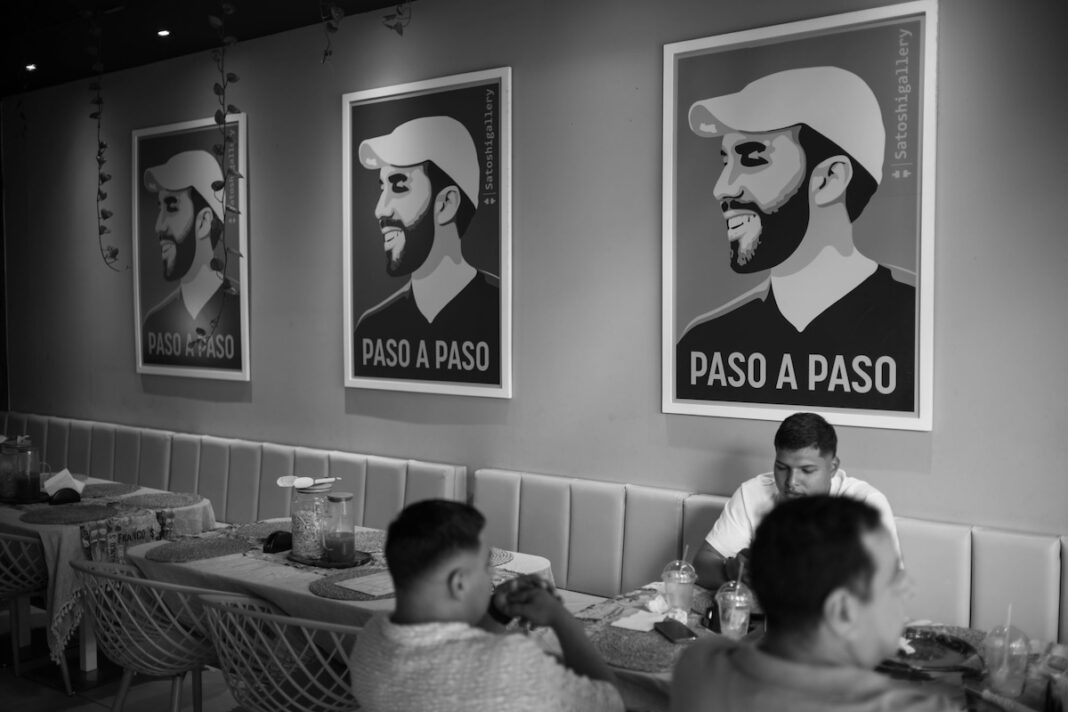
In 2024, journalist and photographer Manuel Ortiz traveled to El Salvador to report on allegations of human rights violations and threats to democracy under the country’s populist president, Nayib Bukele. This week, Ortiz returned to El Salvador with a team of Stanford researchers and in collaboration with the human rights organization Global Exchange to find out what, if anything, has changed over the past year. According to Ortiz, conditions—especially for the nation’s poorest—have grown more dire as mass arrests continue even as people struggle to meet their most basic needs. He spoke to ACoM’s Peter Schurmann.
Hear full interview | SoundOnSight Podcast on Spotify and Apple:
SoundOnSight IS A NEW PODCAST INITIATIVE BY ACoM. CHECK OUT MORE EPISODES HERE.
You’ve been in El Salvador for the past week interviewing people about the situation there. What have you learned? What stands out for you?
El Salvador has been under a “State of Emergency” or “estado de excepción” since 2022. In May of this year, the head of one of the country’s leading human rights organizations, Christosal, was detained by authorities and accused of corruption. She’s being held incommunicado. Just this week the organization—which drew much of its funding from USAID before that was shut down by the Trump administration—announced that after 25 years of service, it is closing operations and leaving El Salvador. This is part of what we came here to investigate, the ongoing mass detentions and the broader state of democracy in the country. And I think the difference that I see now is the heightened state of fear. Most of the people we talk with, not only journalists or victims, or people who have been incarcerated, but anyone, the taxi driver, anyone, will tell you they are scared, scared to talk.
Bukele remains very popular in the country. How do you explain this sense of fear that people have?

It’s a very complex situation here. Yesterday we visited a community, Primero de Diciembre, near the capital, San Salvador, where residents told us about life under the gangs that used to control the area. There was no safety, no security. Then Bukele came to power, and soon after he announced the state of emergency. That’s when the mass arrests started. People like Bukele, and I understand why. They were tired of the violence. They were tired of the failures of past governments, both on the left and the right. But now, what they say is that while they were once victims of the gangs, now they are victims of the state. There is no law, they say. And what the government is doing is basically criminalizing poverty. If you’re young and poor, you’re a target.
Human rights groups accuse Bukele of using torture in prisons like CECOT, where the Trump administration has sent migrants deported from the US. You interviewed former detainees there. What did they say?

We interviewed people who were formerly incarcerated. We interviewed doctors (who asked to remain anonymous out of fear for their safety) who treated former detainees. All of them described torture and torture-like conditions. Former detainees described being beaten when they entered the prison. People are crowded into very small spaces. They are forced to eat in the same place where they go to the bathroom. Sickness and skin diseases are common. We don’t know exactly how many people have died inside these prisons (CECOT is only the most well know, but there are many other prisons), but we know that people have died. The fact is that since the state of emergency was declared the government has not made public any information. What we know comes through Bukele’s X account. That’s how he governs.
That sounds familiar. Have you spoken with anyone deported from the U.S.? And if so, what are they saying?

We spoke with a woman in Primero de Diciembre who was deported. She lived in the United States for 10 years and was sending remittances to her ailing mother here. (Remittances account for nearly a quarter of El Salvador’s GDP, the overwhelming majority coming from the U.S.) She told us she was shocked by conditions when she returned. Aside from safety, economic gains are another Bukele talking point. But according to this young woman, there are days where she doesn’t have enough to feed her family. She says she’s planning to come back to the U.S. even though she knows the risks involved. It’s impossible to live here, she told us.
As you wrap up your trip there what stands out for you? What lessons have you drawn from the people you’ve spoken with?

Americans and the entire world should know what’s going on in El Salvador to see how a populist president can become an authoritarian regime. It doesn’t happen from one day to the next, but gradually, step-by-step, until you have no rights. Right now, Salvadorans have no rights. You can be on the street. Police can arrest you, can take you, can incarcerate you. You will not have access to your lawyer. You will not see your family. You can be in jail for one, two, three years with no due process, with no formal accusation. I think this is the message for the United States.
This story is part of “Aquí Estamos/Here We Stand,” a collaborative reporting project of American Community Media and ethnic/community news outlets statewide tracking how current White House policies are impacting Californians, especially in rural regions, and how residents are responding.