


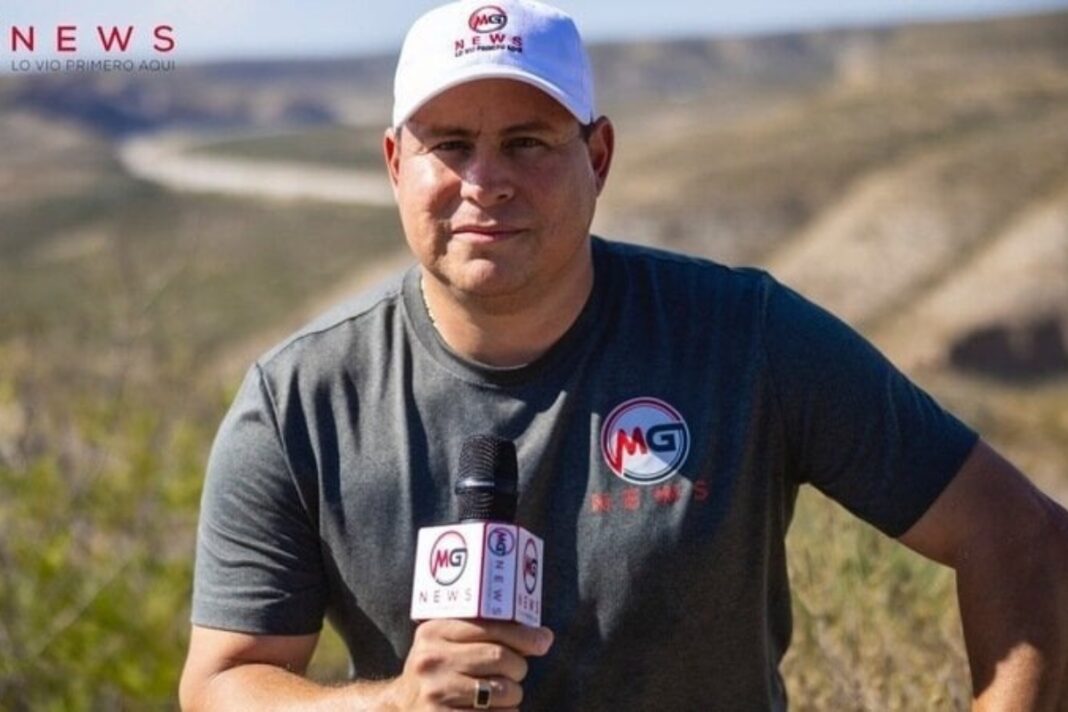
By Irene Diaz Bazan
Editor’s note: Gwinnett County, Georgia July 10 dropped all charges against Salvadoran journalist Mario Guevara, who was arrested last month while covering ICE protests in Atlanta. Guevara, however, remains in ICE custody at a detention center in Folkston, Georgia. The Committee to Protect Journalists has asked for Guevara’s immediate release.
He greeted us like a child, with a wide smile, a firm hug, and immense joy. He was there as we never imagined: dressed in blue, clean, a little thinner, and free of his own freedom.
He briefly described what these past few days away from his family, his audience, and his community have meant to him. Without being able to communicate, what he finds most enjoyable in his professional life.
At the immigration processing center in Folkston, Georgia, about five and a half hours from metro Atlanta, we met our colleague Mario Alexander Guevara. A little concerned about his legal future, Atlanta’s most well-known Hispanic reporter met us in a closed room.
Arrested While Reporting
Mario was arrested on June 14 while covering a protest march against current immigration policies, never imagining that he would be behind bars within hours. Ten days later, thanks to the intervention of his lawyers, the charges filed in DeKalb County were dismissed.
With a work permit but no legal status, the Salvadoran journalist had evaded deportation to his home country for years.
But today he faces trial for other minor traffic charges filed in Gwinnett County.
When asked what he values most now, from his confinement in Folkston, he told us without hesitation: “Having caused harm to my family.”
A Sense of Panic
With a worried look on his face at times, Mario — the colleague and friend — opened his heart to tell us that sometimes he can’t sleep, and that on his third day in detention he felt a strong sense of panic.
Just days before his court hearing, where he could win or face defeat, Mario Guevara is confident in the power of his legal defense and the protection of the Almighty.
He is encouraged by knowing that his family loves him, that hundreds of people have shown their solidarity, and that he still has the strength to endure.
“Maybe I was reckless and overstepped my bounds, thinking I was doing others a favor,” he told us while devouring the chips Armando Bello bought him from the vending machine.
Goodbye
“This is gold to me,” he said. Rafael De J Navarro and I smiled.
After an hour of visiting, we said goodbye. I had a lump in my throat, my voice breaking.
He walked us to the door, hoping to walk through the passageway together. But a door closed in front of him. He could only say goodbye with a friendly gesture from a small, opaque window, where his smile was beginning to fade.
See you soon, Marito, I told him.
This story was originally published in Prensa Atlanta and can be read in Spanish here.