


By Wendy Selene Pérez
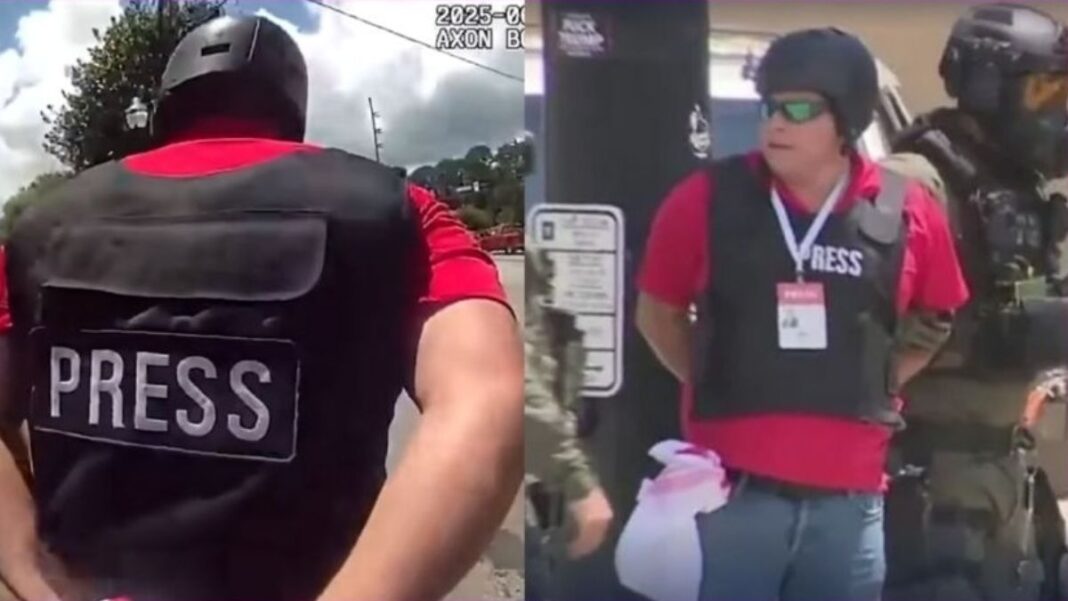
The deportation of Salvadoran journalist Mario Guevara, who was arrested while covering a protest against U.S. Immigration and Customs Enforcement (ICE) agents in Georgia highlights the risks faced by immigrant reporters and communicators in the United States, particularly in the context of intensified immigration operations under this second Trump administration.
Guevara, who lived in the country for more than two decades, founded the digital channel MG News in Georgia, and won an Emmy Award for his reporting. He was arrested on June 14, 2025, while filming a demonstration against immigration raids outside Atlanta. After spending more than 100 days in ICE custody, the US government deported Guevara to El Salvador on October 3, 2025.
Factchequedo consulted with José Zamora, regional director with the Committee to Protect Journalists (CPJ) and a member of our Board of Directors, about what rights non-citizen journalists have in the United States and what recommendations he can offer for reducing risks when carrying out the work of journalism.
We also reviewed a guide from the First Amendment Coalition (FAC) and another from the Association of Foreign Press Correspondents in the United States.
What protections do immigrant journalists have?
All journalists in the United States, including immigrants and non-citizens—with or without legal status—are protected by the First Amendment, which guarantees freedom of expression, of the press, and of assembly. “These protections apply to all persons physically present in the country, regardless of their immigration status,” explains Zamora.
Journalists, whether citizens or not, have the right to:
- Report from public spaces.
- Access most court proceedings.
- Publish information without prior censorship.
Constitutional protections extend to undocumented immigrants, asylum seekers, and parole holders, explains Zamora. “The courts have confirmed that freedom of expression and of the press extends to ‘aliens residing in the country,’” he notes.
The Gap Between the Law and Reality
Zamora, however, warns that there is a difference between having legal protection and being able to exercise one’s rights without consequences: “Immigration status can increase personal risk if an encounter with police leads to an identity check or detention.”
“Legal protection is the same, but law enforcement and consequences may not be,” he notes. “Those with open immigration cases or prior immigration history face greater practical risks if they are arrested while exercising those rights.”
For example, the risk of detention or deportation, as happened with Guevara.
Guevara’s criminal charges were dropped after his arrest, and an immigration judge granted him bail because he was not considered dangerous or a flight risk. However, the U.S. government appealed, arguing that his recording of law enforcement on the day of the demonstration constituted a danger. The reporter remained in detention, his immigration case was reopened, and he was finally deported after 111 days.
Safety Recommendations for Immigrant Journalists
In his remarks, Zamora offered a series of practical tips for immigrant journalists who must cover sensitive events, such as protests or visiting immigration courts, among others.
- Assess the need: Only attend protests or politically sensitive events if coverage requires in-person presence. Consider remote coverage alternatives.
- Plan ahead: Establish clear points of contact, identify exit routes, and have legal contacts. The Reporters Committee for Freedom of the Press (RCFP) hotline is 800-336-4243.
- Dress neutrally: Avoid clothing with media logos that can easily identify you. Wear protective equipment when appropriate.
- Pending or vulnerable immigration cases: Those with open immigration proceedings should avoid covering protests from the front lines or any environment where there is a risk of arrest. Instead, report remotely or assign coverage to colleagues with more stable status.
- Court Coverage: Courts are generally open to the press, but it’s essential to check local rules and carry valid identification. If access is denied, request a written explanation and contact a lawyer immediately.
- Digital Hygiene: Use two-factor authentication on all accounts, keep devices updated, review old online content that could be used against you, and protect sensitive files with encryption.
Access for Journalists in Immigration Hearings and Use of Electronic Devices
In its “Guide for Journalists: Enforcement of Immigration Laws,” the First Amendment Coalition (FAC) lists resources and tips in Spanish for journalists in California. One section addresses access to immigration courts, detention centers, and the use of recording devices.
- Access to Immigration Courts: Hearings in immigration courts are generally public, although immigration judges have the discretion to close proceedings or restrict access to certain individuals in some circumstances.
- Recording and Photography in Immigration Courts: There is a general prohibition on the use of recording devices (including cameras, video recorders, and cassette recorders) inside the courtroom. The use of recording devices outside the courtroom, such as in hallways, is also subject to restrictions.
Save a copy of the public access rules on your phone or print them to share with security guards if they try to prevent you from entering, the FAC advises.
7 Points to Consider for Foreign Correspondents
The Association of Foreign Press Correspondents in the United States has a guide for journalists with journalist visas (I visas) in which it recommends studying the laws of the state from which they report and “understanding their rights under federal law.” And he lists seven points to keep in mind:
1. Know your First Amendment rights and understand their limits: These rights are not absolute, and it’s good to consult with a free speech attorney or media law expert before publishing sensitive investigations. He gives an example:
- Freedom of the press does not guarantee access to private property or classified government documents.
- Laws related to national security, such as the Espionage Act, could be used in ways that challenge investigative journalism, especially for journalists dealing with sensitive leaks or whistleblowers.
- Harassment and surveillance of foreign journalists, “although rare,” have occurred in some cases, particularly those reporting on U.S. foreign policy or intelligence agencies.
2. Protect your immigration and visa status: Most foreign journalists enter the United States with an “I” visa, which allows temporary work in the country.
The visa only allows work for the media outlet that sponsored it. Violation of these terms can result in visa revocation, deportation, or a ban from entering the country in the future.
3. Understand public access and the Freedom of Information Act (FOIA)
At the federal level, the Freedom of Information Act (FOIA) allows anyone, including foreign nationals, to request records from executive branch agencies. Additionally, state-level “Transparency Acts” provide access to local government documents, police records, and meeting minutes.
4. Avoid the risks of defamation and slander: Foreign journalists should pay special attention to the following:
- Be careful with public figures and individuals, who could sue if they feel misrepresented in stories. Be careful with social media, “where even casual or personal posts can become grounds for legal action if they contain defamatory content.”
5. Be prepared for encounters with law enforcement: When covering protests, crime scenes, or immigration enforcement actions, journalists may interact with police or federal agents. While journalists have the right to report from public spaces, confrontations can escalate quickly.
- The right to film and photograph in public spaces, including law enforcement activities. Police cannot legally confiscate your equipment or demand to see your footage without a warrant. But you can be arrested if you interfere with police work, ignore dispersal orders, or are caught in a mass arrest.
- If detained, the association recommends: remain calm and polite; ask if you have been detained or if you can leave; do not resist; Record the event if possible: contact legal support immediately.
- The association advises carrying press credentials and contact information in case of emergency, and collaborating with local legal organizations that provide rapid response to journalists during protests.
6. Understand your civil and legal liability: Be aware that you may face claims for invasion of privacy for recording inside someone’s home or publishing sensitive personal data, for example. He advises “purchasing professional liability insurance (media) if you regularly report on controversial topics or conduct undercover investigations.”
7. Build legal safety nets and create a support system that includes legal representation, professional associations, and emergency contacts.
This story was first published in Spanish by Factchequeado, which works to counter misinformation targeting Spanish-speaking audiences in the United States.