


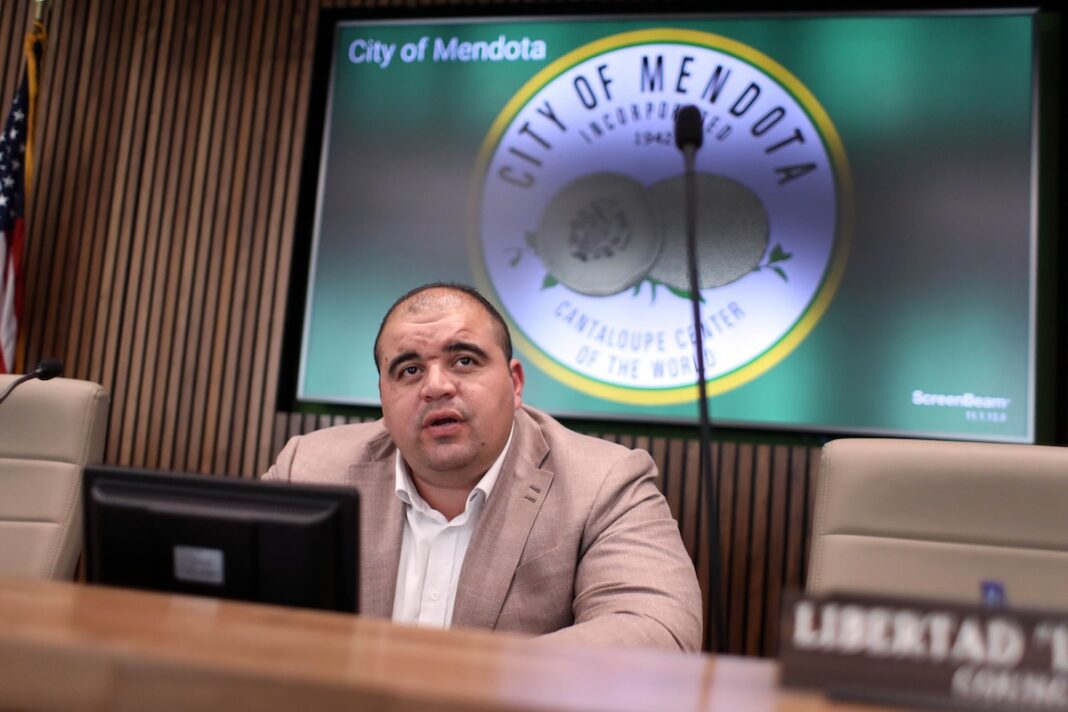

MENDOTA, Calif. – The Sept. 9 termination of temporary legal status for an estimated 170,000 Salvadorans in the US doesn’t appear to faze Luis Torres, and if it does it isn’t obvious. The 67-year-old retired mechanic says he’s hopeful of a path forward.
Torres lives in Mendota, an agricultural city located in the heart of California’s Central Valley and home to one of the largest Salvadoran communities in the country.
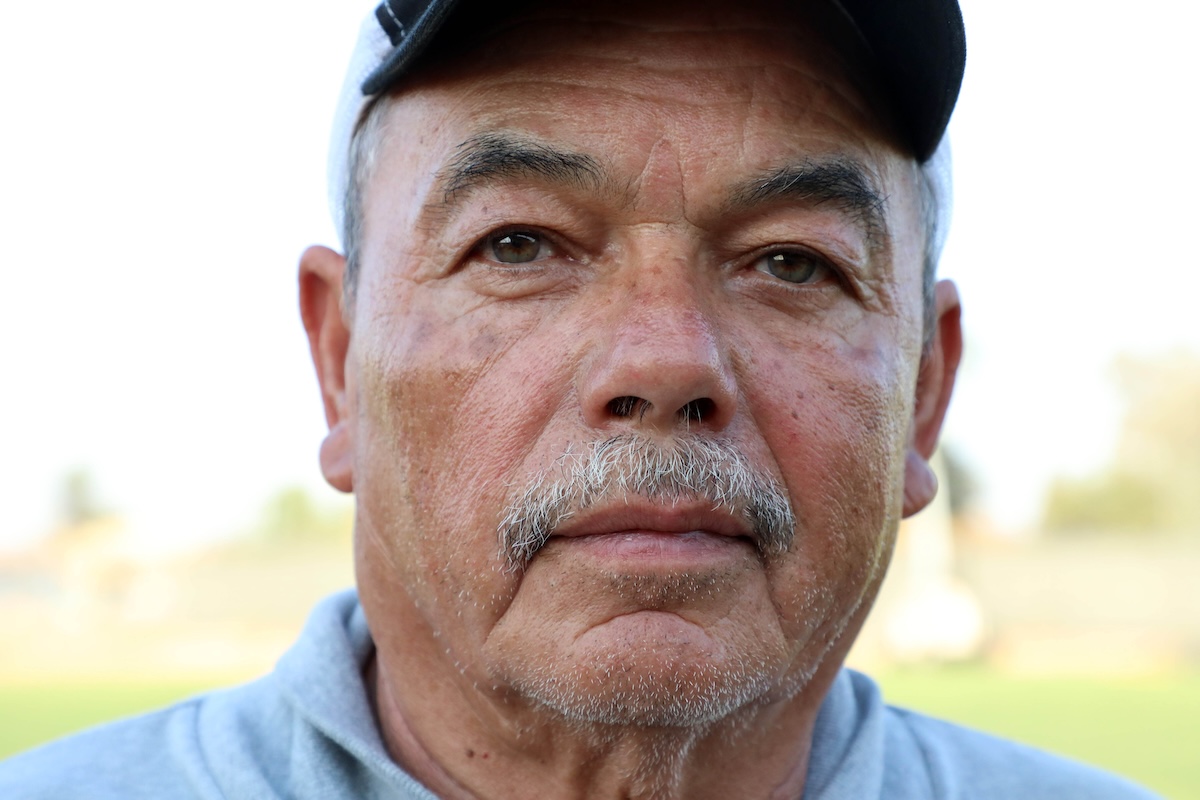
“There is a little bit of worry because no one has given us a definitive answer,” said Torres on a recent weekday afternoon about the ending of Temporary Protected Status (TPS) for Salvadorans.
TPS grants temporary relief from deportation and work authorization for people fleeing violence and/or natural disasters in their home countries. A June ruling by the Supreme Court cleared the way for the Trump administration to end the program for a host of countries, El Salvador among them.
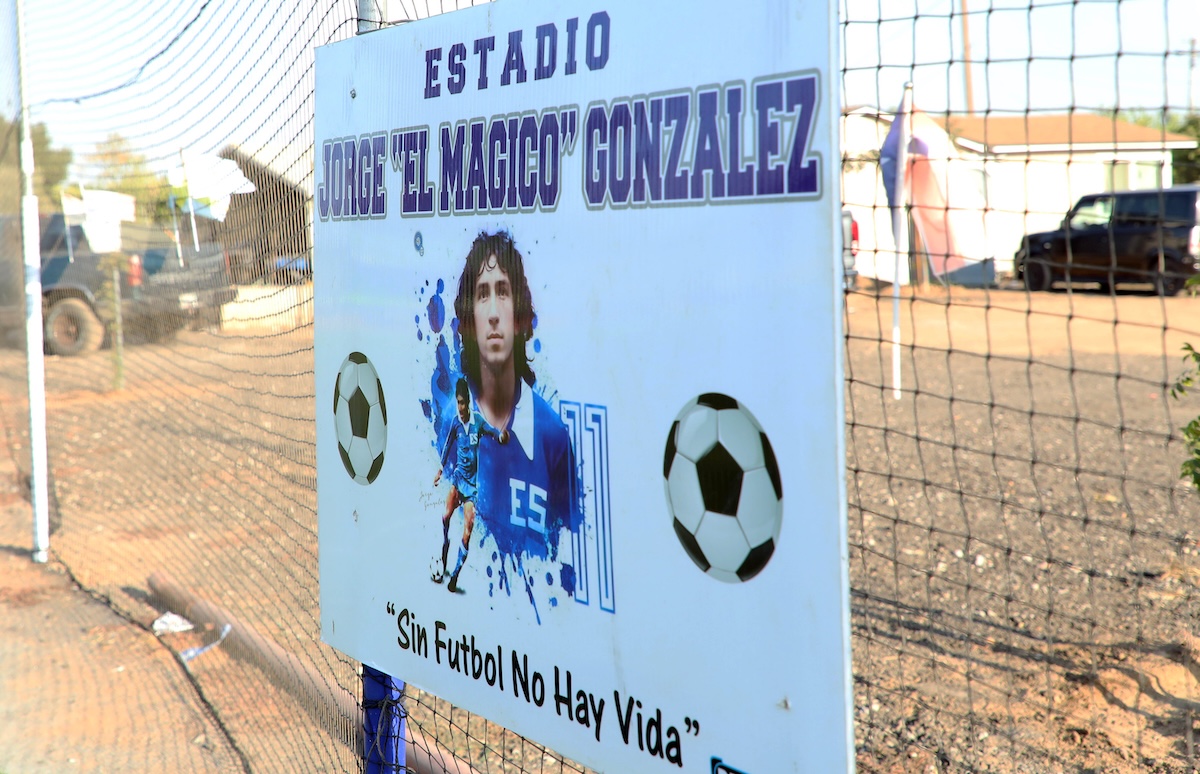
Torres spoke while waiting for a soccer match featuring players over the age of 55 — many of them fellow Salvadorans — at a soccer pitch named after El Salvador’s top soccer player, Jorge “El Mágico” González. Torres built the soccer pitch, less than regulation size for the 7-on-7 matches, two years ago.
“We have been here for years, we have worked here for many years contributing to the U.S. economy,” said Torres, who came to the US in 1980 and is the second oldest of 12 children born to Salvadoran farmworkers. “We have children, family, property. We’d like the government to give us an opportunity at (legal) residency.”
A mayor pleads for support
Torres — whose own father was deported in 1983 — applied for political asylum when he first arrived in the US, but a transient lifestyle working as a butcher, at a restaurant, a tortilla factory and other jobs resulted in no permanent mailing address. “I missed the necessary paperwork,” he said.
Now he plans to apply for U.S. citizenship, noting his three children as well as three grandchildren were born here, though in today’s harsh anti-immigrant political climate that path is far from certain.
Salvadorans were first granted TPS by President George H. Bush in 1990 toward the tail end of El Salvador’s bloody 12-year civil war. It was extended in 2001 by President George W. Bush after two devastating earthquakes that killed more than 1,000.
TPS for Salvadorans had been reauthorized by successive administrations prior to President Trump’s first term when he sought to cancel the program in 2018. Court challenges and legal battles kept protections in place until the June 2026 SCOTUS ruling, Mullin v. Doe, which declared lower courts lack authority to block termination of TPS.
The Trump administration has since ended TPS protections for 13 countries, impacting some 1.3 million people.
“We have worked here for many years contributing to the U.S. economy. We have children, family, property.”
— Luis Torres, retired mechanic
Torres acknowledged he has received letters notifying him of the Sept. 9 expiration date.
Mendota Mayor Víctor Martínez was the first Salvadoran elected to a council seat in Fresno County in 2016. On Aug. 18 he penned a letter to Congressman Adam Gray, D-Merced, asking for support for the TPS program.
“TPS has provided stability for these individuals and their families by allowing them to legally live and work in the United States,” the mayor, who switched from Democrat to Republican in 2024, wrote. “However, the temporary nature of the program creates continued uncertainty for families who have established deep roots in this country.”
Salvadorans key to Fresno County
About 30,000 Salvadorans with TPS live in California, according to the American Immigration Council. Martínez estimates that number is close to 2,000 in Mendota, a city of almost 13,000 and where up to 60% of the city’s population claims Salvadoran roots.
Salvadoran TPS recipients nationwide contribute north of $5.4 billion to the national economy, according to FWD.us. Additionally, they pay $1.5 billion in local, state and federal taxes.
Their presence is seen and felt across Fresno County, where in recent years food trucks featuring pupusas — El Salvador’s national dish made from thick corn patties filled with ingredients like cheese and beans — have proliferated.
Fresno officials recognize El Salvador’s Independence Day (Sept. 15) by hoisting the Salvadoran flag at city hall a few days before the actual date.
Local farmers like Joe Del Bosque, meanwhile, worry about losing essential workers.
An organic melon farmer, Del Bosque says of the 150 or so pickers who work his fields, half are from El Salvador. Their presence is marked by Salvadoran — alongside Mexican — flags flying atop the fruit-packing machines.
Del Bosque explains they were hired on to fill a labor shortage when deportation numbers spiked under President Obama.
“They’ve been an important part of our team,” said Del Bosque, adding their potential loss “is certainly a concern to us as employers.”
Calls for immigration reform
For Martínez, whose own father arrived in 1986 and took advantage of President Ronald Reagan’s signing of the Immigration Reform and Control Act to bring his wife and three sons (including Víctor) to California in 1994, now is the time for similar legislation.
“These are hardworking people,” said Martinez, whose family lived and worked in Mecca and later Mendota, bouncing from crop to crop. Without TPS or other protections, he added, their lives will be “in limbo.”
Martinez says he hopes Trump’s friendly relationship with Salvadoran President Nayib Bukele will bear something positive. Still, he echoed Torres, noting that even if TPS does expire he does not see a mass exodus. “We’re going to look for a way to survive here.”
This story was produced as part of “Aquí Estamos/Here We Stand,” a collaborative reporting project of American Community Media and community news outlets statewide.
JUAN ESPARZA LOERA
Juan Esparza Loera has covered California’s Central Valley for more than 50 years, as an editor and journalist with the Spanish language newspaper Vida en el Valle and as the former opinion editor for the Fresno Bee.