


By Ben Stocking
When two uniformed probation officers appeared in Point Reyes Station recently, the rumors started to fly. Was an ICE raid about to go down? A few frightened employees at one local business took off and ran for cover.
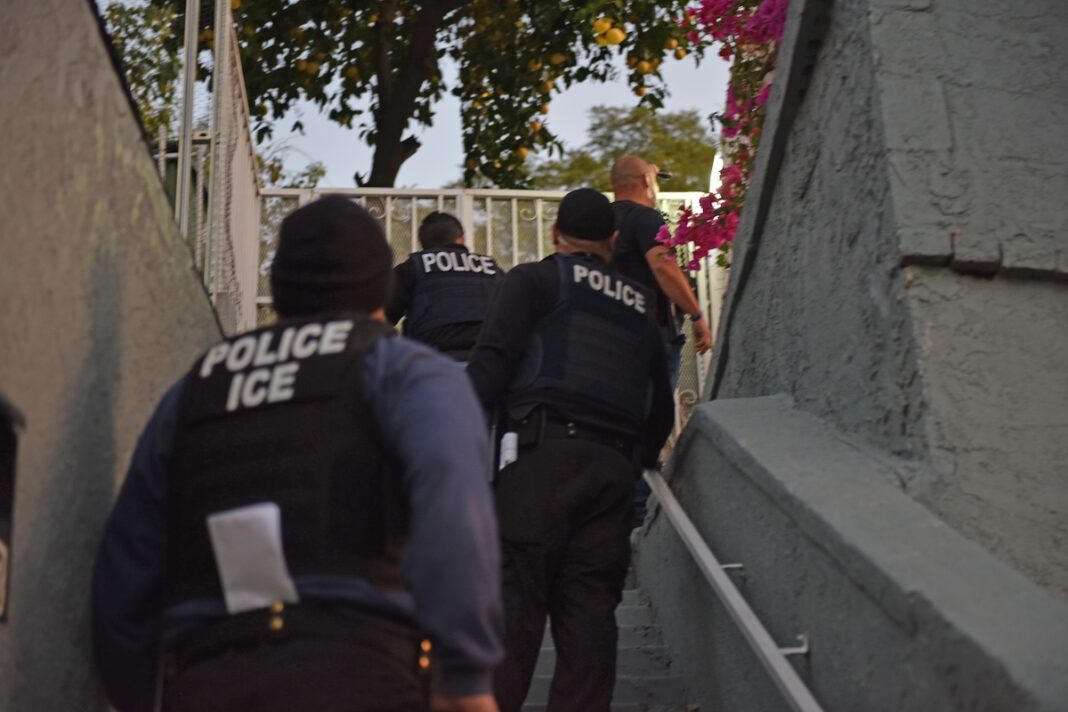
It didn’t take long for members of the West Marin Immigrant Rapid Response Network to deem the incident a false alarm, but the episode underscored the rising fear in the Latino community as the Trump administration unleashes scores of armed ICE agents in cities and towns nationwide.
So far, no detentions have been reported in West Marin. But some have taken place in Sonoma County and East Marin, each one heightening concerns about what could happen here.
To prevent unsettling rumors, the rapid response network has assembled a team to investigate reported ICE sightings and alert people via text if they are real. The idea is to prevent false alarms from circulating in the first place.
The network is also offering a variety of other services to support families with members at risk of being detained. And it is looking for more recruits, according to Alma Sanchez, who is directing the network, operated by West Marin Community Services as part of its Abriendo Caminos program.
Mercy Favrow, a 30-year-old volunteer from Tomales, has joined the team of legal observers who go to the scene of reported ICE sightings to document detentions and offer support if needed.
“We take down the number of people at the scene, the date, the time and names of people having an ICE interaction,” she said. “We take photos and video, as well as voice recordings, to gather any information that might be useful to the person being detained or their families.”
Standing up for immigrants is part of her family legacy. “My grandfather was an immigrant from Mexico,” said Ms. Favrow, a tech entrepreneur who recently joined the W.M.C.S. board. “He came to the United States and had his own Mexican restaurant and then went on to create the U.S. Hispanic Chamber of Commerce. This why I’m so passionate about doing this work.”
As she spoke with the Light this week, Ms. Favrow received a text alert about a possible ICE sighting in Inverness. Like many calls the network receives, this one involved an unmarked white van suspected of being an ICE vehicle. It turned out not to be.
The network strongly encourages anyone who thinks they might have spotted ICE agents to report their suspicions to its hotline at (415) 755.3622. “We’re encouraging people to call us instead of posting on social media,” Ms. Sanchez said. “We have our phones with us all the time. And we need more volunteers because we want to be available to the community 24/7.”
ICE sometimes shows up at people’s doors in the middle of the night, when they’re more likely to be at home. “We’ve had a couple of calls from people who thought ICE was knocking at their door,” Ms. Sanchez said.
The network has held two workshops advising people their rights in such a situation. Among them: Don’t answer questions. Don’t hand over documents. Don’t let anyone in without first seeing a warrant signed by a judge, with your name on it, that an officer slides under the door.
The network has recruited two Inverness lawyers, Dakota Whitney and Martha Howard, to support people with documents that they might need if they are indefinitely detained or deported. Along with their legal assistant, Janice Kehoe, they are offering their notarization services free of charge to immigrants in need of support.
They can help with paperwork to facilitate nominating someone as a potential legal guardian for their children, travel authorizations and granting someone the power of attorney to manage their accounts in their absence. Another precaution: make sure your spouse and children have a valid passport.
“It’s a reign of terror that this government is inflicting on a huge number of people, right here in our community and across the country,” Ms. Howard said. “We’re trying to do this tiny, helpful thing to help people feel less terrorized and dislocated and maybe a tiny bit more prepared. But how can you prepare for this? You can get grabbed off the street. I mean, come on.”
This story is part of “Aquí Estamos/Here We Stand,” a collaborative reporting project of American Community Media and ethnic/community news outlets statewide tracking how current White House policies are impacting Californians, especially in rural regions, and how residents are responding.