


By Témoris Grecko
Nabatiyeh is a town of cats and dogs.
Estimates put the total population – Lebanon has not taken an official census since 1932 – at about 80 thousand inhabitants. Almost all of them have left, following evacuation orders issued by the government not of this country, but of another, Israel, orders made more convincing by Israeli bombing.
Almost one in four Lebanese have had to flee their homes. In these suddenly lonely regions, as in a story, pets become the sovereigns of the territory.
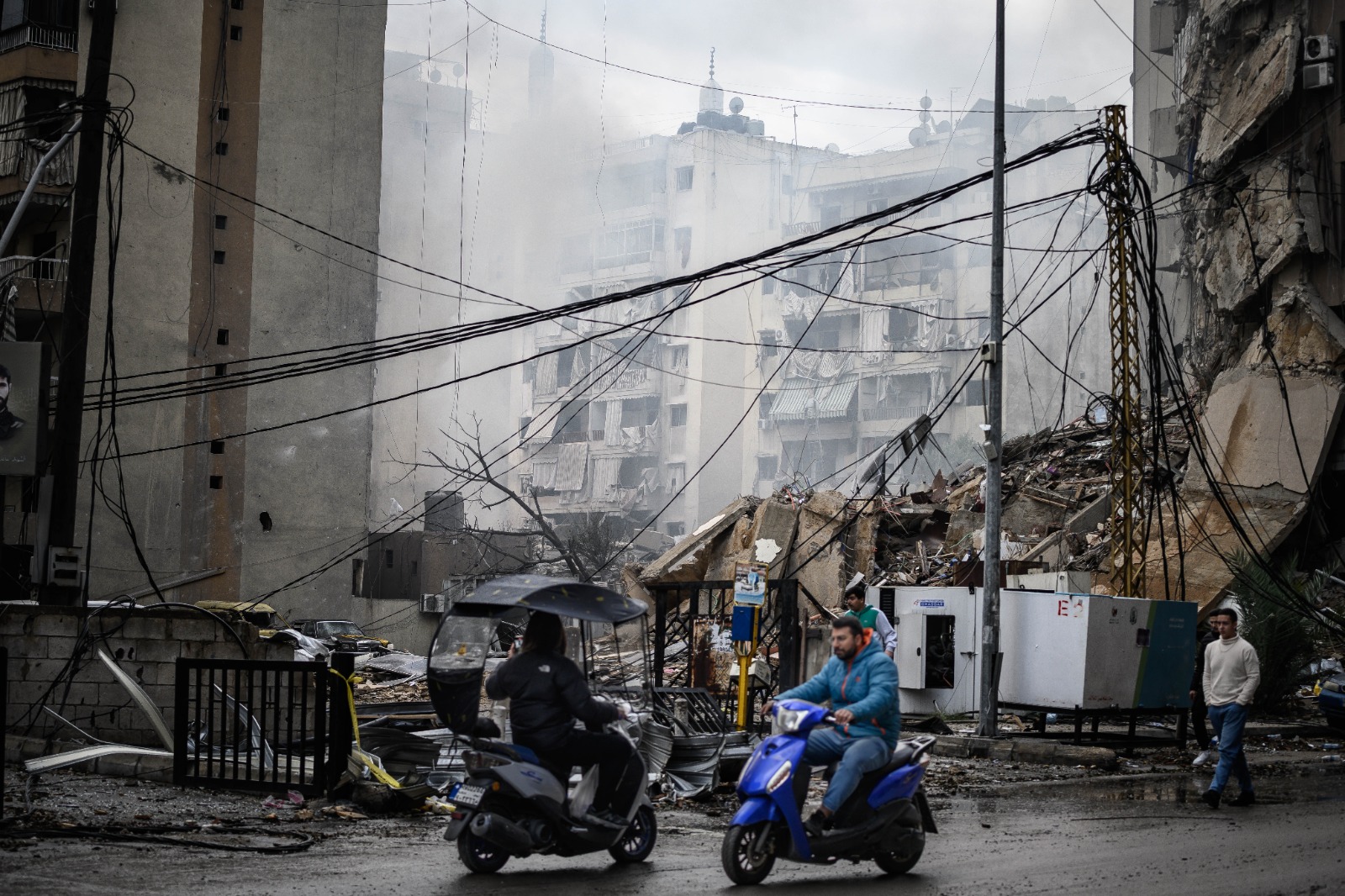
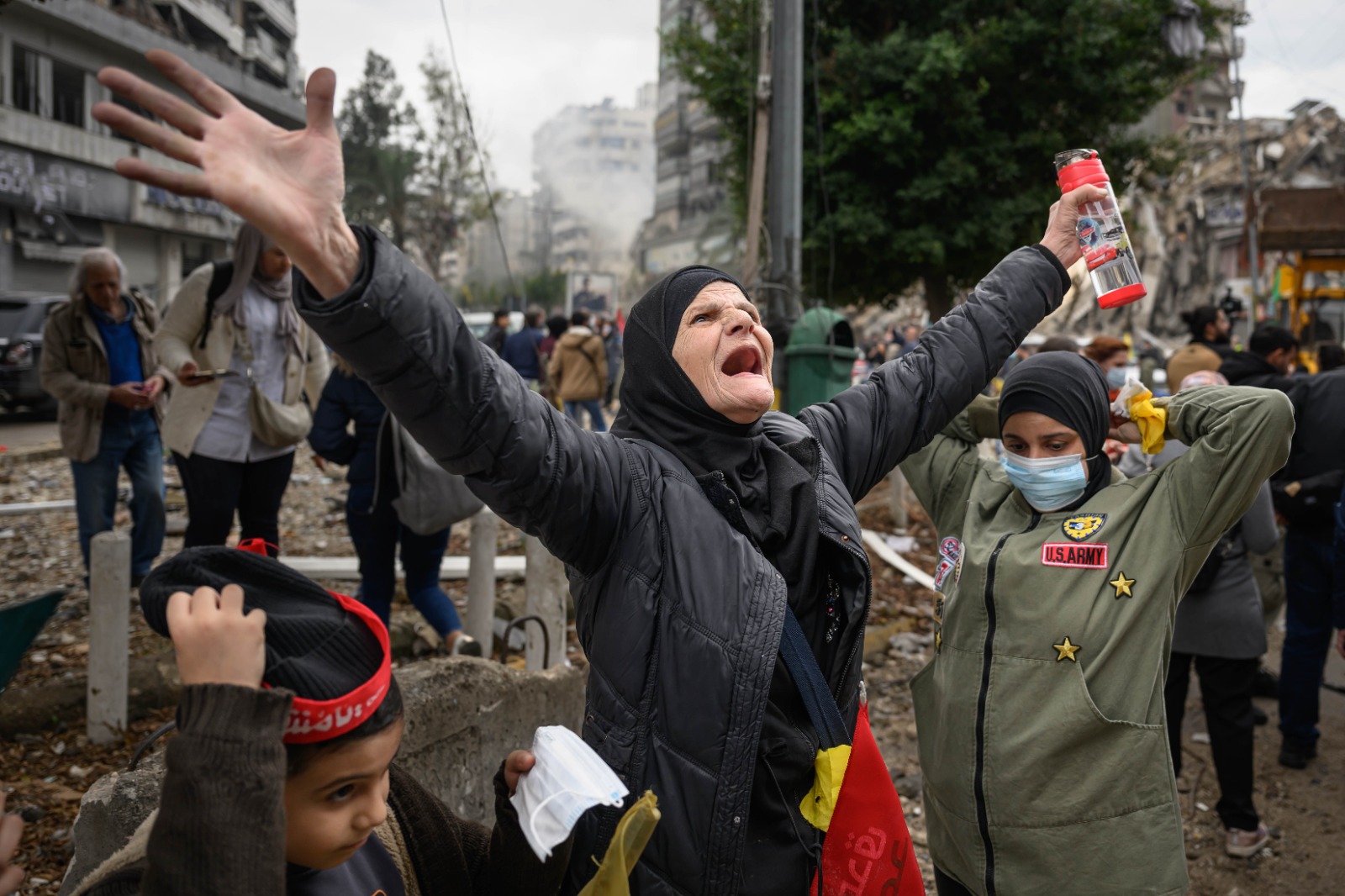
En route to the coast, the road is flanked by buildings destroyed in recent weeks. There are almost no vehicles as the drones blow up anything that moves. We see one group of people trying to put out a car fire after it was struck while parked. There is talk of an imminent ceasefire but meanwhile, the violence continues. The explosion also knocked down a pole: suddenly a thick electrical cable lands across our car as we move forward.
Our Lebanese colleague Mahmoud receives news that some fishermen from the city of Tire whom he knew, because they used to sell their catch to visiting journalists, have just been killed by an Israeli drone, on the beach, for no reason.
Just a fifteen-minute drive away is Saida, a seafaring city that in ancient times was known by its Phoenician name, Sidon. On a small street, we find a house that has been converted into a community center run by the NGO Sikka.
It’s a happy place. Though quickly the conversation inevitably touches on the offensive against Lebanon, the ethnic cleansing in Gaza, the genocide.
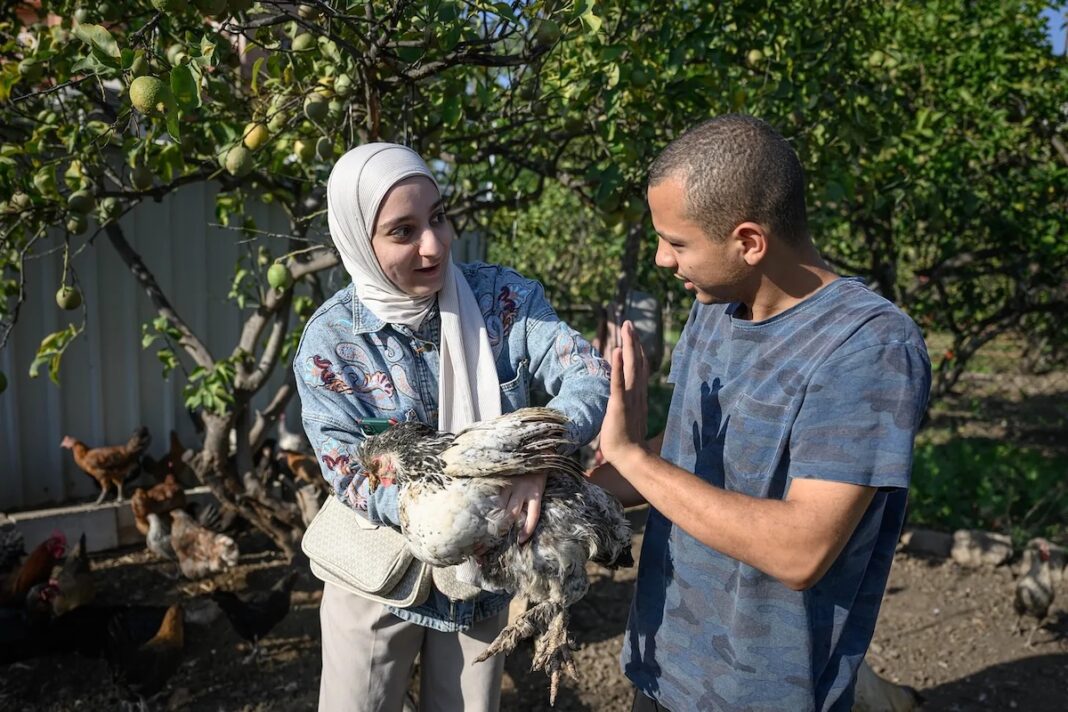
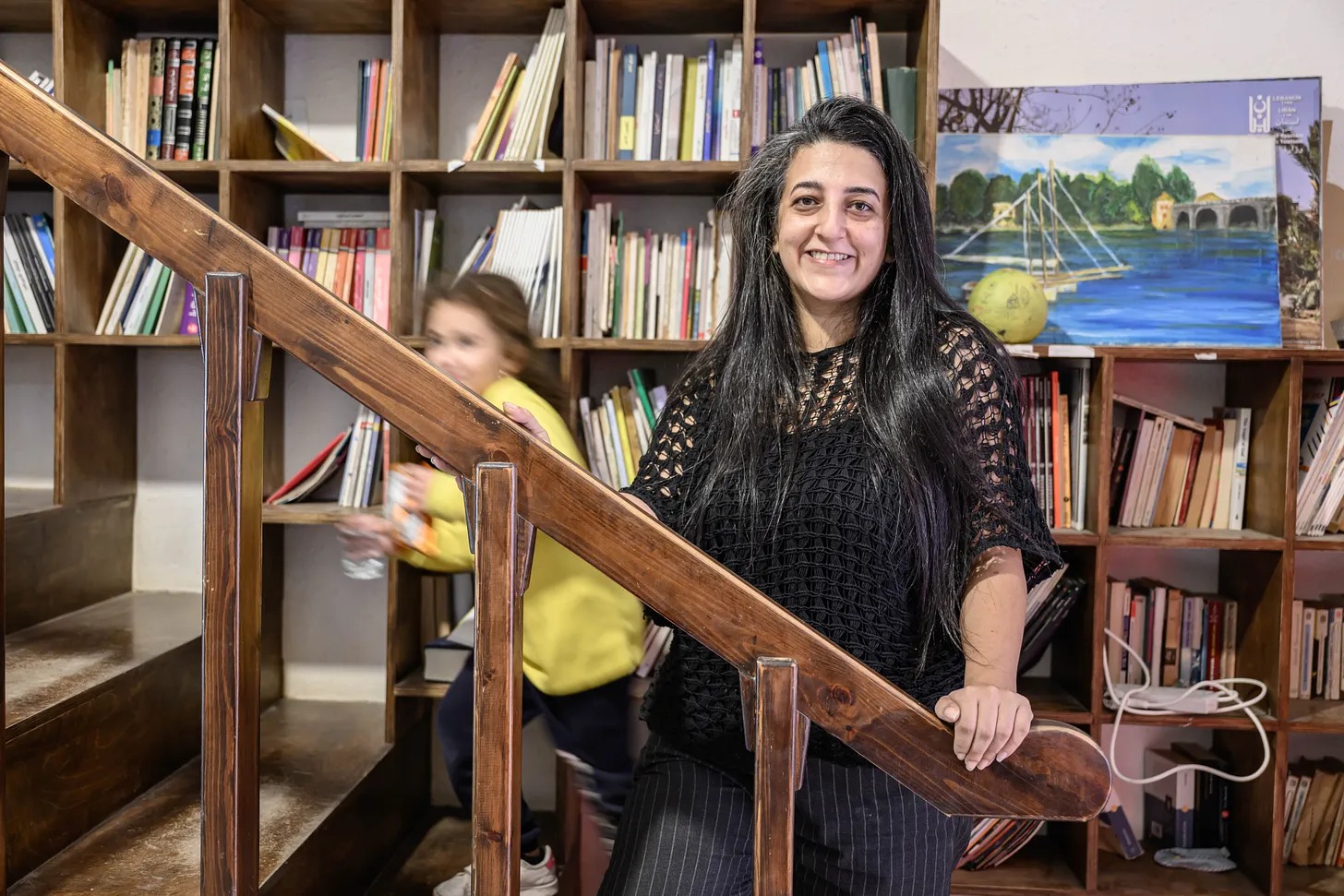
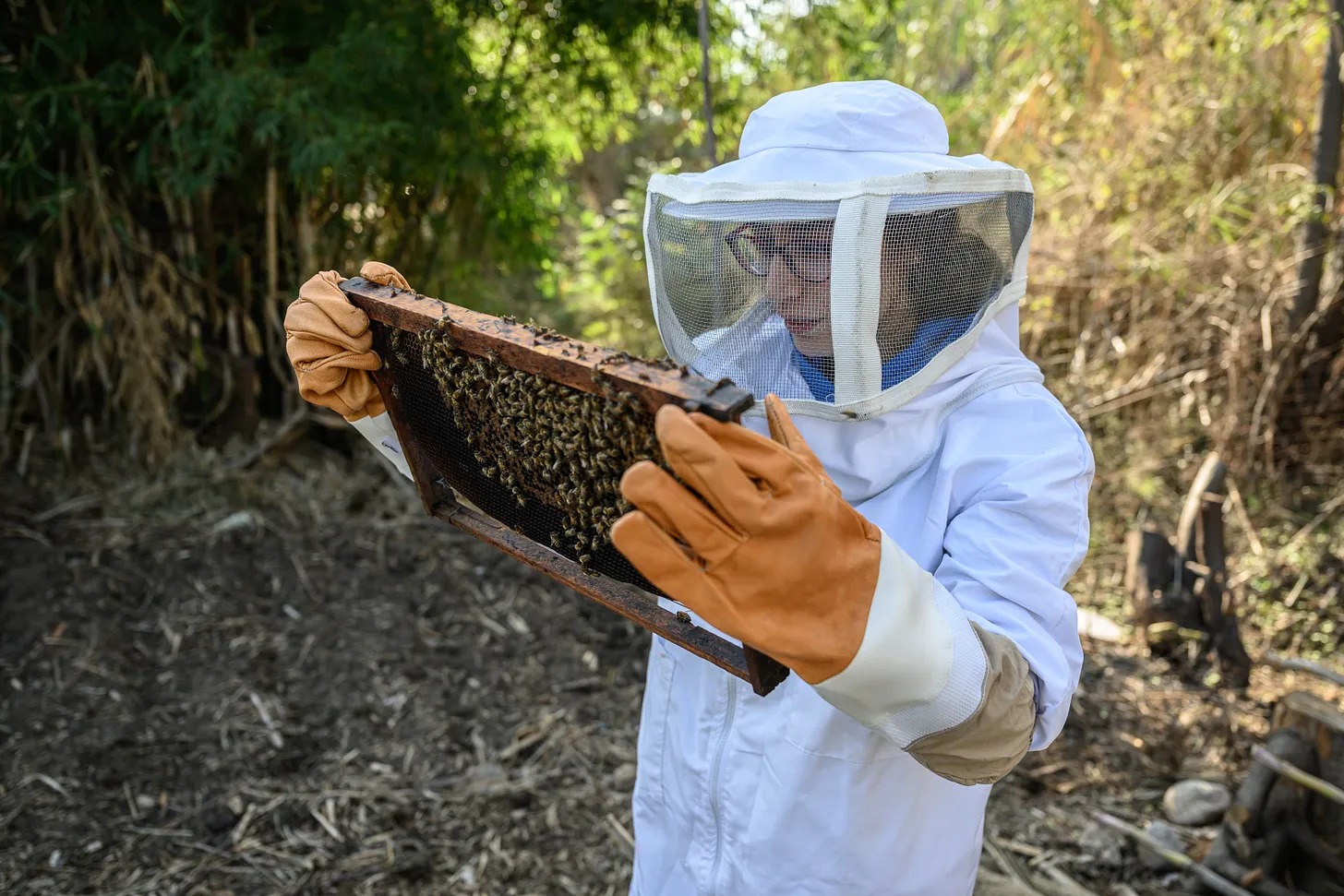
Sikka’s founder is Layal Khatib, a web developer who runs the center along with her husband, Mohammed Ghamloush, and brother-in-law, Ahmad. In the five years since their launch, Sikka has since drawn in other volunteers, including Tarek Abadi, a business administration student and descendant of Palestinians expelled by Israeli militias from the city of Haifa in 1948. Abadi specializes in raising chickens. Another volunteer, Riham Sees, who is pursuing a law degree, helps care for the center’s bee hives.
These stories are important, especially now as so much of the narrative about Lebanon focuses on the destruction, and the technological sophistication being used to kill and terrorize. The individual and collective struggles of people who do not allow themselves to be crushed must receive attention, because they set an example and motivate us.
Narratives of war without end demoralize. Those of resistance inspire.
Sikka sits one some three thousand square meters of land that these urban professionals, who have learned agricultural techniques here and there, have divided into mini plots in which they grow a variety of crops, including lemons, chard, broad beans, pomegranates, cilantro, parsley, cabbage… even amaranth.
Their work has been affected by the lack of supplies that used to arrive from villages farther south, half an hour away, villages which have now become ghost towns.
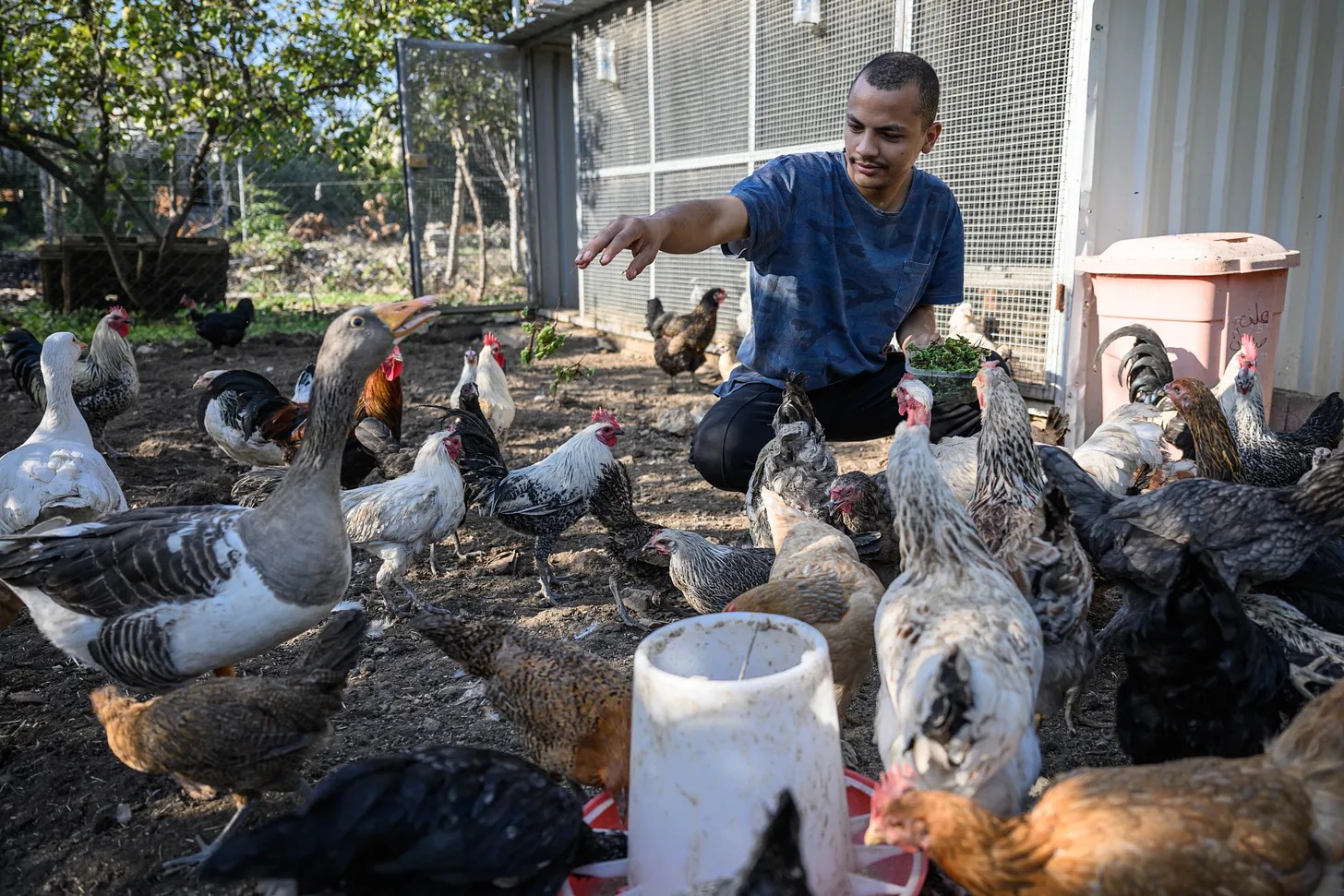
Still, Layal and Mohammad emphasize, self-sufficiency is critical. To that end, Tarek makes use of the manure from his chickens (plus three geese and a turkey) to grow algae in a pool that is then used to fertilize the soil and to feed his birds. These days, the food grown here is used to prepare dozens of meals daily for the streams of displaced Lebanese fleeing violence.
Returning to Beirut, despite the painful sights of entire areas depopulated by Israel’s invasion, we felt a profound sense of optimism, one we could taste and smell even as Tarek insisted that we try this or that vegetable, all organically grown.
Against a backdrop of destruction, here was a symbol of simple human connection, food for the spirit, and for hope.
This story was produced by Peninsula 360 Press in collaboration with Mundo Abierto and with support from Global Exchange.