


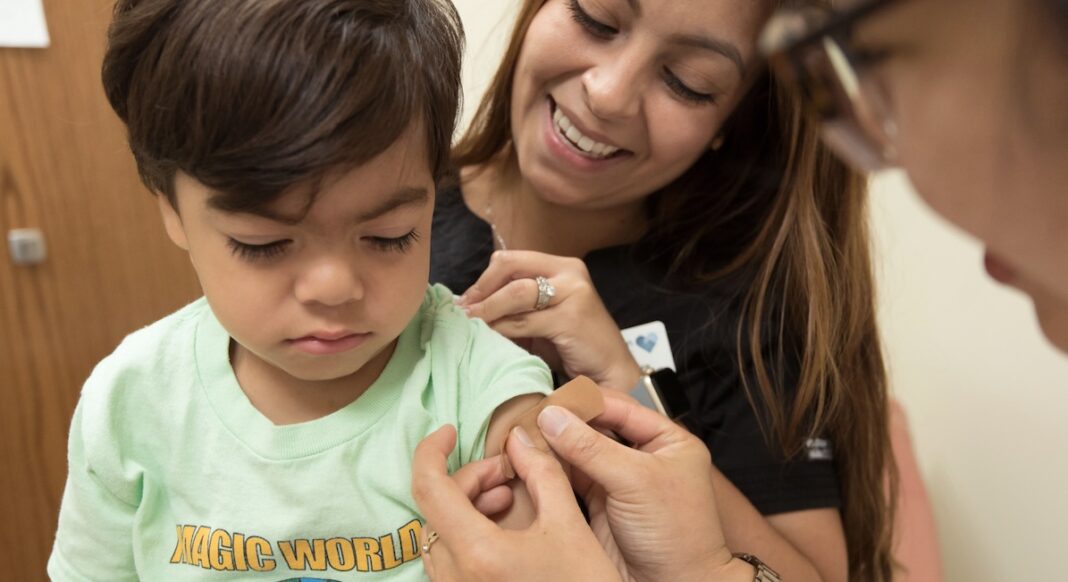
“COVID-19 isn’t really that bad.”
Dr. Jennifer Miller, who serves with East Bay Pediatrics in Oakland, California, hears this statement frequently from the parents of her patients but stresses it isn’t true.
Miller, who is also affiliated with the University of California San Francisco’s Benioff Children’s Hospital in Oakland, spends a good portion of her day dispelling the myths and misconceptions surrounding the COVID-19 vaccine. “They think it hasn’t been well-researched, that it’s not a good vaccine, so why should they bother?” she told EMS in a recent interview.
“Many parents think COVID-19 is no worse than a cold. But it’s not always a mild disease. Kids are dying,” she said.

According to data from the Centers for Disease Control, children below the age of 17 represent more than 19 percent of all COVID-19 cases. Approximately 12.7 million children have been infected with the virus: 2.3 million cases were identified in preschoolers, who are not yet eligible to be vaccinated. About 5 million children between the ages of 5 to 11 have been infected with Covid.
Covid-19 has accounted for 1,532 deaths in children under 17, including 484 deaths in children ages 0 to 4. Recognizing the health risks associated with COVID-19 for those younger groups, Pfizer and Moderna have submitted data to the FDA, asking for emergency use authorization of their vaccines for children under 5. That emergency authorization is expected to come in late spring or early summer.
Despite the safety of COVID-19 youth vaccines, vaccination rates are low for eligible children. In California, less than one-third of 5-11-year-olds are vaccinated, according to data from the California Department of Public Health.
Some parents have told Miller that they had concerns about the safety and efficacy of the vaccine for kids and if they were sufficiently studied.
We are saving lives by getting vaccinated and taking care of our communities
Dr. Jennifer Miller of East Bay Pediatrics in Oakland, California
“Yes, the vaccines were fast-tracked, but corners were not cut. We were just on a faster timeline amid a global public health crisis,” said Miller.
The mRNA vaccines have been in development for decades, and the COVID-19 vaccines have been through substantial safety trials that included people of different genders, ethnicities, ages and pre-existing conditions. There are also ongoing efforts to monitor safety as millions of people continue to receive the vaccine.
A few days ago, Miller had young patients who were all sick. She asked their parents if everyone was vaccinated. One parent told her: “I decline to answer that question.”
“Which usually means no,” said Miller ruefully.
Another unvaccinated family was in her office and asked if they could remove their masks. Miller had to say no since the virus is still spreading.
Miller noted that some communities have different relationships with the vaccine and the healthcare system in general. She cited historical injustices, such as the Tuskegee experiment, a four-decade study conducted on 400 African American men with syphilis, that led to distrust within the Black community towards the healthcare system.
For many people, vaccinating their children is an investment of precious time. “It is time consuming for sure,” said Miller, noting the amount of time it takes to schedule an appointment, taking a child to the appointment, and taking off work to manage vaccine side effects.
“We know it is so hard. Everyone is so tired. But we are saving lives by getting vaccinated and taking care of our communities,” said Miller.
She credited the California Department of Public Health for going into hard-to-reach communities to ensure people who wanted the vaccine had access.
Miller said she and other pediatricians have “been chomping at the bit” in anticipation of the FDA approving Pfizer and Moderna vaccines for those under 5.
The pediatrician said she hopes to see a greater level of COVID-19 vaccination in young children before school starts next fall given the harmful effects contracting the virus can have on children, such as breathing problems and hospitalization.
Miller recommended that children keep masks on at school and on public transportation. While masks at school are recommended and not required, she cited masks as still one of the best tools to combat COVID-19.