


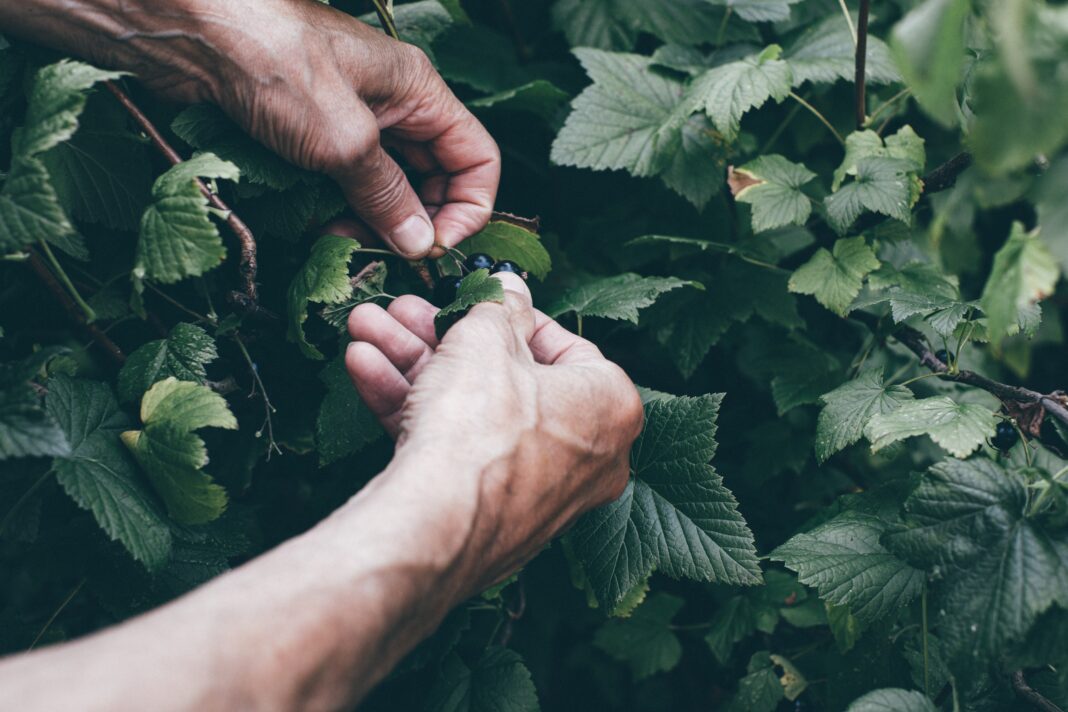
As Patrice Preston Rogers planted collards, cabbage, and cauliflower this year in a once-vacant lot in East St. Louis, she was prepping for a harvest of hope and better health for the area her dad called home.
Three years ago, before the COVID-19 pandemic took hold, Ronald Preston died at age 75 after suffering from “hypertension, high cholesterol, other dietary issues from residing in a food desert,” said Preston Rogers.
“I inherited this land, and I wanted to do something productive with it,” she said of the plot on North 11th Street, blocks from the Katherine Dunham Museum and steps from a wide swath determined by the USDA in 2019 to have low access to healthy foods.
“I was looking to do something beneficial, productive with the land. And that’s how I came up with the community garden.”
Gaping Holes in Food Safety Nets
Just as the coronavirus laid bare health care inequities decades in the making, it exposed gaping holes in society’s food safety net. Across Metropolitan St. Louis, in neighborhoods where livable wages and traditional grocers are in short supply, Blacks already in urban agriculture are expanding and new recruits have joined in.
Each aims to create home-grown solutions to the redline-induced problem of limited access to healthy foods.
That focus on access, along with the broader racial reckoning wrought by the videotaped murder of George Floyd, has given food justice activists more ammunition. They are targeting not just the absence of retailers but also, and more pointedly, what they see as the systemic racism vexing bereft neighborhoods colloquially known as “food deserts” but which they call sites of “food apartheid.”
After decades of seeing tax credits thrown at corporate-owned grocery stores, both planters and activists are pushing for a more sustainable solution to healthy food access, one that casts people of color in directorship roles and leads to what activists call “food sovereignty.”
Pandemic Hunger
“Black people in urban areas are currently and increasingly interested in controlling our food system and resisting against the violence that our people experience through the corporate-controlled food system,” said Dara Cooper, co-founder of the National Black Food and Justice Alliance, a coalition focused on “creating a just food and land revolution.”
“I’m not saying we don’t want access to grocery stores, but my point is we want deeper solutions.”
Since the pandemic began, community organizations, nonprofits and the federal government have been scrambling to head off what loomed as a major food catastrophe.
The deadly virus shuttered businesses, slashing worker incomes. Schools across the nation, a source of food for millions of children, shut down.
In 2020, one in four Black residents across the U.S. experienced food insecurity — more than three times the rate for white households — according to Feeding America, the nation’s largest charitable hunger-relief organization.
The Rise of the Black Farmer
Against that backdrop, many groups looking specifically to help Black Americans get a shovel in the ground say they have seen exponential growth.
Bryan Ibrafall Wright, founder of the Black Urban Gardening Society based in Oklahoma City, said his group has had “easily” over 30,000 membership inquiries since the beginning of the pandemic. The four-year-old group has accepted about 5,000 new members.
“Many of our members are in low-income communities and they look to agriculture as a means to supplement their diets, their incomes as well,” he said.
Sharecroppers and Slaves
Billions of dollars in debt forgiveness for farmers of color were included as part of pandemic relief. But a judge has put the money on hold following lawsuits filed by white farmers claiming that the program amounts to reverse discrimination, according to John Wesley Boyd Jr., president of the National Black Farmer’s Association. In a segment on “Good Morning America,” he countered: “They really should be ashamed of themselves. They don’t know what discrimination is.”
“Black people have been slaves,” he said. “We’ve been sharecroppers and survived through horrific laws of Jim Crow. And we’ve been discriminated against, from a systemic standpoint, at the United States Department of Agriculture, and it’s time for those things to change.”
Read the full story at The St. Louis American.