


LOS ANGELES – With the Nov. 3 midterm elections just two weeks away, election activity is picking up across Los Angeles, including in the city’s large Korean American community.
Organizers say turnout at election information sessions is higher than expected, while inquiries about candidates and ballot measures are also on the rise.
“Compared with the past, more people seem interested in actively participating in the election,” said Jeff Lee, executive director with the non-profit Korean American Federation of Los Angeles (KAFLA). “We are also seeing more voters asking for information about candidates and ballot measures.”
KAFLA, together with a coalition of organizations including the Korean American Chamber of Commerce of Los Angeles and the Korean American Coalition (KAC) hosted a two-week voter registration campaign at Koreatown Plaza from Oct. 5 through Oct. 19.
The campaign assisted newly naturalized citizens and voters who have changed addresses with registration and record updates. Volunteers also provided information on Korean-language ballots and voting by mail.
Voter confusion
Such efforts are especially critical this year amid widespread confusion over continued allegations of voter fraud by the Trump administration and concerns over possible federal interference in the election process.
Then there is the ballot itself, which this year in California contains 14 statewide measures on everything from housing to taxing billionaires and health care, not to mention 10 additional local measures that LA voters will be asked to weigh in on.
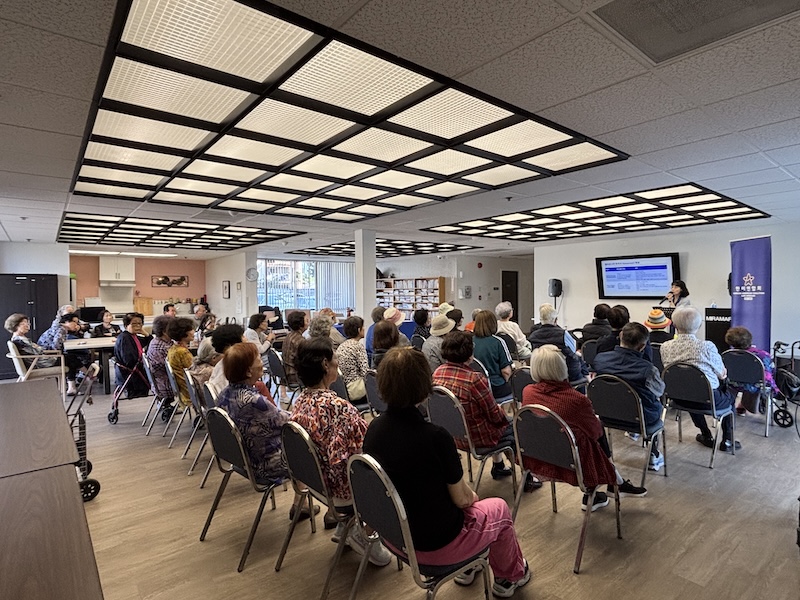
“There are so many candidates and ballot measures to review that many Korean American seniors have difficulty understanding everything on the ballot,” noted Jeany Choi, senior manager at KAC, which holds election information sessions at senior apartment communities around the city.
Still, she said, despite the confusion voters appear engaged.
“We were surprised recently because more Korean American seniors showed up than we expected,” Choi said. “It seems clear that interest in the election has increased.”
KAC will operate a Flex Vote Center from noon to 6 p.m. on Oct. 27 at the KOA Building in Koreatown in partnership with the Los Angeles County Registrar-Recorder/County Clerk. Korean-speaking volunteers will be available to assist voters.
Kheir Clinic, Korean American Family Services, the Koreatown Youth and Community Center and the Koreatown Residents Association are also supporting that effort.
KAC will also hold in-house sessions at their main office from 10 a.m. to 4 p.m. on Oct. 20, 22 and 29 for voters who need help understanding their ballots or other election information.
A growing electorate
This year’s election comes amid steady growth in the Korean American electorate. According to a report published by The Korea Times ahead of the June primary, California had about 228,000 registered Korean American voters, up 9.2% from the 2022 midterm election.
Los Angeles County had 98,725 registered Korean American voters, while Orange County had 51,875, equating to roughly 150,000 Korean American voters across the two counties.
Turning those registration numbers into actual votes, however, remains a challenge.
According to Political Data Inc., or PDI, and other election data, 25,045 of 95,438 registered Korean American voters in Los Angeles County cast ballots in the March 2024 primary, for a turnout rate of 26.2%. Overall turnout in Los Angeles County was 28.8%.
Robert Ahn, president of the Korean American Federation of Los Angeles, said political influence ultimately depends on participation.
“The strength of the Korean American community comes from voter turnout,” Ahn said. “Voting is an opportunity to choose the right leaders, and we are working to encourage more people to participate and make the community’s voice heard.”
The number of Korean American candidates on the ballot is also drawing attention this year.
Increased outreach
Rep. Young Kim, who is seeking a fourth term in California’s 40th Congressional District, and Rep. Dave Min, who is running for reelection in the 47th District, are among the candidates.
Others include Jane Kim for California insurance commissioner; Paul Seo for state Assembly District 66; Sukhee Kang for Irvine City Council District 1; Yongduk Choi for Buena Park City Council District 2; and Soo Yoo for the ABC Unified School District Board of Education, District 2.
As interest in the election grows within the community, candidates themselves have also increased their outreach to Korean American voters.
Republican gubernatorial candidate Steve Hilton met with about 200 Korean Americans on Oct. 2 during a campaign fundraiser and policy briefing at Glory Church of Jesus Christ in Los Angeles.
Hilton discussed proposals including tax cuts, reducing the cost of living, strengthening public safety and improving education. He also held a town hall meeting in Koreatown in June.
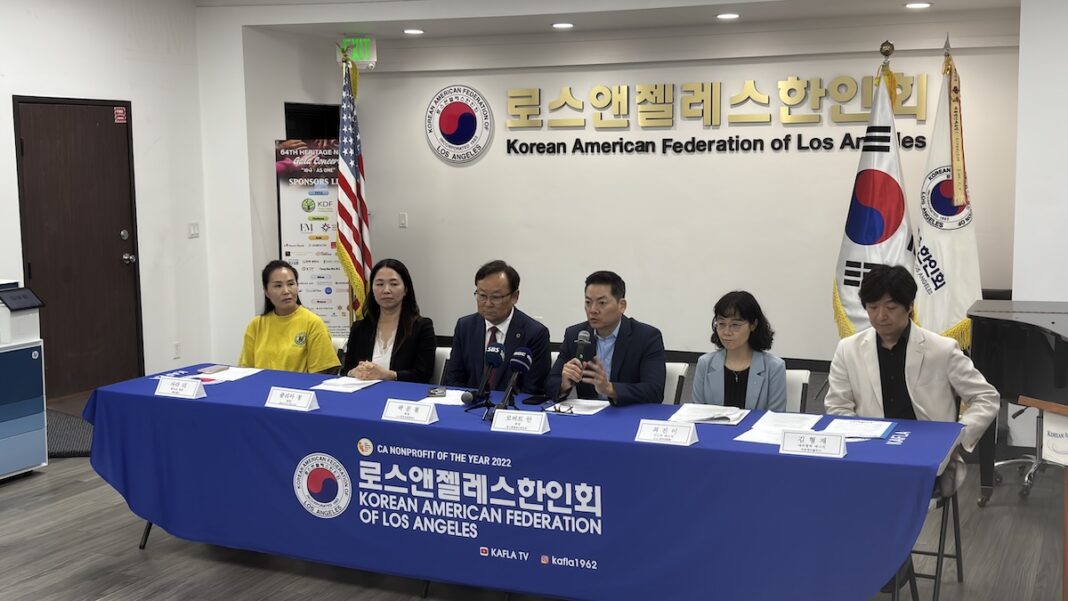
Jane Kim, a second-generation Korean American running for California insurance commissioner, also appeared at a Sept. 3 news conference at the KAFLA and appealed for support from Korean American voters.
Kim finished first in the June primary with 27.4% of the vote and advanced to the general election.
Los Angeles Mayor Karen Bass, who is seeking reelection, has also made several appearances in the Korean American community. She attended the opening ceremony of the 53rd Los Angeles Korean Festival on Oct. 1 and visited the Wilshire Adult Day Health Care Center on Oct. 6, where she met with about 200 Korean American seniors.
Turnout is key
Steve Kang, president of the Los Angeles Board of Public Works and a Bass supporter, said the community has become increasingly important in city elections.
“Not only are there Korean American voters, but there are also many businesses concentrated in Koreatown,” Kang said. “That makes the Korean American community an important constituency in elections.”
Kang also pointed to the Bass administration’s expanded Korean-language outreach as a sign of the mayor’s attention to the Korean American community.
“The fact that major news releases and social media posts from the mayor’s office are now provided in Korean shows that Mayor Bass recognizes the Korean American community as an important part of Los Angeles and is making an effort to communicate directly with Korean-speaking residents,” Kang said.
Community leaders say voters should look beyond campaign-season visits and consider how well candidates understand local concerns and whether they will continue engaging with Koreatown after the election.
In the meantime, Korean American organizations are now focused on turning heightened interest into actual ballots cast.
While voter registration has grown and candidates are paying greater attention to the community, local leaders say the community’s political influence will ultimately depend on how many voters turn out on Election Day.
RELATED
The AAPI Vote in 2026: What Has Shifted Within This Diverse Electorate?

NICOLE CHANG
Nicole Chang is a media veteran with 25+ years in journalism and community service, including at The Korea Daily, where she led coverage on public issues and managed content across platforms. She regularly covers immigration and the Korean American community for ACoM.