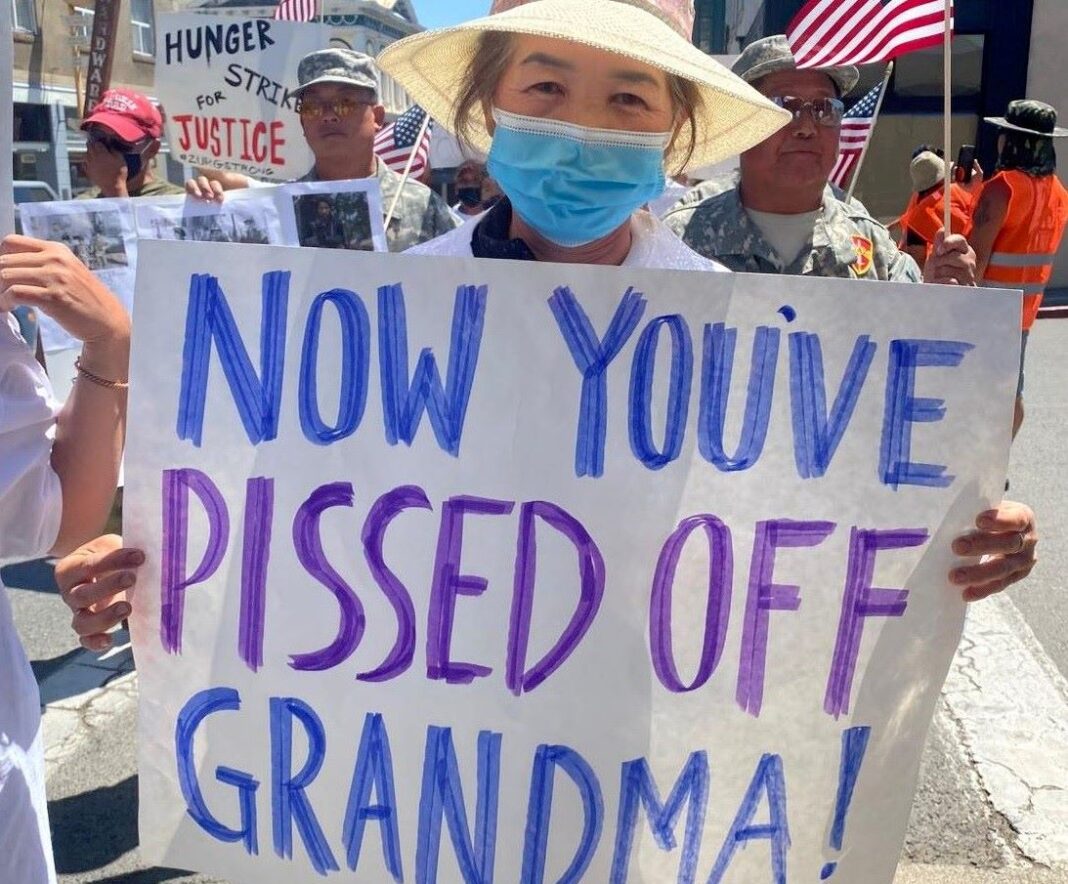
A settlement hearing has been postponed until Sept. 4 in the Chang vs. Siskiyou County case, which alleges that local law enforcement is waging “a systematic campaign of racist hostility and persecution” by restricting access to water for the Hmong community in the Shasta Vista area of Northern California.
The class action lawsuit, filed on Aug. 4, 2022, also alleges that the Siskiyou County Sheriff’s Department has participated in “unlawful traffic stops, search and seizure practices, and property liens that are blatantly aimed at Asian Americans.”
According to court documents, nearly 30% of all drivers stopped by Siskiyou County sheriff’s deputies in 2021 were Asian American, who make up less than 2% of the residents of the county.
Racist Siskiyou?
“There has been such incredible fear for Asian American residents living in this sweeping racist environment,” Niketa Kumar, communications director at Asian Americans Advancing Justice – Asian Law Caucus, told Ethnic Media Services.
“We are in settlement negotiations, and hope to see progress in ensuring basic human rights,” said Kumar.
In May, 2021, the Siskiyou County Sheriff’s Department issued a series of ordinances, including an order banning the transportation of more than 100 gallons of water on the main roads leading up to the Shasta Vista subdivision. The Hmong community makes up more than 75% of the residents in that subdivision.
Over that summer, the Hmong community watched their livestock and income slowly die. Hmong American activist Tong Xiong, whose grandparents own a 40-acre parcel in the subdivision noted that a single cow needs more than 100 gallons of water each day.
‘You Don’t Belong’
He believes the Hmong community has been singled out due to racial animus. “It’s not the first time we have been treated this way,” Xiong told EMS, noting that his family is routinely told to “go back to your country.”
AAAJ-ALC said in a press statement that the ordinances “deprived thousands of Hmong American, Chinese American, and other Asian American residents of basic water for survival, hygiene, and wildfire defense.”
“Siskiyou County’s bigoted practices draw from a long history of U.S. policies treating people of Asian descent as less than full Americans who ‘don’t belong’ in our country, picking and choosing who has the freedom to build better lives and live safely,” said Glenn Katon, litigation director for the Asian Law Caucus.
Illegal Marijuana Grows
Siskiyou County Sheriff Jeremiah LaRue told EMS in 2021 that he rejected the idea that the Hmong community is being targeted because of its ethnicity. He said he was concerned about illegal cannabis grows, and that 90% of the land in that subdivision was being used to grow marijuana.
“Our intent is to target crime, not race, and we have to target areas where we see the crime. Marijuana is not what concerns me. It’s about the crime associated with it,” said LaRue.”
Marijuana growing is legal in California, but Siskiyou County has banned it. Moreover, growers must possess a permit issued by the state.
Settlement
On Sept. 3, 2021, U.S. District Court Judge Kimberly Mueller issued a temporary injunction against the ban until a decision was issued in a separate case, Lo vs. Siskiyou County. “The dehydration and de facto expulsion of a disfavored minority community cannot be the price paid in an effort to stop illegal cannabis cultivation and any attendant harms,” she wrote in her injunction.
The parties reached a settlement in the Lo case in July. On Aug. 1, the Siskiyou County Sheriff’s Department removed two of its water ordinances, as a part of the settlement. Kumar explained to EMS that all Siskiyou residents can lawfully transport unlimited amounts of water to their homes and can also purchase water from neighboring wells for human consumption, hygiene needs, watering livestock, and watering gardens.
‘Impossible Choices’
“People were forced to leave their homes after the water ordinances were put into place,” she said, expressing her excitement that they had now been repealed.
Russell Mathis, who lives in Siskiyou County, said in a press statement issued by AAAJ-ALC: “My neighbors and I have been forced to make impossible choices between bathing every week and providing water to our pets, livestock, and gardens.”
“Today, we celebrate an important victory affirming our human right to water and our rights to live without oppressive fear and trauma, simply because of where we were born or what we look like. Although it is still difficult for me to get water due to the county’s actions, I’m glad that these ordinances are gone,” said Mathis.