


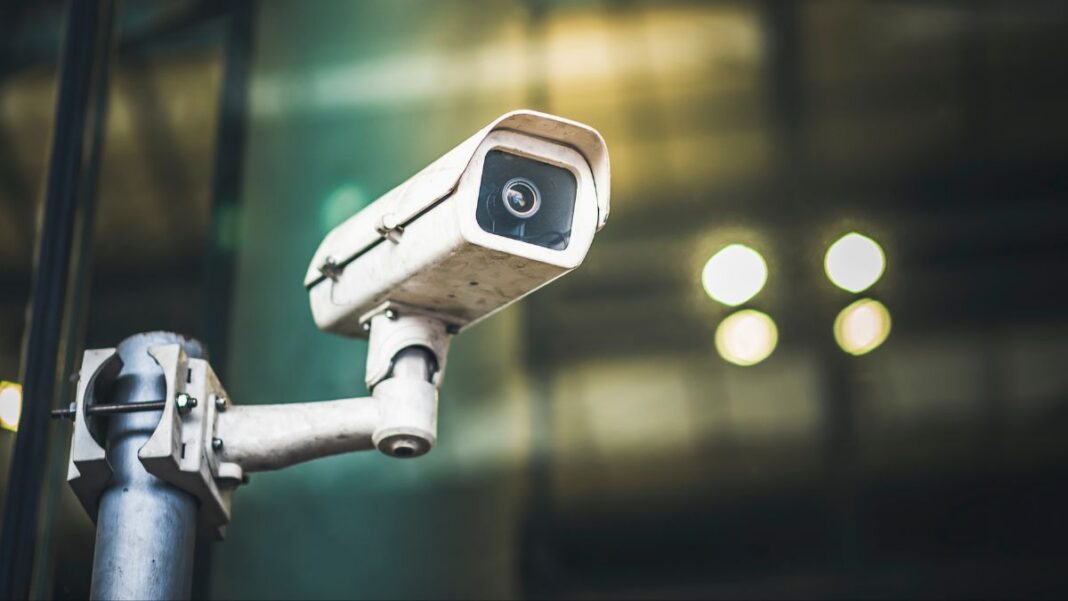
“There’s nowhere left to hide!” was the title of a recent press conference in San Francisco, where a panel of experts in technology, law and immigration policy warned about the transformation of law enforcement agencies into technological powerhouses operating with little democratic oversight.
The conference at the World Affairs Council in San Francisco, organized by American Community Media in collaboration with the San Francisco Local Media Coalition, focused on how tools originally designed for warfare and counterterrorism are now being used for mass deportation and the everyday surveillance of citizens.
Invisible Online Raids

Ariel Ruiz Soto, senior analyst at the Migration Policy Institute (MPI), was the first panelist to address how Immigration and Customs Enforcement (ICE) has become the best-funded law enforcement agency in the country, after receiving a budget of $10 billion, plus an additional $75 million in 2025. One of the most alarming points raised by Ruiz is the breaking down of “data silos.”
But what does this mean? The term refers to information storage systems that are isolated from one another — that is, data that was previously private, such as health records, IRS tax records and driver’s licenses — now flows into a centralized database called “Immigration OS,” developed by Palantir.
This system uses artificial intelligence to conduct life-pattern analysis, predicting habits that facilitate real-time detentions. The government has moved from traditional raid techniques to what he calls “invisible online raids.” This makes clear that the pursuit no longer begins on the street, but on servers, through which the government can locate and profile individuals without needing immigration agents in the field.
Science Fiction Technology on the Streets
Researcher Jacob Ward, reporter-in-residence at The Omidyar Network, described inappropriate uses of surveillance technology that have bypassed traditional systems used by law enforcement: After a protestor had a run-in with the New York Police Department at a No Kings rally, the police arrested him days later at his apartment.
“The footage we had showed the Clearview AI printout that had his face and where he lived, and it literally says at the top, ‘Not to be used for suspect identification,’” said Ward, adding that this was exactly what the police department did — and that with these AI tools, they’re “inventing legal strategies to provide the evidence required in court.”
Yet surveillance also builds on widely used consumer technologies, he continued, warning that as a society we have accepted surveillance devices in our homes under a false premise of convenience.

“I’ve learned that I can’t speak on radio or television and say the name of a listening device that Amazon sells, because you’re turning on my Alexa. Suddenly we’ve created this panopticon repository,” Ward said.
Ward also alerted the audience to technologies that seem pulled from science fiction films but are part of reality: “There are already systems — one deployed by special forces — that can identify your heartbeat from 200 yards away using a laser.”
According to Ward, this method is 98% accurate and impossible to evade: “You can’t leave your heart at home. You can’t cover it up or run around. There is literally nothing you can do to avoid being identified that way.”
Reporting on this technology in 2019, MIT Technology Review explained that every person’s heart produces a unique cardiac signature — much like an iris or fingerprint — that can be used for identification purposes, and notably, from a distance. The technology behind this capability was originally developed for the Pentagon.
Ward also noted that Wi-Fi technology uses home routers to “triangulate your position and essentially create a video feed of where you are in your house, from a van parked outside,” without the need for physical cameras.

These new systems also make it possible to use Wi-Fi signals and high-sensitivity cameras to “read lips through a mask — you can’t even cover your own mouth to hide what you’re saying,” Ward added.
Writer Juan Sebastián Pinto, a former Palantir employee, pointed out that tools designed for battlefields are now being deployed for domestic law enforcement purposes.
These platforms are not simple data aggregators, but rather stem from “tracking technologies used in the military” and experience in “counterinsurgency,” said Pinto.
“The way Palantir builds social graphs and tracking mechanisms shows they were developed with intelligence agencies,” he explained.
When asked about the use of the technology in Gaza and Israel, he stated: “Palantir was not only involved in policy in Gaza, but is now involved in the policy of who enters Gaza. I think that really underscores the problem with these technologies. They are involved in a kind of biopolitics in deciding who deserves to live, and in a necropolitics in deciding who deserves to die.”
In closing, Ward mentioned that young people see the situation more clearly than other demographic groups. There are advisory groups being put together to pull in young people’s perspectives on AI and technology. Whether that will solve any of the problems today remains to be seen.


Sadly most people, particularly Americans, have ignored this technology or even welcomed it as “security.”
Yet when they became victimized by it they profess ignorance.
I am 70 years old and I have watched this technology develop as an exoert. We warned about the threat to privacy and freedom, but we were ignored by those who profited, the consequence of capitalism and industry.
This article is probably one of the scariest things I have ever read. I have no legal issues to be concerned about. The legislation protecting people lags far behind the advancement of technology. Most people will never see, hear anything about these tools for the watchers to watch us all. The immigration enforcement is a trial run. They need to learn too. These are some crazy days indeed.