


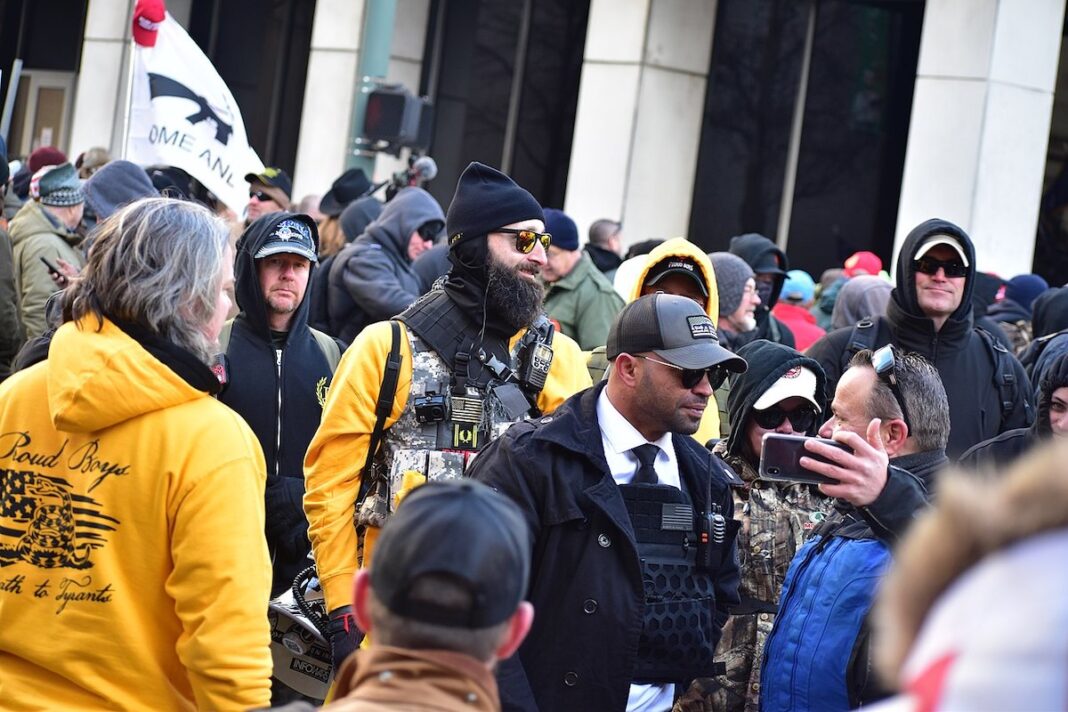
Enrique Tarrio (center), leader of the right-wing militia group Proud Boys, is of Cuban-American and Afro-Cuban descent and has for years spread neo-fascist, right-wing ideologies in the U.S.
By Bilal G. Morris | Black America Web
A growing number of U.S. Latinos are buying into the far-right, white nationalist narrative that’s seeped in hate and contradicts many aspects of their own culture.
The latest example of this is Mauricio Garcia, the Mexican-American man who was killed by police after killing eight people, including three children at a Dallas-area shopping mall over the weekend. According to reports, Garcia left behind a social media profile filled with white supremacist rhetoric.
Police said Garcia, who was a Dallas resident, opened fire on pedestrians with an AR-15-style rifle at the Allen Premium Outlets mall in Allen, Texas. The 33-year-old was shot dead by police on the scene. After his death, investigators found hate-filled posts targeting racial and ethnic minorities, according to NBC News. Garcia allegedly had an account on the Russian social networking platform OK.ru and shared posts referring to white nationalism, praising Hitler and sympathizing with neo-Nazi beliefs.
It has also been reported that Garcia wore a patch that read “RWDS,” an acronym known to stand for “Right Wing Death Squad.” The symbol is associated with multiple right-wing extremist groups including the Proud Boys. It’s also worth noting that many of Garcia’s posts referred to his mental health.
Read the full story Black America Web