Dr. Thao Ha’s niece once asked her: “What would you do if you won the lottery?”
Ha said that if money weren’t an obstacle, she’d create a gang intervention and incarceration rehab organization in Oceanside, a city 40 miles north of San Diego where she works as sociology professor at MiraCosta College and as the coordinator of the school’s Transitions Scholars Program (TSP).
TSP provides support for previously incarcerated students, but she often has to send her students to San Diego for the services they need.
Earlier this year, Ha was one of two recipients of the inaugural 2024 Nancy Jamison Fund for Social Justice. When she learned she had won the $50,000 award, she was standing next to her colleague, TSP student services specialist Ashley Gerda, who nominated her.
Ha was stunned. She now could build the nonprofit of her dreams.
‘Carrying it forward’
This mission has been close to Ha’s heart all her life, as described in her upcoming 2026 memoir, “Love Letters to the Dirty South,” chronicling her life as a Vietnamese refugee who grew up in Texas, Tennessee and Iowa.
After the Vietnam War ended in 1975, her air force pilot father and mother ran with Ha through a hail of bombs to a plane that carried them to safety. In the U.S., her Vietnamese refugee community continued to witness incidents of hate and injustice, including threats by the local KKK in Seadrift, Texas; this would become the subject of a documentary, “Seadrift,” that she produced in 2019.

Ha grew up among Houston Vietnamese American gangs in the 1990s and fell in love with Vu Tran, a man later sentenced to 60 years in prison for aggravated assault with a deadly weapon.
After that crushing verdict — and a close call where she was shot in a gang-related drive-by shooting — Ha vowed to turn her life around, get a higher education and give voice to a community without the resources to sustain itself.
Decades later, she rekindled the flames of her first love and resumed contact with Tran, although he remained incarcerated until his death in 2000.
“We had these plans for each other when he would come home,” said Ha. “I’d reassure him: ‘There’s so much out there for you, you’re not nobody.’ When he didn’t get to come home, it was an opportunity lost. So for me, it became about how I could take this energy and carry it forward for people who do get to come home.”
This year, Ha established her nonprofit. She chose the name “Collective Freedom,” based on the idea that no one is free until everybody is.
She said that her work helping students transition out of incarceration is not just about helping them get jobs and education; it’s also about “how to help them break free from the prison of their mind … and we can all be victims to that.”
“Even if it’s hard to believe in yourself, believe in the work you’re doing,” she added.
‘It meant the world’
The second $50,000 award went to Jamie Arangure, the founder of Proyecto Trans Latina, a nonprofit providing mutual aid and social services for LGBTQ+ Latino immigrants in San Diego.
Arangure said she started Proyecto Trans Latina to advocate for queer communities that were struggling to get culturally-specific resources from larger San Diego LGBTQ+ nonprofits, mostly based in places like Hillcrest and North Park, where many transgender community members couldn’t afford to live.
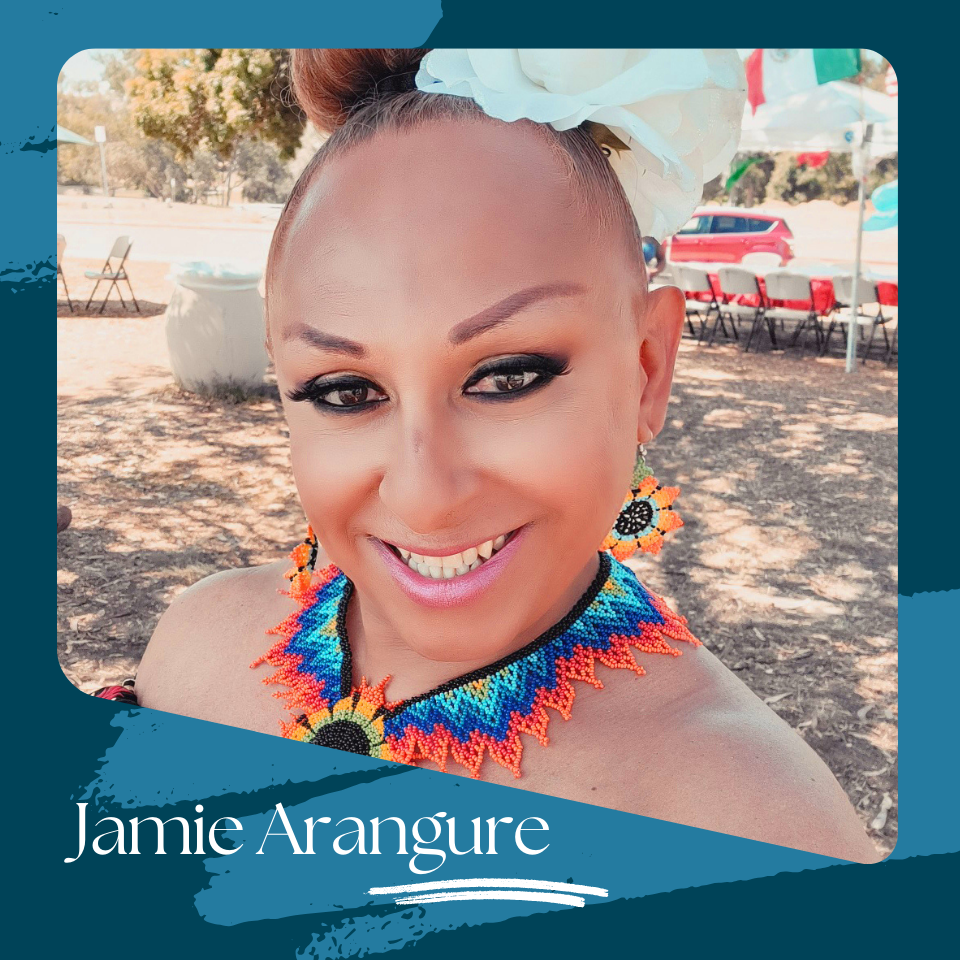
To help, the Proyecto Trans Latina team feeds the homeless every first Sunday of the month; provides clothing, hygiene supplies, emergency housing vouchers, accompaniment to gender-affirming medical care and other care referrals; and offers STD and HIV prevention education and patient advocacy workshops.
Arangure, the nonprofit’s executive director and a member of the transgender community, had been doing this work for seven years without being paid, and said she would have continued doing it without being paid — but “it meant the world to her” to receive this monetary support for the year.
She added that not having to stress as much about money has given her more time and energy to dedicate toward Projecto Trans Latina, and take classes to learn digital skills.
“It’s another step to continue doing my job, what I want and what I love – which is helping my community,” Arangure explained.
About the fund
When attorney and advocate Andrea R. St. Julian first heard about the Nancy Jamison Fund for Social Justice, she said she couldn’t believe it.
“So much of funding in the nonprofit world goes toward large nonprofits,” said Julian. “That misses the importance of these key individuals: small groups that are often doing the work selflessly … and can often move more effectively than larger organizations, because they have less restrictions.”
Jamison, the former president and CEO of Catalyst — a network of funders that started in 1979 — died of cancer in 2021. After her death, community leaders wanting to continue the social justice work she nurtured all her life established a fund to award two San Diego County-based people who worked to address equity issues including racial justice, environmental health, LGBTQ advocacy and immigrant rights.
When Julian heard of Catalyst’s call for nominations, she immediately nominated six people in her community for the award.
To her surprise, Julian herself was also nominated, and became a finalist, for her work with Free SD, a San Diego-based participatory defense group that supports the accused and their families as they navigate the criminal justice system.
Julian — along with finalists Leticia Ayala, Mikail Hussein and Rigoberto Reyes — each received $5,000.
“It gave me such an emotional boost,” she said. “I can’t exaggerate how good it feels. You feel valued. It helps feed your soul.”
How to apply
Why nominate someone for the Nancy Jamison award?
One member of the fund’s Grants Committee, who preferred to remain anonymous, reflected on the process: “Getting to know the honorees through the nomination process, celebrating together and then sharing their incredible stories had me reflect on the legacy that one person can leave.”
The deadline for nominations for the 2025 cycle is December 31, 2024.
In-person conversations with finalists will occur in February 2025, and grant decisions will be announced in April.
The Nancy Jamison Fund plans to give these awards annually for four years.
Nominees don’t necessarily need to be a part of a nonprofit, said Michelle Silverthorn, the fund’s program manager. They’re open to any individual working within San Diego County, and the nomination form is available in both English and Spanish.
Those who wish to submit the application in another language can contact Silverthorn at michele@catalystsd.org, and she’ll help get the application translated.
Nominations can be anonymous, and self-nominations are accepted.
Silverthorn added that the use of award funds are purposefully unrestricted: The funding could support specific initiatives, but it could also help a community’s unsung heroes pay for housing costs and other basic needs, as much of this impactful work often goes unpaid.
Applicants should focus on quality, not quantity, Silverstorn added. Most crucial of all for the committee is how an application helps them understand “your impact. We want to see what fuels your work.”