


For years newspapers in the US have faced stiff headwinds as ad revenues decline and audiences turn to social media and online platforms. For the ethnic press, those challenges are compounded by younger generations who no longer speak their parents’ native tongue.
That was the impetus for the launch of a new English language newsletter earlier this month by the Korean language Korea Daily as it seeks to engage a new generation of Korean Americans.
“Despite the anniversary commemorating 120 years of Korean immigration to the United States, there is currently not a single English language news outlet catering to the Korean American community,” says Mooyoung Lee, a reporter with the Korea Daily and the lead editor for Katchup Briefing, which launched in April.
Lee says the purpose of the newsletter is to engage with younger Korean Americans who may not be fluent in Korean and who may be looking for news and information about Korea and about their own communities. He adds the newsletter is also a vehicle for highlighting the concerns of Korean Americans to non-Korean audiences here in the US.
This is about “disseminating the views and voices of the Korean community to mainstream society, not just delivering news,” a release announcing the newsletter’s launch stressed.
The Korea Daily is one of the largest Korean-language newspapers in the US. With headquarters in Seoul, the paper maintains bureaus in major cities including Los Angeles, New York and Atlanta and has been in operation in the US since 1974.
Still, as new generations of Korean Americans come of age here, like their non-Korean peers many are turning to social media for news and information, shunning more traditional, non-English platforms like the Korea Daily that first-generation Korean immigrants still rely on to navigate their lives here.
Language access is another major challenge. According to the latest census data, there are some 2 million people of Korean origin in the US currently. Census numbers also show that more than half of Asian Americans born in the US – Korean Americans among them – struggle to learn their parents’ native tongue.
“The population of second and third generation Korean Americans continues to grow, and they are mostly native English speakers who prefer to consume news content in English rather than Korean,” says Lee, adding the newsletter often focuses on stories not covered by the mainstream press.
These include topics like the recent appointment of an LA city councilwoman to the city’s District 10 seat, which includes Koreatown, rather than putting the seat up for a vote, as well as the confusion around advertising campaigns targeting the Korean community that often rely on shoddy translations, which one expert noted “can be interpreted as a sign that American society still overlooks the importance of minorities.”
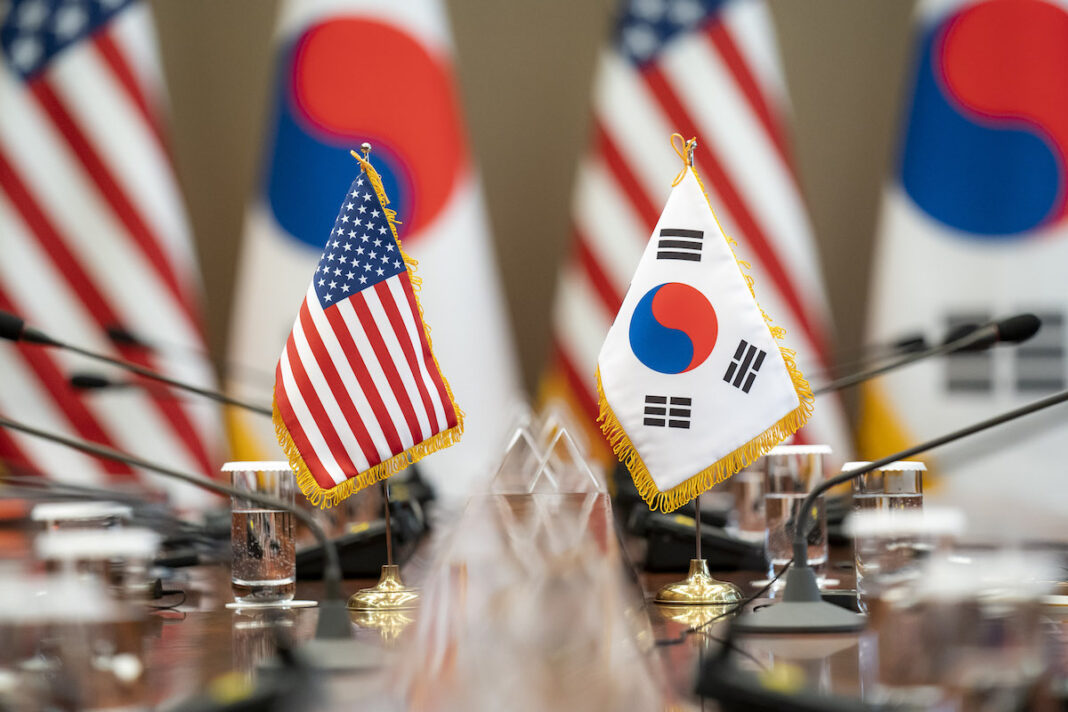
The most recent issue leads with a story on this week’s visit to the White House by South Korean President Yoon Suk Yeol, whose trip commemorates 70 years since the allies signed a Mutual Defense Treaty at the start of the 1950-53 Korean War. It also comes amid rising tensions with China and the ongoing war in Ukraine.
Yoon grabbed headlines Thursday after offering a live rendition of the 1970s folk song American Pie by Don McLean. The South Korean president, reportedly a fan of the song, was then handed a guitar signed by the singer by a grinning President Biden.
Things are less jovial behind the scenes, however, as Yoon must contend with opposition figures back home who bristle at what they perceive as his cowing to Washington’s demands that South Korea refrain from developing its own nuclear capabilities in the face of rising threats from North Korea. The Biden administration is also pressing Seoul to take a more aggressive stance against Beijing, Korea’s largest trading partner, and Moscow.
The South Korean president’s visit punctuates the longstanding political and cultural ties that bind the two countries, and it comes as the K-Pop wave continues to sweep the country, shaping food, television and music trends and helping to put South Korea squarely on the map for millions of devotees.
Yet as Lee notes, the dearth of English language news about Korean Americans leaves a significant hole in the media landscape, rendering members of this growing community and their concerns largely silent in the broader public narrative.
Lee and his team are currently hiring reporters, with plans to integrate the newsletter into the Korea Daily’s regular English-language news section, including its various social media channels.
And while Lee acknowledges that it’s too soon to tell what the response will be from younger Korean Americans, he says the paper feels “an obligation” to try and fill this void.
Additional reporting by Jongwon Lee