By Aleah Gatto/PEN America
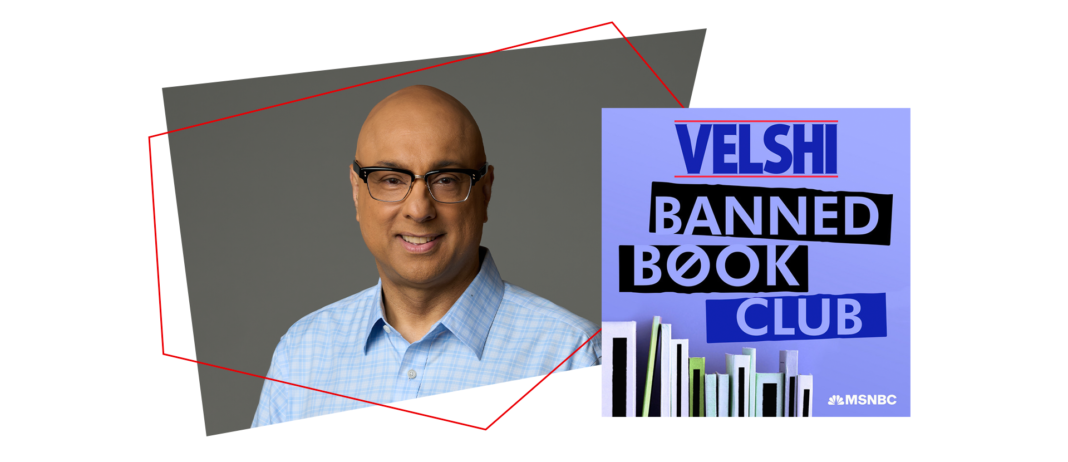
Journalist Ali Velshi has focused on the book banning crisis in America through a literary lens for more than a year with his Velshi Banned Book Club segments on his MSNBC show Velshi.
In his new Velshi Banned Book Club podcast, Velshi is joined each week by a prominent author of banned literature to talk about both the author’s experience of being banned and the podcast’s running theme of why literature is, in itself, an act of resistance.
Velshi, a member of PEN America, spoke to us about what drew him to focus on book bans and the new podcast, available on Spotify, Apple Music, Amazon Music, or wherever you get your podcasts.
Your podcast is described as “an act of resistance against the epidemic of book banning.” How did Velshi Banned Book Club come to be and why is it so important?
The Velshi Banned Book Club started nearly two years ago as a TV segment on my show, Velshi. Now it is so much more: articles, exclusive streaming, and a podcast. A lot of media outlets were covering the uptick in book bans and removals across the nation, but it was mostly numbers, and the politics of it all. We wanted to approach book challenges through a literary lens.
Around that time, Omnika Thompson, our then-Senior Executive Producer of Weekend Programming at MSNBC, e-mailed us with the suggestion. Hannah Holland, the now-editor of the Velshi Banned Book Club franchise, started producing and writing the segments. She really gave it wings because she immersed herself in the stories of the authors, the ideas underpinning the books and, most importantly, the writing itself.
In each episode of the podcast, you’ve been joined by prodigious authors (Margaret Atwood, Nikole Hannah-Jones, and Laurie Halse Anderson, to name a few) to delve into the epidemic of book banning. What are some of the most startling insights you’ve found?
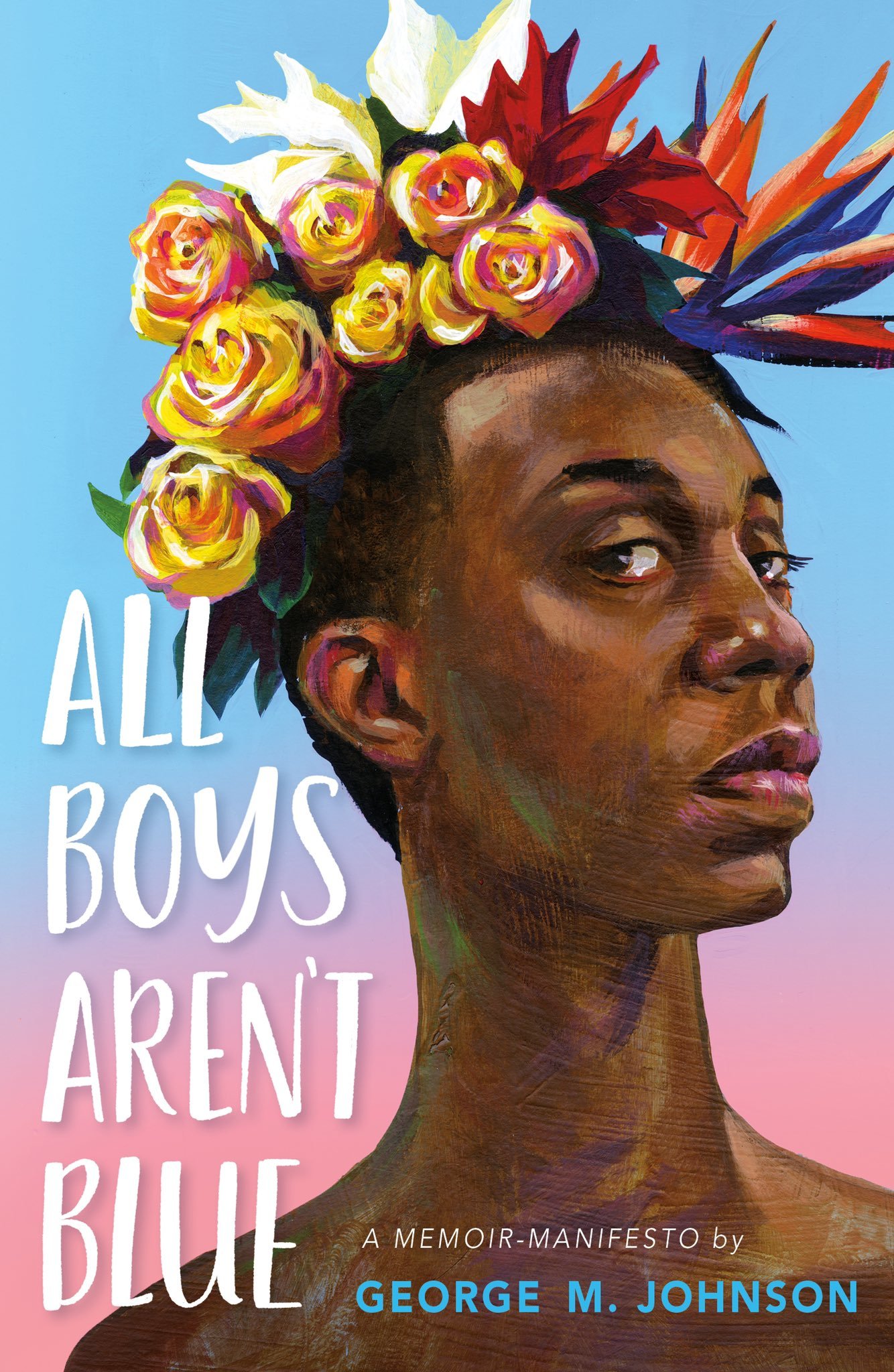
One of the first authors we featured on the Velshi Banned Book Club was George M. Johnson, who wrote All Boys Aren’t Blue. If you haven’t read it, you should. It’s an amazing auto-biographical series of essays about growing up black and queer. We assumed that the bulk of member reactions we would get would be from Black and queer people about the importance of representation. But that wasn’t the case, at all.
Overwhelmingly, older, cis-gendered white people wrote in about how much they loved the book. I remember one person in particular explained that they had never even met a Black or queer person, but Johnson’s book helped them understand. I would say this is more pleasantly surprising than startling, but it has really stayed with me.
The Velshi Banned Book Club exposes readers to stories they probably wouldn’t pick up at their local store and they really resonate. You don’t have to like a book, but if it expands your world view and creates space for empathy, it was worth every word.
How do you feel the current state of division in the U.S., and the rise of the “culture war” over books in schools, is informed by your own broad understanding of political instability and your journalistic work around the globe?
It’s interesting you bring up “culture wars” because we have actively stopped using that phrase to describe the book banning epidemic. Imara Jones, the journalist, transgender activist, and friend of the Velshi Banned Book Club, was the first to point out that this isn’t a “war” at all. There aren’t two sides. Librarians, teachers, and most parents are not willing soldiers, and the classroom is not a battleground.
Sure, there is a conversation to be had about appropriate reading material per age group and reading level, but the widespread attacks on books we are seeing is not that. Removing books is censorship. Plain and simple. And it’s been used in history not just to silence the stories of the aggrieved or censor so-called “pornography,” but to eliminate dissent and overcome political criticism and oppositions.
Book banning is, at its root, anti-democratic, and it leads to broad scale political censorship.
Read the full interview at Pen America.