


By Eduardo Stanley
Leer en español
Over the past 20 years or so the cultural presence of the Oaxacan community in the San Joaquin Valley has steadily grown, particularly in Madera and Arvin, both in Kern County. Thousands of agricultural workers have arrived in the region from the southern Mexican state, where nearly half of the population is of Indigenous origin.
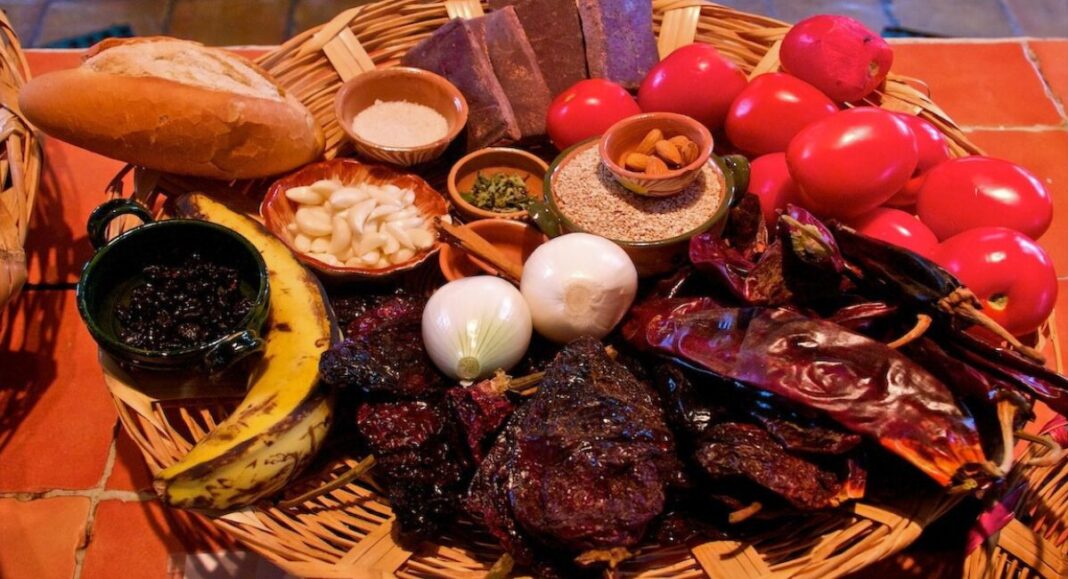
There are more than 16 distinct Indigenous communities in Oaxaca, each with their own language and tradition, with food playing a central role across all of them. Oaxacan food is not only delicious, but colorful, with a distinct flavor due to the herbs common across much of Oaxacan cuisine. In recent years, there has been a surge in Oaxacan fine dining restaurants – as well as books and articles – on both sides of the Mexico-US border.
But as we know, there is the food you experience in a restaurant, and then there is home cooking. And for that reason, a group of Oaxacan women in Madera, led by community organizer Rosa Hernández, put on a traditional outdoor market in the city’s main park offering traditional drinks, foods, refreshments, fresh-made tortillas, bread and pastries and other fresh produce.
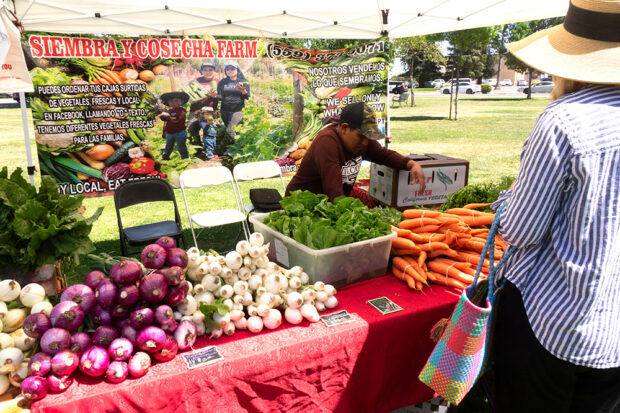
The women named the event Nu’u Yavi, which means market in the Indigenous Mixtec language, spoken across parts of Oaxaca.
“We invited the women to come and cook dishes that preserved the traditional flavors passed down from their mothers and grandmothers,” said Hernández, who is herself of Mixtec origin from the community of Santiago Juxtlahuaca in Oaxaca.
“The idea is to offer traditional dishes using ingredients from our communities, if possible, while preserving the overall environment you find in Oaxacan kitchens. And to present these dishes with pride, keeping our ancestral heritage.”
The May 3 Nu’u Yavi event was held in Court Park in the center of Madera, located about 30 miles north of Fresno. It is estimated that roughly a third of Madera’s 61,000 residents are from Oaxaca. The city is also the nation’s first to have elected a Oaxacan of Mixtec origin, Elsa Mejia, to the City Council.
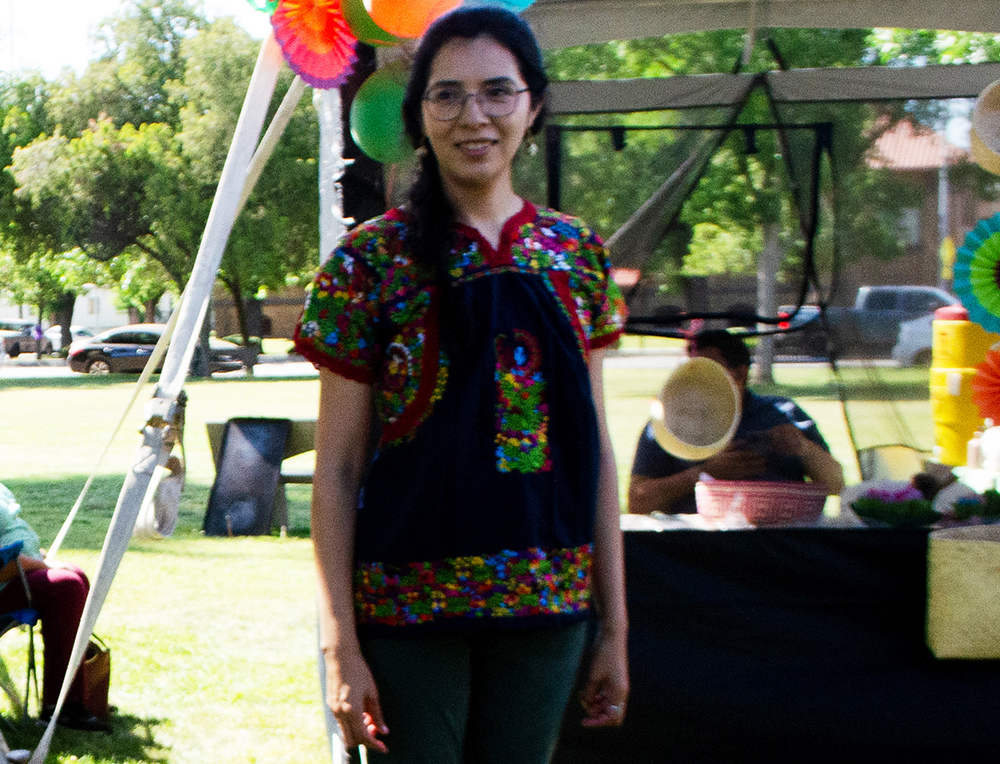
Seven Oaxacan women (six Mixtec and one from the Triqui community) prepared their favorite dishes: tortillas, a red and a yellow mole sauce, pozole, juices, yiqui (a stew made from corn, avocado and roasted meat), tamales and huachimole (an elaborate dish made from tomatillos, various seeds, chiles and pork).
The event was sponsored by the Pan Valley Institute of the American Friends Service Committee. The food stalls were distributed in a semicircle around the park’s kiosk, which became the center of the event. Many people attended, not only to eat but also to enjoy the conversation while the children played. Soft Oaxacan music could be heard in the background.
“For me, this was an experience aimed at educating the public about our food and our cooking techniques,” said Daisy Mejía, who prepared huachimole. “It is like green chili but it is cooked with guaje seeds and costeño chili. My mom taught me how to cook it, so it means a lot to me. I hope that our new generations do not lose these recipes.”
How difficult is it to get the original ingredients? “Now you can get gourd in some stores; that was not the case a few years ago,” Mejía explained. “Guaje trees have even been planted in the area.”
It’s not difficult to understand. Immigrants not only bring their work skills and energy, but they also reproduce their cultures, including, of course, their food.
Thus they create a market for new products. In the case of plants, they end up being planted locally. However, there are some exceptions. “Ideally, huachimole should be cooked with chili costeño (chili from the coast of Oaxaca). “My mother brought them from Oaxaca because they are not produced here,” Mejía said.
“What I liked about this event is that several women came together to cook and share our traditional food. It is food that we know, however, each one has a special touch that they learned from their mothers,” Mejía said.
And, of course, there were tamales. The traditional ones, and the Oaxacan ones, which are made with banana leaves.
“When I cook, the smell, the colors, the flavors transport me to my land,” said Mireya Agustín, with a nostalgic tone. She offered tamales and yellow pozole (pozole made with yellow chiles). “Yellow pozole is very popular during the festivities that are celebrated in the plaza of my land.”
These women have something in common when they cook for events like Nu’u Yavi: they have the help of their families.
Agustín mentioned that, although more Oaxacan ingredients are currently produced here, “they don’t taste the same.” She sells food from home and at special events. “I like to share my food… People enjoy Oaxacan food and that makes me happy,” she said.
There is something else besides good food.
“This effort—to organize the event—is part of a fight, a fight to be recognized as a community that is part of the community at large. This is also part of our contribution, we are not just working hands,” concluded Hernández, suggesting there are discussions for a similar event in July.
And, who knows, Nu’u Yavi could become a permanent event?
Feature image published under Creative Commons license.

This resource is supported in whole or in part by funding provided by the State of California, administered by the California State Library in partnership with the California Department of Social Services and the California Commission on Asian and Pacific Islander American Affairs as part of the Stop the Hate program. To report a hate incident or hate crime and get support, go to CA vs Hate.