


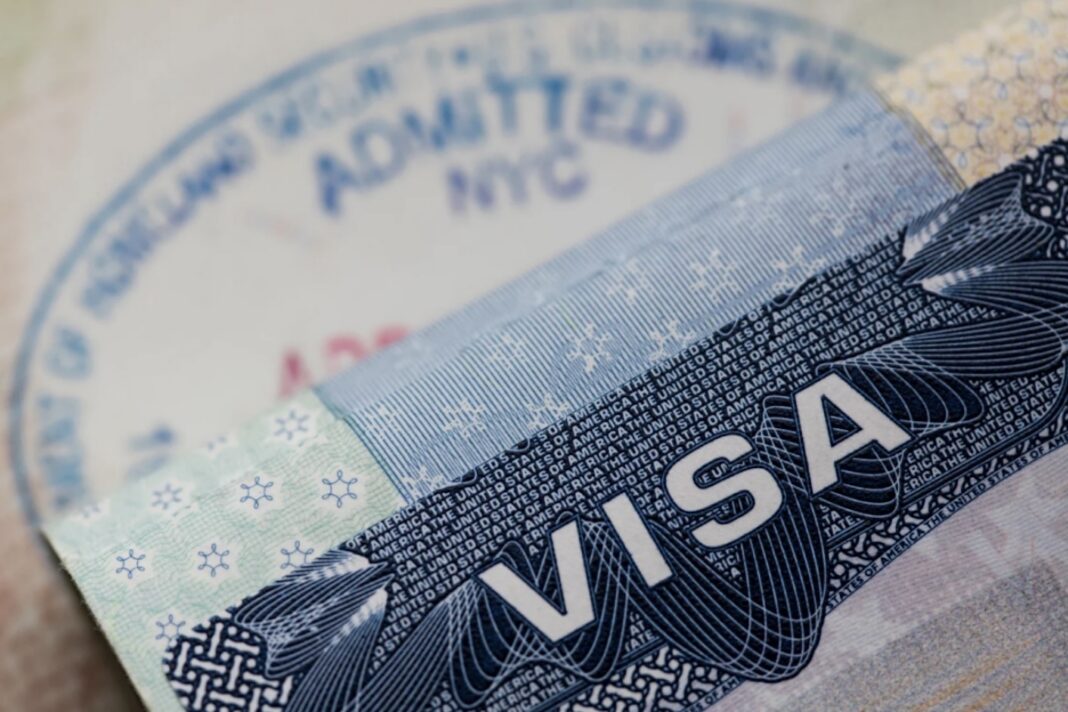
The federal government will consider a broader range of public benefit use when reviewing green card, visa and United States admission applications starting this fall.
The final rule — published by the Department of Homeland Security on July 20 and scheduled to take effect on Sept. 18 — rescinds narrower public charge standards adopted by the Biden administration in 2022.
Public charge is the legal standard immigration officers use to determine whether someone seeking permanent legal status is likely to become primarily dependent on government assistance.
What will be reviewed
Per the more limited 2022 standards, public charge reviews generally consider only cash assistance for income maintenance and long-term institutional care paid for by the government.
The new public charge rule allows immigration officers to deny a visa, admission to the United States or adjustment to lawful permanent resident status if an applicant is deemed likely to become dependent on government assistance in the future.
Under this rule, immigration officers may consider a wider range of means-tested public benefits available to people whose income or assets fall below certain limits.
Public charge bond requirements will also be strengthened: An immigrant admitted under a public charge bond could be found violating that bond by receiving a means-tested benefit or violating another bond condition.
Federal law already requires officers to consider an applicant’s age, health, family status, assets, income, education and job skills. They may also review an affidavit of support, employment prospects and other factors affecting the applicant’s ability to remain financially self-sufficient.
DHS has said the 2022 restriction of benefit reviews “was not the best implementation of the statute,” placing excessive limits on officers that made it difficult to accurately assess whether applicants were likely to support themselves.
Still, the department stressed that receiving public benefits will not automatically lead to the denial of a green card or admission application.
Instead, officers will now conduct an individualized review that considers the length and amount of benefit use, the circumstances that led to the assistance, the applicant’s current employment and future earning potential.
As the final rule does not specify every public benefit that officers may consider or how much weight each type of assistance should receive, U.S. Citizenship and Immigration Services (USCIS) is expected to issue implementation guidance before the rule takes effect, explaining how officers should evaluate individual cases.
Who is affected
The new rule applies to green card, visa and United States admission applications filed on or after Sept. 18.
Benefits received before that date will generally be evaluated under the 2022 standard, which usually considers only cash assistance and long-term institutional care at government expense.
Refugees, asylum recipients and certain humanitarian immigrants who are federally exempt from public charge review will remain exempt.
The rule applies to admission and adjustment-of-status cases handled by USCIS. It does not directly alter public charge standards used by U.S. consular officers abroad or by immigration courts.
DHS said the rule could discourage immigrants and mixed-status families from applying for health care, food and housing assistance, or lead some recipients to withdraw from programs they already use.
The department estimated that federal and state benefit spending could fall by about $13.05 billion annually as a result of the new rule.
Over 10 years, the total reduction could net between $91.6 billion to $111.3 billion.
DHS acknowledged that lower participation could create financial losses for hospitals, nonprofit organizations, state Medicaid agencies, grocery stores participating in the Supplemental Nutrition Assistance Program (SNAP), agricultural producers and landlords in federally supported housing programs.
During the rulemaking process, DHS received 8,846 public comments, with most opposing the changes. Despite the objections, the department adopted the final rule largely as proposed.